The Infantino Peace Prize controversy has erupted globally after FIFA President Gianni Infantino awarded Donald Trump the inaugural FIFA Peace Prize, provoking widespread criticism and accusations of political bias.
Observers immediately flagged the decision as a breach of FIFA’s long-stated policy on neutrality, intensifying the ongoing FIFA neutrality debate among fans, journalists, and human rights organisations worldwide.
Critics argue the award seemed designed to strengthen personal ties between Infantino and Trump, overshadowing humanitarian concerns and undermining FIFA’s credibility as a politically impartial organisation.
The timing of the award was particularly controversial, coming shortly after a US air strike in the Caribbean killed civilians, intensifying global scrutiny over Trump’s administration.
Former UN official Craig Mokhiber condemned the prize as “vulgar and shameful,” arguing that it attempted to whitewash Trump’s record on international conflicts and human rights violations.
Mokhiber noted that FIFA has repeatedly refused to sanction Israel over alleged violations in Palestine, highlighting a perceived double standard in FIFA’s engagement with political issues.
He added that the new award effectively obscures Trump’s “disgraceful record” in foreign policy, including lethal strikes and controversial support for Israel, raising ethical concerns among activists.
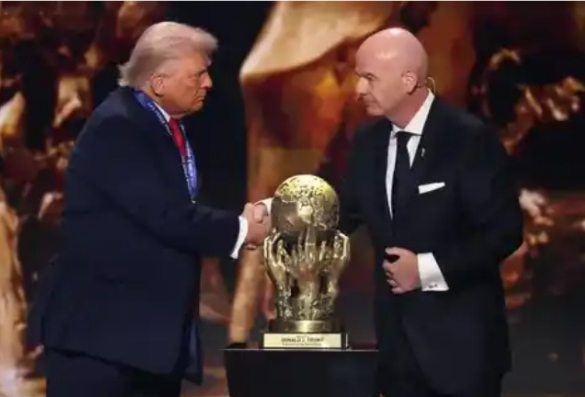
Infantino, presenting the prize, praised Trump for international agreements like the Abraham Accords, framing him as a unifying leader whose actions merited recognition from the global football community.
“This is what we want from a leader: a leader who cares for people, unites nations, and promotes a safe world,” Infantino said while honoring Trump publicly.
Trump, in turn, described the FIFA Peace Prize as one of the “great honours” of his career, reiterating claims of saving millions of lives and ending global conflicts.
He briefly contrasted his record with that of Joe Biden, asserting the United States had transformed into “the hottest country anywhere in the world” under his leadership.
Observers noted the contradiction between awarding a peace prize and Trump’s recent remarks calling Somali immigrants “garbage,” comments widely condemned as racist and dehumanizing internationally.
Journalist Zach Lowy mocked the award, comparing it to “giving Luis Suarez a prize for not biting people’s ears,” highlighting public ridicule across social media platforms.
The controversy also underscores global football politics, as FIFA prepares for the 2026 World Cup, co-hosted by the United States, Canada, and Mexico, with Trump’s involvement raising potential diplomatic concerns.
Infantino has maintained a high-profile relationship with Trump, attending ceremonies like the Gaza truce formalization, blurring lines between sport diplomacy and political endorsement.
Two years earlier, Infantino emphasized that football must remain politically neutral, calling sport “the most powerful tool to unite people,” remarks now considered contradictory by critics.
FIFA did not respond to Al Jazeera requests for comment, leaving analysts and fans to speculate on the motivations behind creating a completely new peace award.
The Democratic Party mocked the prize on social media, stating: “Trump couldn’t win a Nobel Peace Prize, so FIFA made one up for him,” further inflaming debate over the decision.
Human Rights Watch criticized the award, highlighting that Trump’s administration “does not display exceptional actions for peace and unity,” contradicting FIFA’s stated rationale.
Analysts reviewed Trump’s foreign policy, noting some peace deals in Africa while simultaneously advocating for increased military spending across Western countries, revealing a complex legacy.
Trump also authorized a strike on Iran’s nuclear facilities and continued unwavering support for Israel, actions widely criticized for escalating conflicts and civilian harm.
Legal experts condemned 22 US air strikes in the Caribbean, describing them as extrajudicial killings that claimed at least 86 lives, raising questions about legality and morality.
Military mobilizations near Venezuela added to speculation about potential conflict aimed at removing President Nicolas Maduro, sparking broader regional tension in the Western Hemisphere.
Domestically, Trump’s intensified immigration crackdown included detentions, attempted deportations, and targeting of Palestinian advocates, challenging constitutional protections for free speech.
Rights advocates argue these policies conflict sharply with any narrative of peace, increasing skepticism over FIFA’s decision to honor Trump with a peace prize.
Activists emphasized that FIFA often fines players for political expressions, yet Infantino publicly awarded a political figure, raising accusations of selective moral standards.
Infantino defended his actions by arguing that football cannot resolve geopolitical issues, though critics say creating a prize for Trump directly involves FIFA in politics.
Observers warn that the controversy risks FIFA’s credibility among fans seeking fairness and consistency in global sport, especially with the 2026 World Cup approaching.
The decision may amplify World Cup 2026 tensions, as political narratives threaten to overshadow tournament preparations, complicating FIFA’s stated goals of unity and inclusivity.
Human rights campaigners have called for the award to be rescinded, stating that sports institutions should never legitimize violence, discrimination, or controversial foreign policies.
Mokhiber argued FIFA is “playing on a bloody pitch,” a metaphor for the moral hazards sports organizations face when intertwining with controversial leaders.
Experts stress that FIFA wields enormous soft power, and its awards carry weight in shaping public perception and legitimizing political figures internationally.
They insist that genuine neutrality requires consistency, especially when celebrated leaders are associated with human rights violations and aggressive foreign interventions.
The controversy highlights the increasingly blurred lines between sports and global politics, raising ethical questions about governance and organizational accountability.
Many question whether FIFA can retain credibility while selectively endorsing leaders, risking reputational harm among fans and global stakeholders alike.
Some analysts interpret the prize as an attempt by Infantino to maintain favourable relations with the US as a key logistical and economic partner for the 2026 World Cup.
Others warn the award sets a dangerous precedent, suggesting future honors may serve political interests rather than recognizing genuine contributions to peace or sport.
Football supporters from Africa, Asia, and South America voiced concerns that FIFA is drifting away from its core values of fairness, transparency, and global representation.
Social media discussions highlighted the insult felt in regions affected by US foreign interventions, emphasizing the dissonance between a peace prize and real-world impacts.
Political commentators note that the incident reflects a broader trend of sports organizations being drawn into ideological and geopolitical disputes, willingly or otherwise.
Some suggest the award frames Trump as a peacemaker ahead of the World Cup, despite contradictions in his domestic and international policy record.
Critics maintain that the prize was engineered to flatter Trump personally, raising doubts about the independence of FIFA’s awards and decision-making process.
Observers fear the controversy could deepen divisions between fans, governments, and international football bodies, jeopardizing the inclusive spirit FIFA claims to uphold.
Activists argue the episode demonstrates the perils of intertwining sports recognition with political ambitions, potentially undermining the moral authority of international institutions.
Human rights groups insist that FIFA’s legitimacy relies on consistent principles, not strategic alignment with powerful political figures, to maintain global trust.
Some analysts believe the award risks alienating football communities in marginalized regions, who may view FIFA as complicit in global injustices through selective recognition.
Global football analysts warn that, without corrective action, the Infantino Peace Prize could erode faith in FIFA’s neutrality and ethical standing before the 2026 World Cup.
Fans and campaigners worldwide are watching closely, questioning whether FIFA will uphold its professed values or continue actions seen as politically expedient and ethically questionable.
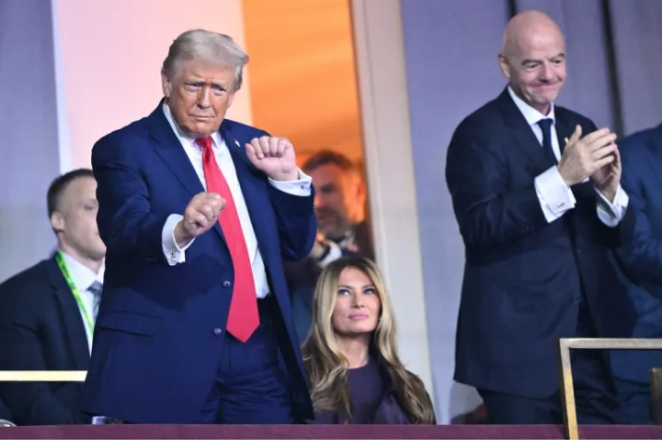
Ultimately, the Infantino Peace Prize controversy underscores the fragile balance between sports diplomacy and political influence, with implications for FIFA’s reputation and the global football community.
About The Author