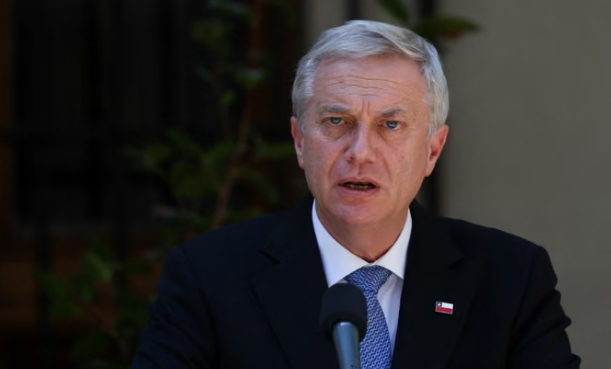
SANTIAGO — Fears for women’s rights in Chile are growing as the country prepares for the inauguration of José Antonio Kast, widely described as an anti-abortion president. Activists warn that his ascent marks a turning point for reproductive freedoms and gender equality, potentially rolling back hard-won protections for women across the nation.
Kast, 60, a staunchly Catholic politician whose father was a member of the Nazi party, has spent decades opposing progressive reforms on women’s rights. During his political career, he voted against the legalization of divorce in 2004 and has repeatedly challenged measures allowing abortion under limited circumstances.
Since the introduction of Chile’s three-exceptions abortion law in 2017, Kast has pushed to reinstate a total ban and introduce parental consent requirements for emergency contraception.

Historically, Chile allowed abortions for medical reasons from the 1930s until 1989, when Gen. Augusto Pinochet enacted a total prohibition. Kast has openly expressed admiration for Pinochet, maintaining many conservative positions on family structure and social values.
This alignment with past authoritarian policies raises concerns among feminist groups and human rights advocates who have long fought for reproductive autonomy and gender equality.
In a controversial move, Kast appointed 30-year-old evangelical Judith Marín as the new minister for women and gender equality. Marín, an anti-abortion activist, gained notoriety in 2017 when she interrupted a senate session on abortion decriminalization, shouting religious exhortations while being removed by police. Observers say her appointment signals that the incoming administration intends to maintain a hardline stance on reproductive rights.
Andrea Álvarez Carimoney, assistant professor in public health at the University of Chile, described the situation as “very provocative, because someone whose views were once considered marginal now wields significant political power.” Experts note that even without overturning the current abortion law, the government could limit access by restricting the three existing legal exceptions.
Kast, a founding member of the Republican Party, has continued to campaign on immigration and national security but has reaffirmed his position on abortion. Republican Party members previously announced intentions to repeal the 2017 abortion law, which currently allows procedures in cases of rape, danger to the mother’s life, or non-viable fetuses.
Government data indicate that approximately 7,000 legal abortions have taken place since 2017, though studies estimate more than 100,000 induced abortions occur annually in Chile, many of which are clandestine.
The incoming administration’s potential restrictions have caused divisions among Chilean feminist organizations. The movement, which mobilized hundreds of thousands in the streets during efforts to reform the Pinochet-era constitution, pushed for abortion rights to be enshrined constitutionally alongside quotas for women in public office.
A 2022 draft constitution achieved these aims but was overwhelmingly rejected by the public for being overly complex and partisan. A second attempt in 2023, led by Kast’s Republican Party, similarly failed.
Activists also criticize the outgoing Boric administration for delays in presenting a free abortion bill, which only entered congress in 2025. Vesna Madariaga, spokesperson for the Coordinadora Feminista 8M, one of Chile’s largest feminist organizations, said, “Boric campaigned on reproductive rights and autonomy, but introduced the bill too late and without the momentum needed to push it through parliament.”
Antonia Orellana, the outgoing minister for women and gender equality, defended the administration’s approach, highlighting efforts to improve conditions under the three-exceptions rule.
The government issued an inspection manual for health professionals to ensure compliance and penalized institutions or staff violating patients’ rights. Orellana acknowledged a lack of congressional support for broader legislation, emphasizing the limitations of a legislative minority.
Despite political setbacks, the feminist movement demonstrated its continued strength during Sunday’s International Women’s Day march, which drew an estimated 500,000 participants. Grassroots abortion networks, such as Con las Amigas y En La Casa, led chants advocating for reproductive rights.
Operating across multiple regions, the group provides information on safe abortion practices and maintains a significant social media presence despite repeated blocking efforts by anti-abortion advocates.
A member of the network, speaking on condition of anonymity, stated, “Women are having abortions now, and they will continue regardless of government policies. Kast is dangerous, but Chilean women are strong and organized. We will keep advancing our rights.”
Observers say that Chile’s struggle reflects wider trends across Latin America, where progressive movements—sometimes called the “green wave”—have achieved significant legal victories in countries like Argentina, Colombia, and parts of Mexico.
In contrast, Kast’s administration appears poised to reintroduce conservative measures, potentially complicating access to reproductive health services and limiting protections for women.
Key additional concerns include the influence of religious ideology on government policy, potential modifications to the three-exceptions abortion law, challenges in ensuring compliance by health providers, and ongoing public debates over reproductive rights. Analysts warn that if the government curtails abortion access, it could lead to increased unsafe procedures and heightened social tensions.
Experts emphasize that the broader issue extends beyond abortion. Gender equality, family planning, and women’s health services are all potentially at risk under policies that prioritize conservative social values.
Legal and advocacy groups are preparing to monitor the government’s actions closely, offering support to women navigating new or more restrictive regulations.
As Chile enters this period of political transition, the intersection of conservative governance and women’s rights remains a focal point for both domestic and international observers.
The incoming administration’s policies will likely serve as a benchmark for future debates on reproductive health and gender equality across Latin America.

About The Author