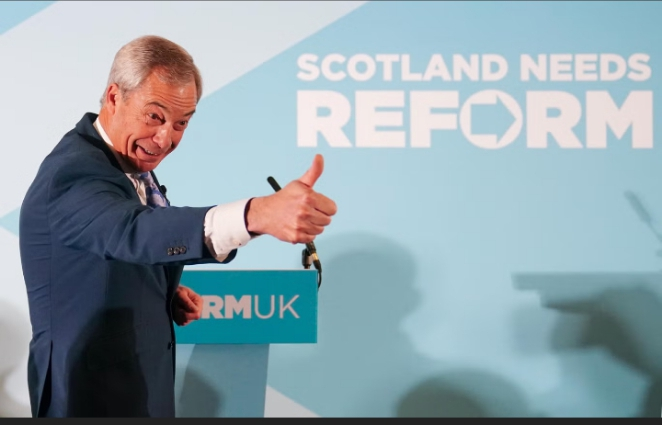
The Reform UK spending scandal intensified dramatically after Nigel Farage was referred to police by a former campaign insider, triggering a political firestorm and amplifying questions surrounding the party’s financial conduct.
Richard Everett, a former Reform councillor and member of Farage’s Clacton campaign team, submitted documents alleging the party disguised local campaign expenses as national spending during the 2024 general election.
Everett claims approximately £9,000 in costs were improperly reallocated, potentially pushing the campaign over its legal spending limit and exposing both Farage and his election agent to legal consequences.
He alleges that significant items such as banners, extensive leaflet runs, office energy bills and a costly refurbishment were excluded from the official local campaign return to avoid breaching limits.
The campaign reportedly declared spending of £20,299.80, narrowly below the £20,660.72 ceiling, yet Everett insists this figure masks substantial unreported costs that should have been included accurately.
Drawing on his experience managing previous campaign returns, Everett argues that several essential expenses were hidden, mislabelled or omitted entirely, raising serious concerns about transparency and procedural integrity.
One of the most striking allegations involves the use of an armoured Land Rover during a major Clacton rally, which was neither declared as a donation nor listed as hired equipment.
Reports suggest that the vehicle’s financial value, including its rental cost, never appeared within Reform UK’s spending records, intensifying suspicion surrounding the broader handling of campaign funds.
The claims cast a long shadow over the Reform UK spending scandal, increasing pressure on electoral regulators to scrutinise the party’s reporting practices and ensure compliance with national law.
Everett insists Farage himself may have been unaware of the overspend, yet maintains that the responsibility lies with party officials who allegedly manipulated the numbers to appear compliant.
He stated that experienced agents should recognise mandatory reporting requirements clearly, arguing that the omissions indicate deliberate attempts to sidestep legal spending boundaries rather than accidental administrative errors.
His remarks have reignited longstanding debates about the fairness and rigidity of the United Kingdom’s electoral spending laws, especially during increasingly expensive, high-intensity national campaigns.
The allegations revived memories of previous election finance controversies across multiple parties, prompting analysts to warn that public trust in democratic institutions could be further eroded by ongoing scandals.
Inside Reform UK, reactions have been fierce, as the party dismissed Everett as a “disgruntled former councillor,” claiming his motivations stem from personal grievances rather than principled accountability.
A spokesperson accused him of inappropriate misconduct in the Clacton office, allegations he strongly denies, describing the accusations as politically motivated attempts to silence internal critics.
The spokesperson insisted no electoral laws were broken, emphasising that all spending was reported transparently and suggesting Everett’s documentation misrepresented internal processes and campaign management structures.
This public exchange has deepened internal divisions within Reform UK, with some members reportedly uneasy about the political fallout and the intense media attention surrounding the Reform UK spending scandal.
Analysts caution that the controversy may damage Farage’s efforts to portray Reform UK as a clean, insurgent force distinct from traditional parties often tainted by financial or ethical controversies.
The accusations arrive at a fragile moment for the party, which has enjoyed rising support amid broader political dissatisfaction but now faces renewed scrutiny regarding its internal governance standards.
Opposition parties seized on the allegations, demanding a full investigation and arguing that the claims reinforce concerns about transparency, accountability and high-profile political figures evading electoral rules.
Labour MPs accused Farage of hypocrisy given his frequent attacks on establishment parties over alleged corruption, insisting the current situation reveals double standards within Reform UK’s leadership.
Conservative commentators expressed alarm that the scandal could fracture the growing right-wing vote, undermining potential electoral strategies and damaging the credibility Reform UK has cultivated among disaffected voters.
Despite growing pressure, Farage has not publicly addressed the full specifics of the allegations, instead focusing on wider national political battles and portraying attacks as politically motivated attempts to weaken Reform UK.
Political strategists note this tactic mirrors previous campaigns in which Farage sought to rally supporters by framing controversies as assaults led by hostile political elites seeking to undermine alternative voices.
However, experts warn this approach could falter if police find grounds for a formal investigation, especially given the detailed financial documents now sitting with the Metropolitan Police.
The Electoral Commission has faced mounting calls to clarify whether it will independently review the allegations, though officials have yet to announce any new inquiry into Reform UK’s campaign finances.
Legal analysts argue that if overspending occurred, both Farage and his election agent could face significant consequences, including potential fines or even disqualification depending on the severity of the breach.
They emphasise that Britain’s electoral laws are designed to maintain fairness, preventing wealthier candidates from purchasing disproportionate influence and ensuring transparent accountability across all political parties.
Amid ongoing controversy, Reform UK supporters dismissed the allegations as manufactured distractions, insisting the party remains committed to political reform, lower taxes and stronger national accountability.
Nevertheless, internal reports suggest pockets of anxiety are emerging within the party, with members concerned that the scandal could overshadow policy ambitions and disrupt its upward polling trajectory.
Public reaction has been sharply divided, with critics insisting that election spending laws must be upheld strictly, while supporters argue the issue is exaggerated and politically motivated.
As the Reform UK spending scandal continues dominating headlines, analysts predict further developments could shape upcoming political debates, influence voter perceptions and determine the party’s long-term credibility.
The situation highlights broader questions about how political financing is regulated, enforced and challenged, particularly at a time when public confidence in democratic institutions remains fragile and deeply contested.
Whether the scandal leads to formal charges or dissipates as political theatre remains to be seen, but its impact on Reform UK’s reputation is already unfolding dramatically across the national stage.
Observers warn that the allegations may linger throughout the next election cycle, resurfacing repeatedly as opponents leverage the scandal to undermine Farage’s leadership and question the party’s financial ethics.
For now, Reform UK faces a critical battle to regain control of the narrative, a challenge that will test its strategic discipline, internal unity and ability to withstand sustained political scrutiny.
The controversy underscores the volatility surrounding emerging political movements, revealing how rapidly public momentum can shift when confronted with allegations touching on money, power and democratic integrity.
As the nation watches developments, the Reform UK spending scandal may prove a defining moment for Farage’s movement, shaping its political trajectory, public image and long-term electoral viability.
About The Author