

Farage rejects claims of a ‘totally unregulated sexual economy’ in Britain
Nigel Farage has publicly distanced himself from Reform MP Danny Kruger’s comments that the UK is “suffering from having a totally unregulated sexual economy.”
Kruger, a Tory defector, previously criticised divorce laws and advocated for a pro-social framework supporting family formation.
Farage emphasised that Reform UK is a party of different wings, allowing a variety of perspectives on social issues, including sexual culture in Britain.
Kruger, who joined Reform UK last September, argued that marriage historically regulated sexual relations, and that reforms such as no-fault divorce undermine this framework. He suggested that the party should support incentives for couples to have children, reflecting a pronatalist policy.
Farage, however, rejected this specific viewpoint while affirming the party’s diversity of opinion.
The debate highlights internal tensions within Reform UK over social and cultural policies. Farage insisted that members are free to express their personal values, whether rooted in Christianity or other beliefs.
This comes after confusion surrounding the party’s position on Britain’s foreign policy and potential involvement in Middle East conflicts.
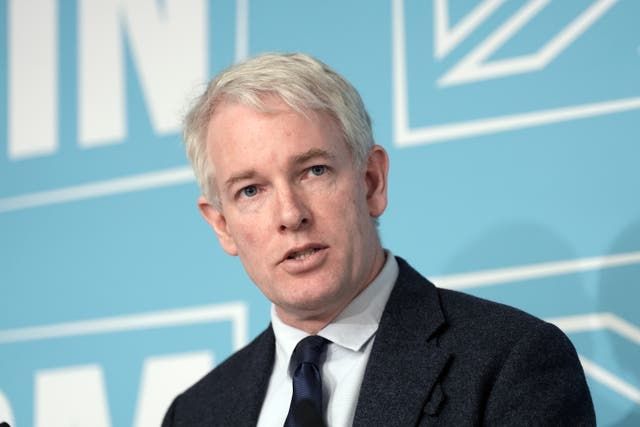
Kruger’s call for a “Christian restoration” in Britain underscores his broader agenda to reshape sexual culture and family structures. While he believes society suffers from unregulated sexual activity, Farage maintains a more libertarian approach, supporting individual choice within a pluralistic party framework.
The tension between these positions illustrates the broader challenge of balancing cultural reform with political strategy.
The episode marks yet another example of differing priorities within Reform UK, with some members advocating cultural reform, while leadership focuses on broad political positioning.
Farage stressed the importance of unity despite these ideological differences. His comments indicate that while the party contains socially conservative elements, it is not committed to enforcing any single view on sexual morality.
Analysts note that this public disagreement may affect the party’s image among voters concerned with traditional family values. Kruger’s stance on sexual culture and family policy aligns with a segment of socially conservative supporters, but Farage’s rejection signals a commitment to tolerating multiple viewpoints.
Observers suggest that the party’s internal debates reflect the wider national conversation about sexual ethics and family priorities.
The pronatalist agenda advocated by Kruger includes encouraging higher birth rates and government support for families. He argued that pro-child policies, including incentives for married couples, could help strengthen societal stability.
Farage, however, emphasised that such policies are not the defining principle of Reform UK. The party, he said, aims to allow a spectrum of opinions, from traditional Christian values to more libertarian approaches to sexual culture in Britain.
Farage’s response comes amid ongoing discussions on the party’s foreign policy, particularly regarding the UK’s potential involvement in US-led Middle East actions. Divergent views among members, including Richard Tice, Nadhim Zahawi, and Robert Jenrick, mirror internal debates on social issues. These debates reinforce the idea that Reform UK contains multiple ideological wings, each pushing different priorities.
Kruger has previously argued that the legalisation of no-fault divorce “basically means that your vows don’t matter.” He warned that the UK’s sexual culture has become increasingly individualistic, which he sees as detrimental to family formation.
His call for a more regulated sexual economy highlights the broader cultural concerns driving his political positions.
Farage, in contrast, framed the debate as an issue of personal freedom. He stressed that while he respects Kruger’s opinion, Reform UK must accommodate a wide variety of beliefs. “We’re a party of different wings, and the bigger you become, the more you have to allow free expression,” he told the Financial Times.
This underscores Farage’s commitment to ideological plurality, even when it conflicts with the views of prominent members.
The public split also touches on the relationship between religion and politics in Britain. Kruger’s vision of Christian restoration aligns with socially conservative voters seeking to reverse the social changes of the 1960s sexual revolution.
Farage, by contrast, emphasises personal values rather than imposing religiously motivated policies, reflecting a pragmatic approach to modern politics.
The debate also raises questions about Reform UK’s long-term strategy. Some party members see cultural reform, including stricter regulation of sexual behaviour, as essential to attracting socially conservative voters.
Others, including Farage, believe the party’s future depends on broad appeal, tolerating multiple viewpoints to maximise political influence. This tension is likely to continue shaping internal discussions as the party grows.
Kruger has argued that Britain’s sexual culture has consequences beyond personal morality, affecting child-rearing, marriage stability, and broader social cohesion. He suggested that the party should actively promote policies that support families and children. Farage, while acknowledging the importance of family values for some members, prioritises flexibility over prescriptive policies.
Observers note that the public nature of this disagreement may have wider political implications. It could influence the perception of Reform UK among voters, highlighting ideological diversity while also exposing potential fractures. Farage’s measured response seeks to reassure the public that the party can accommodate differing views without internal conflict.
Ultimately, Farage’s distancing from Kruger reflects the tension between promoting party unity and addressing controversial cultural reforms. The focus remains on allowing diverse perspectives while navigating the challenges of party growth and public scrutiny. The episode is a reminder that political parties often encompass multiple ideological currents, and managing these differences is essential for cohesion.
Kruger’s advocacy for a pronatalist policy, combined with his call for a more structured sexual economy, reflects a vision of society guided by traditional norms. Farage’s rejection of these positions emphasises individual liberty and the importance of multiple ideological wings.
The debate captures the ongoing struggle to balance personal freedoms with societal frameworks in contemporary Britain.
The public discussion also highlights broader societal questions about the role of government in regulating private life.
Kruger argues for interventions to support family formation, while Farage supports a more hands-off approach. This mirrors debates in other areas, including education, healthcare, and social policy, where party members hold differing views on the balance between state guidance and personal choice.
Read also: Lula says he has ‘forbidden Trump adviser from visiting Brazil’ after visa dispute
Farage’s comments distancing himself from Reform MP Danny Kruger’s claims that Britain is “suffering from having a totally unregulated sexual economy” illustrate the party’s internal diversity.
While Kruger advocates Christian restoration and pronatalist policies, Farage emphasises ideological plurality and freedom of expression. The debate underscores both the challenges and opportunities for Reform UK as it navigates cultural, social, and political issues in modern Britain.
About The Author


