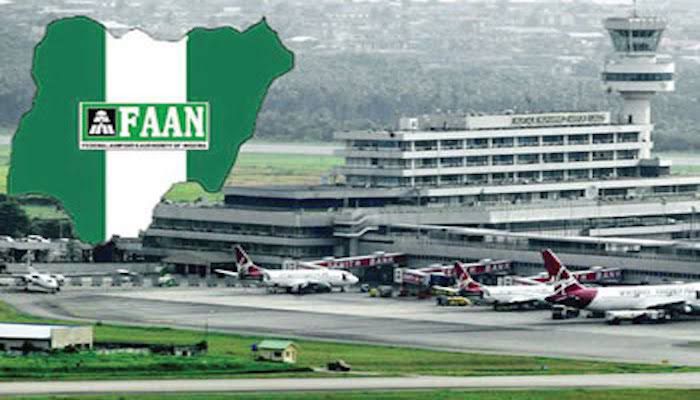
Nigeria’s aviation authorities have begun issuing large volumes of airport access cards to motorists nationwide following the disruption that trailed the implementation of a cashless toll payment system at airport gates.
The Federal Airports Authority of Nigeria (FAAN) confirmed that more than 100,000 airport access cards have already been distributed to drivers as the agency attempts to stabilise operations and prepare for the eventual reintroduction of the digital toll payment policy.
The development comes days after the Federal Government temporarily suspended the enforcement of the policy following widespread traffic congestion and passenger frustration at major airports.
FAAN issues 100,000 airport access cards after tollgate chaos
The Managing Director of FAAN, Olubunmi Kuku, disclosed that the number of airport access cards issued surged significantly within a short period, particularly after the initial disruption caused by the enforcement of the cashless toll policy.
According to her, about 62,000 airport access cards were registered within three days of the policy’s rollout, indicating a sharp increase in demand from motorists seeking uninterrupted access to airport facilities.
The policy, which officially commenced on March 1, was designed to eliminate physical cash transactions at airport tollgates and replace them with an electronic payment system using pre-issued access cards.
However, the sudden enforcement of the system led to severe traffic gridlock at entry points in major airports, particularly in Lagos and Abuja. Long queues of vehicles formed at toll plazas as many motorists arrived without the required cards.
Passengers attempting to catch domestic and international flights were forced to abandon vehicles or trek into terminals due to the traffic congestion.
FAAN officials acknowledged that despite several awareness campaigns prior to the rollout, a significant number of airport users underestimated the seriousness of the enforcement.
Kuku explained that the authority had started registering users months before the policy took effect but many motorists only rushed to obtain the airport access cards after the enforcement began.
She noted that the sudden influx of motorists seeking registration created pressure on the system, even though the agency had anticipated a gradual adoption.
Tinubu orders temporary suspension of toll payments
The disruption prompted swift intervention from President Bola Tinubu, who directed that airport tollgates be opened temporarily to allow motorists free passage.
The decision followed reports that passengers were missing flights due to the gridlock created by the new payment system.
Following the directive, toll collection officials withdrew from airport entry points, and barriers were opened to allow vehicles to move freely. Several motorists confirmed that traffic around the airport gates has improved significantly since the toll suspension.
One frequent airport user who identified himself as Idris said he had been entering the airport premises for several days without paying any toll.
He said, “For the past five days I have been passing through the airport gate without seeing any official collecting money. The barricades are open and vehicles are moving freely.”
Eyewitnesses also reported that the absence of toll officials led to smoother traffic flow, which contrasted sharply with the chaotic scenes witnessed when the policy was first introduced.
Government reviewing digital toll system
The Minister of Aviation and Aerospace Development, Festus Keyamo, confirmed that the Federal Government has temporarily halted the cashless toll enforcement while authorities review the operational challenges that emerged during its rollout.
According to him, the President acted quickly after receiving reports of hardship experienced by airport users.
Keyamo said the directive was issued primarily to protect the welfare of passengers who were struggling to access airport terminals due to traffic congestion.
He explained that the government has asked FAAN to revert to the previous payment arrangement while officials develop a more efficient digital solution.
The aviation ministry is expected to redesign the operational framework for the cashless toll system to prevent a repeat of the earlier disruptions.
Cashless policy still part of long-term plan
Despite the temporary suspension, aviation authorities insist that the electronic toll system remains a key component of the government’s modernisation strategy for airport infrastructure.
Industry analysts say digital toll payments are expected to improve transparency, eliminate cash leakages, and enhance traffic management within airport premises.
They also note that many international airports already operate similar electronic access systems for vehicles entering restricted zones.
However, experts believe the Nigerian rollout must be supported with better public awareness campaigns and expanded registration centres to ensure that airport users obtain the necessary access cards before enforcement resumes.
For now, FAAN continues to process applications and distribute airport access cards nationwide, with officials hoping that increased adoption will ensure a smoother transition once the digital toll system is fully reinstated.
As Nigeria’s aviation sector pushes forward with reforms aimed at improving efficiency and passenger experience, authorities say careful planning and stakeholder engagement will be critical to avoid disruptions that could undermine confidence in the country’s airport operations.
Damilola Bayonle is a business journalist at iReport247News, focused on financial news, economic trends, and market developments. She delivers insightful analysis on business activities, entrepreneurship, and economic policies affecting individuals and organisations. With a strong interest in growth and innovation, Damilola aims to simplify complex financial topics and provide readers with practical understanding of the business world.