UK fighter jets to Middle East -The United Kingdom is increasing its military presence in the Middle East as the conflict involving Iran intensifies, with Prime Minister Keir Starmer announcing the deployment of additional fighter jets to Qatar.
While resisting direct involvement in the ongoing Iran-US war, Starmer emphasized that the longstanding “special relationship” between the UK and the United States continues to operate effectively despite criticisms from former US President Donald Trump.
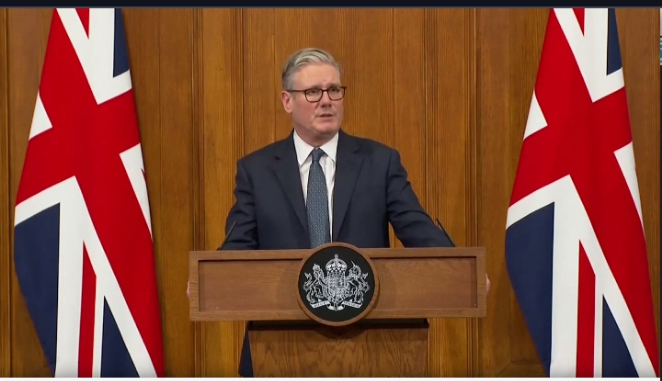
Speaking at a press conference, Starmer detailed the UK’s defensive measures: “I can announce today that we’re sending four additional Typhoon jets to join our squadron in Qatar to strengthen our defensive operations in Qatar and across the region.
Wildcat helicopters with anti-drone capabilities are arriving in Cyprus tomorrow.” The statement underscores London’s commitment to protecting allies in the region while avoiding escalation into active conflict.
Despite the increased military support, the Prime Minister firmly rejected pressure to commit the UK directly to the Iran-US confrontation. Trump, critical of Starmer’s cautious stance, had publicly branded the UK leader “no Churchill,” implying that he would have stood more firmly alongside Washington in confronting Tehran.
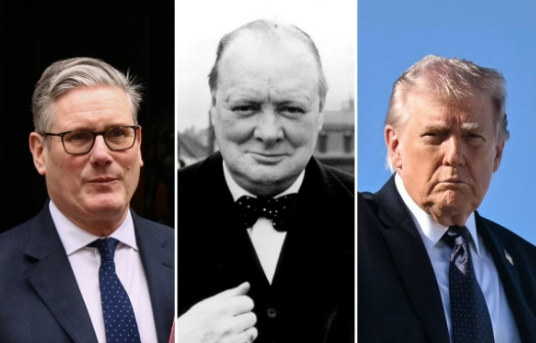
Starmer responded by asserting the UK’s sovereignty in decision-making: “It’s for me as the British prime minister to take decisions that I consider to be in the best interest of the United Kingdom. There’s nothing controversial about that. The special relationship is operating right here at an important point.”
The UK’s enhanced military deployment follows a surge of regional tensions, including drone attacks on Cyprus and escalating missile strikes in Gulf nations.
Defence Secretary John Healey met his Cypriot counterpart to coordinate response strategies and reinforce stability. Starmer described these actions as vital to safeguarding UK personnel and interests in the region while highlighting a careful balance between support for allies and independent policymaking.
In addition to the fighter jet deployment, the UK has begun large-scale evacuation operations for citizens in the Middle East. The first UK chartered evacuation flight departed Oman after an overnight delay due to passenger boarding issues.
Starmer stressed the scale of the effort: “We will lay on additional charter flights in the coming days. British Airways is putting on daily flights from Oman, and we will keep working with all of our partners to increase the speed and capacity of this airlift. It’s one of the biggest operations of its kind, many times bigger than the evacuation from Afghanistan.”
The operation comes amid mounting concern over the duration and intensity of the Middle East crisis. British Foreign Office minister Hamish Falconer warned that the situation could last weeks, possibly months, signaling a protracted period of instability.
The UK government has already registered more than 140,000 Britons in the Middle East, demonstrating the scale of coordination required to ensure citizen safety.
Energy security has also become a focal point amid the conflict, with disruptions to shipping in the Strait of Hormuz, a vital artery for global oil and liquefied natural gas (LNG) transport.
UK Energy Secretary Ed Miliband reassured the public that Britain’s energy supply remains robust despite international tensions, emphasizing the importance of green energy expansion to reduce reliance on fossil fuel imports.
“Half of the recessions of the last 50 years can be attributed to fossil fuel price crises,” Miliband noted, underlining the strategic need for a resilient, domestic energy framework.
Starmer’s handling of the so-called “special relationship” with the United States has drawn intense scrutiny. He insisted that the partnership is fully operational, noting that intelligence-sharing continues around the clock and that UK forces are actively supporting US operations from joint bases.
“We are working together in the region, the US and the British, working together to protect both the US and the British in joint bases where we’re jointly located, and we’re sharing intelligence on 24/7 basis in the usual way. That is the special relationship. That is a special relationship in operation,” Starmer said.
The Prime Minister also provided a detailed timeline regarding the US request to use British bases, clarifying that no formal request was received until Saturday afternoon.
A unanimous ministerial decision was reached the following day to approve the action, highlighting the methodical approach the UK has taken in navigating the complex dynamics of the conflict.
Meanwhile, ordinary citizens have faced extraordinary challenges due to the rapidly deteriorating security environment. One British couple reportedly paid £1,500 to travel across the Middle East in a so-called “disco bus” to board a flight from Oman to London.
Their journey illustrates the urgency and logistical difficulties of civilian evacuation in the face of war. Such accounts highlight the human impact of geopolitical conflicts and underscore the UK government’s responsibility to protect its nationals abroad.
In the wider strategic context, analysts have questioned the implications of the UK’s restrained engagement compared to US and Israeli actions in the region, including the targeted killing of Iran’s Supreme Leader Ali Khamenei.
While the offensive has reshaped the regional power landscape, Starmer’s measured approach signals a prioritization of defensive operations over offensive intervention, reflecting both domestic political calculations and broader diplomatic considerations.
Former US President Donald Trump’s critiques, including references to Winston Churchill, have fueled debate about historical comparisons and the proper role of the UK in transatlantic military engagements.
While Trump argued that Churchill would have supported immediate confrontation, historians note that Churchill’s legacy is more nuanced, balancing military readiness with strategic diplomacy.
Starmer’s careful calibration appears informed by such considerations, aiming to protect UK interests while sustaining alliance commitments.
Looking forward, the UK government has committed to ongoing monitoring and flexible responses as the Middle East situation evolves. Additional charter flights from Oman are scheduled, and military assets in Qatar and Cyprus will continue to bolster regional security.
These steps demonstrate the UK’s capacity to operate simultaneously in diplomatic, humanitarian, and defensive arenas.
Starmer’s approach has received a mixed reception domestically.
Critics argue that the UK’s measured stance risks undermining alliance solidarity, while supporters praise the focus on national interest, citizen protection, and measured military engagement.
Ultimately, the Prime Minister has positioned the UK as a responsible, capable actor in a rapidly shifting global crisis, emphasizing that strategic caution does not equate to inaction.
Keir Starmer’s decision to deploy additional UK fighter jets to Qatar while resisting pressure to join the Iran-US war underscores a nuanced approach to international security.
By balancing alliance obligations with national sovereignty, ensuring citizen evacuation, and maintaining robust intelligence-sharing, the UK continues to assert influence in the Middle East without escalating into direct conflict.
This strategy, grounded in careful planning and operational readiness, reinforces the UK’s commitment to both global stability and the protection of its citizens abroad.
Read also: ‘Save some for Putin’: Trump using up all his missiles on Iran risks leaving Ukraine short against Putin- Zelensky