The European Union is considering a bold move to fortify its skies with an EU drone wall, aiming to counter repeated Russian drone incursions and bolster European airspace security.
The proposal is part of the broader European Drone Defence Initiative, envisioned to integrate advanced detection, tracking, and neutralisation systems across the bloc. The plan seeks full operational capacity by 2027.
European Commission President Ursula von der Leyen emphasized the urgent need for action, stating Europe must “secure our eastern flank” after reports of more than 20 Russian drones entering Polish airspace.
Von der Leyen’s remarks came amid growing concerns among EU capitals regarding escalating Russian drone incursions into NATO and EU member states, which have heightened tensions on the continent.

The draft roadmap calls for initial operational capacity of anti-drone systems by the end of 2026, with full deployment across key member states by late 2027.
Once finalized, the initiative will be presented to EU foreign affairs chief Kaja Kallas, European Commission Executive Vice President for Security Henna Virkkunen, and Defence Commissioner Andrius Kubilius for approval.
The EU drone wall concept initially emerged as a protective measure against sporadic aerial threats, but it has evolved into a comprehensive continental defence network with political backing from Brussels.
In recent weeks, incidents were reported in Poland, Denmark, Estonia, and Germany, involving drones suspected to originate from Russian territory, although Kremlin involvement has not been conclusively verified.
Russia’s federal security service has accused NATO intelligence services of orchestrating the alleged incursions, claiming the EU nations are fabricating incidents to provoke tensions.
For NATO, the challenge of countering inexpensive, agile drones has exposed gaps in integrated air defence, prompting the alliance to accelerate testing of systems on its eastern flank.
“NATO is now trialing integrated solutions to detect, track, and neutralise aerial threats,” Secretary-General Mark Rutte said, underscoring the need to adapt quickly to evolving Russian drone tactics.
Ukraine has repeatedly asserted that Russia’s cross-border incursions are deliberate, aimed at testing Western resolve and expanding the conflict beyond its borders, according to Foreign Minister Andrii Sybiha.
“Putin continues to escalate and expand his war while probing Western security responses,” Sybiha told European media after drones violated Polish airspace, reflecting Kyiv’s growing unease with regional stability.
Experts in drone warfare caution that some of the incursions might not have been intentional, citing possible navigation errors or technical malfunctions, highlighting the complexity of attributing responsibility.
The European Drone Defence Initiative is also seen as a strategic move to complement NATO operations rather than duplicate them, emphasizing European autonomy in airspace security, officials say.
“We are not duplicating NATO’s work,” Kallas stressed. “The initiative is designed to complement alliance efforts and provide additional protection for European airspace against emerging threats.”
Several EU member states have expressed cautious optimism about the plan but worry it could strain relations with NATO, especially regarding coordination and intelligence sharing in the event of cross-border drone activity.
The EU drone wall is envisioned to integrate radars, electronic warfare capabilities, and rapid-response intercept drones, forming a multi-layered system capable of neutralising threats in real-time.
The initiative also includes research and development projects for artificial intelligence-assisted threat detection, ensuring that European airspace security adapts to increasingly sophisticated Russian drone technology.
For member states like Poland and Estonia, which have been frontline targets of drone incursions, the project represents a tangible step toward deterring violations and strengthening their eastern borders.
In addition to protecting critical infrastructure, airports, and military installations, the EU drone wall will serve as a political signal to Moscow, demonstrating the bloc’s commitment to collective security.
As the Russia-Ukraine war stretches into its fourth year, the European Union is increasingly aware that defence innovation, including drone countermeasures, will play a central role in maintaining regional stability.
The EU’s plans coincide with ongoing diplomatic efforts to rally support for Ukraine and deter further escalations, particularly in countries directly threatened by cross-border drone activity.
While full deployment is scheduled for 2027, interim measures, including mobile anti-drone units and coordinated intelligence sharing, are being fast-tracked to counter immediate threats in vulnerable regions.
Some analysts warn that Russia may respond by testing the system, potentially increasing the frequency of drone flights or experimenting with electronic countermeasures to bypass detection.
Despite uncertainties, European officials argue that investing in drone defence infrastructure is essential, noting that the cost of inaction far outweighs the financial and logistical effort required for deployment.
The EU drone wall may also set a precedent globally, showcasing how regional blocs can collectively develop technological solutions to emerging aerial threats without depending solely on alliance frameworks.
Member states have begun consultations on funding, technology transfers, and joint exercises to ensure interoperability, as Brussels seeks to avoid duplication and maximise efficiency within the European Drone Defence Initiative.
Public opinion in the EU remains broadly supportive of measures that enhance national and regional security, though debates continue over sovereignty, defence spending, and potential escalation with Moscow.
Meanwhile, NATO continues to bolster its eastern flank, with joint exercises and new rapid deployment forces being tested to complement the EU’s emerging anti-drone capabilities.
Analysts say the success of the EU drone wall will depend on speed, coordination, and technological integration, as well as political will from member states with varying levels of defence capacity.
Brussels maintains that the initiative will be transparent and cooperative, working in concert with NATO while allowing the European Union to exercise strategic autonomy in matters of airspace security.
The initiative reflects a growing trend in European defence policy: anticipating threats, investing in technology, and responding proactively to Russia’s increasingly sophisticated use of unmanned aerial vehicles.
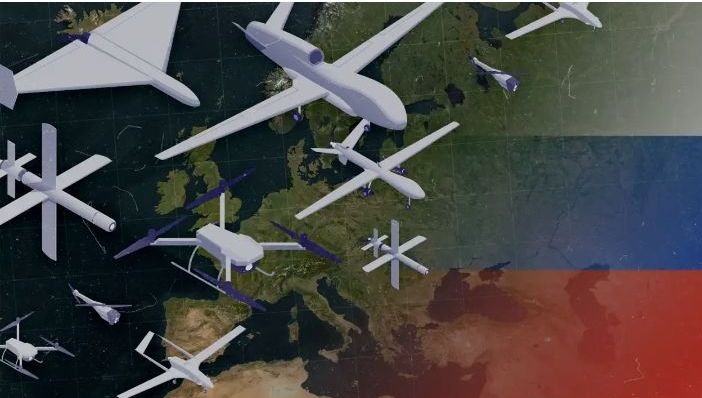
Experts say the EU drone wall could become a blueprint for other regions facing similar threats, with lessons learned in Europe potentially guiding drone defence strategies worldwide.
With geopolitical tensions high and Russian incursions ongoing, the European Union’s plan for a drone wall marks a significant step in adapting to modern warfare and securing the skies above its member states.