The Federal High Court in Ibadan has delivered a decisive ruling protecting the autonomy and governance of the prominent cultural group, Egbe Omo Ogbomoso Paraapo Agbaye.
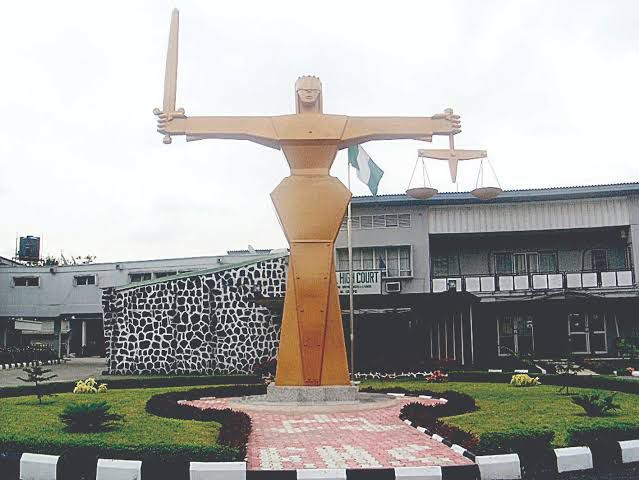
The judgment mandates that the association operate unhindered, ensuring that its constitutionally recognized leadership is respected.
The legal dispute arose in September 2025 when the Soun of Ogbomoso, Oba Ghandi Olaoye, announced the dissolution of the association’s executive committee.
Following this announcement, the monarch appointed Prof. Josiah Ajiboye as acting president to head a caretaker committee, pending the election of a substantive executive.
This move immediately triggered controversy, as members of the association contended that the Soun did not have the authority to interfere in their internal affairs.
Challenging the monarch’s decision, the association’s acting president, Alhaji Yusuf Adetayo, along with Mr. Tolani Balogun and Alhaji Bukola Badmus, filed a suit against Oba Olaoye, Prof. Ajiboye, and the association’s registered trustees.
The claimants sought to restrain the Soun from dissolving the executive committee or imposing new leadership structures, arguing that Egbe Omo Ogbomoso Paraapo Agbaye is a legally registered body under the Corporate Affairs Commission (CAC) and governed by its own constitution.
The applicants emphasized that the caretaker committee had no legal right to displace the acting executive or conduct elections that would undermine the association’s constitutionally installed leadership.
“The Soun cannot unilaterally remove elected leaders of a constitutionally recognized association,” their lawyers argued before the court.
During proceedings on Wednesday, counsel to the claimants, I.N. Obasan, informed the court that the parties had reached an out-of-court settlement.
Obasan explained that although the case was scheduled for hearing, the parties had agreed to terms of settlement on January 28, 2026, which were subsequently filed with the court. She urged the court to adopt these terms as the final judgment.
Counsel for the second and third defendants, O.K. Abimbola, confirmed Obasan’s submission, stating that all parties consented to the adoption of the settlement terms as binding.
In her ruling, Justice N.E. Maha formally adopted the settlement as the final judgment of the court, directing that no party interfere with Egbe Omo Ogbomoso Paraapo Agbaye or its constitutionally recognized leadership.
The judge’s ruling underscores the legal independence of cultural and community associations, particularly those registered with CAC.
By affirming that the association’s constitution must be respected, the court highlighted the importance of protecting internal governance structures from external interference, even by traditional authorities.
Egbe Omo Ogbomoso Paraapo Agbaye, which has played a significant role in cultural preservation, community development, and advocacy for Ogbomoso indigenes, can now continue its operations without fear of disruption.
The association’s leadership, led by Alhaji Yusuf Adetayo, welcomed the judgment, describing it as a “landmark decision for the autonomy of registered community associations.”
The court also ruled that all parties bear their respective costs.
Legal observers have noted that the decision may set a precedent for future disputes involving traditional rulers and legally registered cultural associations, reinforcing the principle that constitutions of associations take precedence over external interventions.
This case has brought renewed attention to the delicate balance between traditional authority and legally recognized associations in Nigeria.
While traditional rulers hold significant cultural influence, the judgment reinforces that such influence does not extend to violating the rights and independence of registered bodies like Egbe Omo Ogbomoso Paraapo Agbaye.
Ireport247news
About The Author