

Nigeria’s foreign exchange market maintained a relatively stable outlook on Wednesday, December 10, 2025, with both official and parallel market indicators reflecting improved liquidity and reduced volatility.
The movement comes as investors, importers, and currency traders continue to assess the impact of the Central Bank of Nigeria’s (CBN) sweeping reforms in the Bureau de Change (BDC) segment.
Data from the Nigerian Foreign Exchange Market (NFEM) shows the Dollar to Naira exchange rate today stabilising at ₦1,452.16/$1 in early trading, representing a marginal depreciation of less than 0.1% from the opening figure of ₦1,451.30/$1.
Trading patterns over the past seven days confirm that the Naira has remained within a narrow range, signalling deeper market confidence following months of turbulence in the FX landscape.
CBN Measures Underpin Stability in the Dollar to Naira Exchange Rate Today
Analysts say the relative calm in the official market is directly linked to the apex bank’s recent overhaul of the BDC sector.
Under the new regulatory structure, only 82 BDC operators received final approval to function under redefined Tier-1 and Tier-2 licensing categories requiring ₦2 billion and ₦500 million capital respectively. More than 4,000 licences were revoked or left pending for non-compliance.
The Central Bank argues that the restructuring is intended to sanitise the market, eliminate round-tripping, increase transparency, and align the operations of BDCs with global best practices.
Market insiders describe the reforms as “the boldest BDC clean-up in more than a decade,” crediting them for narrowing the once-wide gap between the official and parallel market rates.
At the official window, the week’s trading chart shows a high of ₦1,457.00 and a low of ₦1,450.25, marking one of the most stable stretches since July.
On Monday, December 8, the Naira closed at ₦1,454.00, further reinforcing the perception that the currency’s downward slide is now moderating.
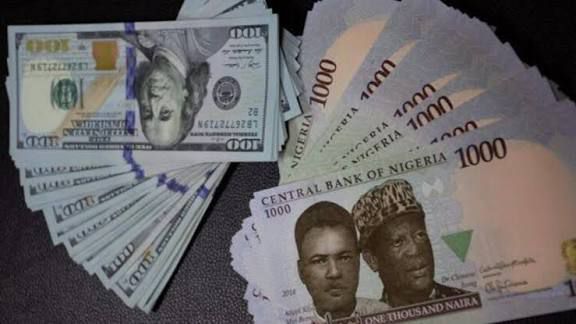
Parallel Market Mirrors Official Trends as Dollar to Naira Exchange Rate Today Shows Convergence
In the parallel market, the Dollar to Naira exchange rate today hovered between ₦1,460 and ₦1,478, depending on location and transaction volume.
The spread with the official rate has now narrowed to less than ₦30, a milestone that dealers attribute to the CBN’s targeted clampdown on speculative trading.
Lagos-based traders say that the past two weeks have seen fewer abrupt price jumps, adding that the market’s “fear premium” has reduced significantly since the announcement of the new BDC capital requirements.
Abuja traders also report improved liquidity, though noting that seasonal pressures may push up demand in the coming days as businesses prepare for year-end imports.
The stabilisation trend is already influencing inventory planning for import-dependent firms, many of whom struggled with unpredictable exchange rates earlier in the year.
Euro, Pound, and Canadian Dollar Update as FX Stability Extends Beyond the USD
With Nigeria increasingly engaging in multi-currency trade settlements, more attention is being paid to other major global currencies.
Updated rates from both official and parallel market monitors show the following benchmark prices:
Official Market (NFEM):
Euro to Naira: ~₦1,557/€1
Pound to Naira: ~₦1,831/£1
Canadian Dollar to Naira: ~₦1,095/CAD$1
Parallel Market:
Euro to Naira: ₦1,568–₦1,588
Pound to Naira: ₦1,845–₦1,865
Canadian Dollar to Naira: ₦1,110–₦1,135
These rates reinforce the broader trend of moderated volatility across major currency pairs, further emphasising the stabilising influence of current CBN reforms.
Outlook: Dollar to Naira Exchange Rate Today Expected to Maintain Narrow Band
FX traders forecast that the Dollar to Naira exchange rate today will remain within the ₦1,450–₦1,480 range through the end of the week.
However, they maintain a cautious tone, citing global oil price fluctuations, foreign portfolio inflows, and Nigeria’s external reserve levels as key risk factors.
The most critical question for analysts remains whether the FX stability is sustainable or simply a temporary reaction to the regulatory shake-up.
Some economists argue that the real test will come in early January when seasonal liquidity tightens and government FX demand picks up with new fiscal year disbursements.
Still, the consensus is that reduced volatility—rather than immediate appreciation—is the most realistic near-term objective for the Naira.
About The Author


