The doctors strike across England has entered its most disruptive phase yet, crippling hospital services and exposing deep fissures between medical unions and the government’s negotiating stance.
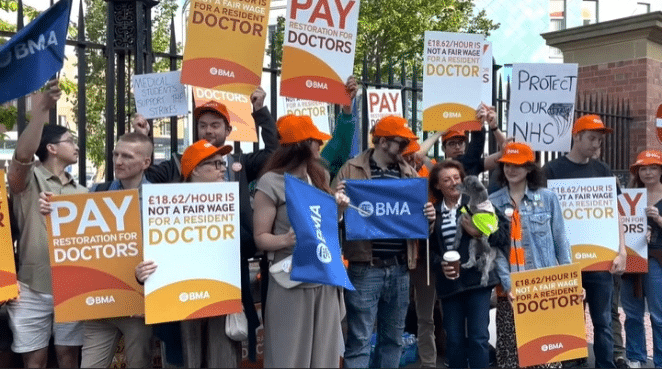
Tens of thousands of consultants and junior doctors have walked out, protesting what unions call “chronic underpayment and disregard,” leaving critical care services strained to near-breaking point.
Operating theatres have gone silent, outpatient appointments cancelled, and thousands of patients rescheduled indefinitely — the doctors strike now resembles the most severe health labour standoff in recent British history.
Hospital trusts are struggling to maintain emergency operations, with temporary staff and volunteers covering essential wards. “We are stretched to the limit,” said one NHS trust leader Thursday.
Health Secretary Wes Streeting insists the government remains open to “constructive dialogue,” yet no fresh negotiations have been scheduled since talks collapsed earlier this month.
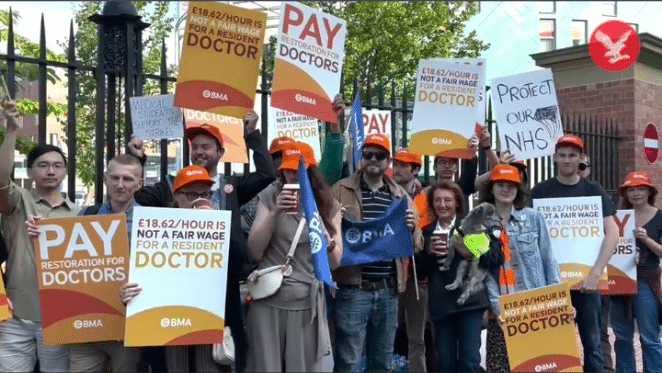
Union leaders accuse ministers of “weaponising fatigue” to break medical resolve, arguing that the government deliberately delays talks hoping doctors will “return defeated.” The doctors strike continues regardless.
A joint statement from the British Medical Association (BMA) and Hospital Consultants Association described morale as “defiant but exhausted,” urging members to “hold the line” despite growing financial strain.
Meanwhile, NHS England reports more than one million cancelled appointments since the doctors strike began, with waiting lists expanding to record levels and patients facing indefinite delays for elective surgery.
Public frustration is rising sharply. Polls show majority sympathy for doctors but declining patience over prolonged disruptions. “We support them, but this can’t go on forever,” one patient told the BBC.
Prime Minister Keir Starmer has called for “mutual restraint and responsible dialogue,” though critics say his administration appears paralysed by the scale of the health sector’s internal revolt.
The doctors strike has spotlighted chronic issues long ignored — stagnating pay scales, burnout, and workforce shortages — all worsened by post-pandemic exhaustion and inflationary pressure on public salaries.
According to the BMA, junior doctors’ pay has fallen 26% in real terms since 2008. Consultants echo similar grievances, citing “erosion of respect” for their expertise and mounting bureaucratic control.
Government figures contest these claims, noting recent pay rises averaging 6% across healthcare roles. But doctors argue the offer barely touches years of systemic underfunding and wage suppression.
Health economists warn that the doctors strike could drain the NHS of its most skilled workers as many seek private or overseas employment, worsening an already dire staffing shortage.
A report by the Institute for Fiscal Studies revealed that over 10,000 UK doctors applied for foreign work permits in the past two years alone — a sign of deepening disillusionment.
“The NHS is bleeding talent,” said Professor Anita Patel, a healthcare policy expert at King’s College London. “This strike isn’t just about pay — it’s a cry for survival.”
In response, the government announced contingency plans deploying military medics to key hospitals. Critics labelled the move “cosmetic,” arguing it does little to resolve the doctors strike’s core causes.
Streeting defended the measure, claiming it ensured “minimum patient safety” during industrial action. Yet union leaders say such steps only harden their determination to demand a “fair and lasting settlement.”
The doctors strike has triggered ripple effects across the wider NHS workforce. Nurses, paramedics, and technicians — though not striking — express solidarity, warning that morale across hospitals has plummeted.
Labour unions representing other public service sectors are watching closely. “If doctors can’t be heard, what hope is there for teachers or civil servants?” said TUC General Secretary Paul Nowak.
The Royal College of Physicians described the situation as “a moral emergency,” stressing that no health system can sustain itself while alienating its most vital professionals.
Streeting insists progress can only come through “fiscal realism.” He argues the government must balance fair pay demands against tight public finances strained by economic uncertainty.
But critics contend that austerity politics is no longer tenable. “You cannot balance the books on the backs of exhausted doctors,” said Dr. Vishal Dutta, a striking junior doctor in Birmingham.
The doctors strike has also sparked fierce debate in Parliament, dividing even ruling party MPs, some of whom urge the government to “cut its losses” and negotiate before winter pressure mounts.
Conservative backbencher Sir Robert Buckland warned, “The NHS will crumble if ideological rigidity prevents compromise. Patients are already paying the price of political arrogance.”
Behind the scenes, Treasury officials fear the strike’s economic toll. Lost productivity and treatment delays could cost billions, compounding inflationary effects from reduced workforce participation.

According to NHS Confederation estimates, the doctors strike may have already cost over £1 billion in rescheduled operations, overtime pay, and logistical disruptions across England’s health networks.
Private hospitals, meanwhile, are witnessing a sharp surge in patient inquiries. Industry insiders call it “the outsourcing of desperation” — proof of growing inequality in healthcare access.
As winter looms, NHS leaders warn the health service faces “the most dangerous season in living memory.” Emergency admissions are expected to rise, with reduced staff capacity compounding the crisis.
The doctors strike has evolved beyond a pay dispute into a national reckoning over Britain’s healthcare model — its values, funding, and the respect owed to its frontline workers.
“Doctors are not machines,” said BMA co-chair Dr. Emma Runswick. “We are asking for dignity, not luxury. Fair pay means fair care.” Her words now echo through hospitals nationwide.
Even senior hospital executives, once cautious to criticise government policy, increasingly voice concern. “We are on the edge of systemic failure,” admitted one anonymous NHS director in Manchester.
In response, patient advocacy groups urge mediation. Healthwatch England called for “an independent arbitration process” to break the deadlock and restore patient trust amid deepening doctors strike fatigue.
Analysts say the strike’s political cost could reshape future elections. Voters cite healthcare as their top concern, with many blaming government inaction for a preventable crisis.
The doctors strike has become a defining test of leadership — not just for Streeting, but for the entire British political establishment tasked with rescuing a collapsing health infrastructure.
“History will judge whether we saved or sacrificed the NHS,” warned Dr. Julian Hart, a retired consultant. “This isn’t merely industrial action. It’s a moral confrontation.”
International observers, including the World Health Organization, have voiced alarm over Britain’s deteriorating healthcare stability, citing the doctors strike as emblematic of global health workforce unrest.
Comparative studies show similar discontent across Europe, but Britain’s uniquely prolonged dispute underscores deeper governance and policy failures within the NHS’s post-pandemic recovery framework.
For now, both sides remain locked in stalemate. Each passing day of the doctors strike deepens public anxiety and chips away at trust in the nation’s healthcare future.
Unless compromise emerges soon, analysts warn Britain could face a prolonged healthcare paralysis — one that redefines public faith in the NHS’s once unshakable promise.
About The Author