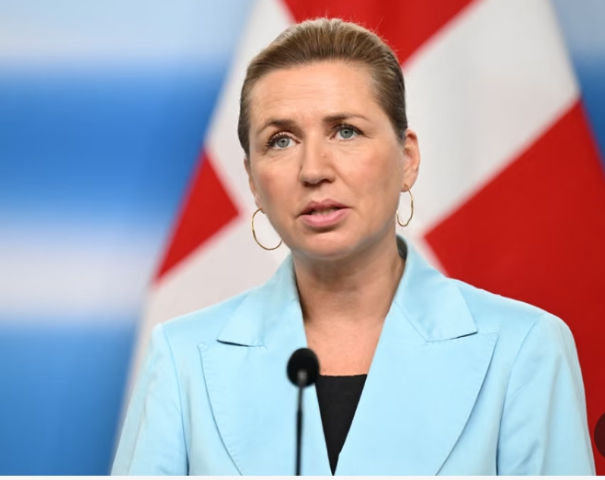
Denmark snap election has been called by Prime Minister Mette Frederiksen, setting the country on course for a general vote on 24 March amid shifting political winds and renewed geopolitical tension.
Speaking with urgency, Frederiksen framed the contest as a defining moment, insisting that “Denmark and Europe must stand in their own right,” while vowing to protect the future of the Danish commonwealth and its strategic territories.
The Denmark snap election comes as Frederiksen unveils a proposal for a new wealth tax, aimed at strengthening public schools and safeguarding welfare provisions.
Read also:‘Paedo Defenders Party’: Kemi Badenoch refuses to apologise at PMQs
The prime minister argued that extraordinary times require “extraordinary responsibility,” saying the tax would ensure that society’s strongest shoulders carry more of the burden. Her message, sharpened by international uncertainty, seeks to project stability while reasserting Denmark’s social democratic values.
Political analysts note that the Denmark snap election has been triggered at a moment of renewed confidence for Frederiksen, who is reportedly benefiting from a so-called “Greenland bounce” in opinion polls.
This rebound follows her assertive response to diplomatic pressure from the United States, particularly after repeated remarks by Donald Trump suggesting Greenland’s strategic value should be reconsidered under American control.
Frederiksen’s firm rejection of any external claims over Greenland resonated strongly with Danish voters, many of whom view the Arctic territory as central to national sovereignty and identity.
The prime minister stressed that Greenland is “not for sale,” a line that has since become emblematic of her leadership during the crisis. Observers say this stance helped reverse damage from earlier local election losses, including her party’s historic defeat in Copenhagen.
The Denmark snap election is also being cast as a broader referendum on Europe’s future role in global affairs. Frederiksen warned that Europe can no longer rely on others for security guarantees, arguing that unity within the European continent is essential in an era of shifting alliances.
She pledged to work closely with partners while ensuring Denmark maintains an independent and credible defence posture.
Greenland has emerged as a central theme of the campaign, not only because of its strategic importance but also due to its place within the Danish commonwealth.
Frederiksen promised continued investment in Greenlandic infrastructure and greater respect for local governance, describing the relationship as one that must be built on “mutual trust, not convenience.”
Analysts say this messaging is designed to reassure both Greenlanders and Danish voters concerned about international pressure.
Critics of the Denmark snap election accuse the prime minister of opportunism, arguing that she is capitalising on a temporary polling boost rather than addressing unresolved domestic issues.
Opposition figures claim that the wealth tax proposal lacks clarity and warn it could discourage investment. Frederiksen dismissed such claims, saying leadership means “acting when the moment demands it, not waiting for perfect conditions.”
Despite the controversy, early polling suggests the Denmark snap election could favour the governing Social Democrats, particularly if the Greenland issue remains prominent. Voters appear divided but attentive, with many acknowledging the gravity of the international context.
As Frederiksen concluded her announcement, she told reporters that the election is about “securing Denmark’s future in an uncertain world.”
With campaigning set to intensify, the Denmark snap election now stands as one of the most consequential political tests in recent years, blending domestic reform, Arctic geopolitics and Europe’s strategic direction into a single decisive vote.