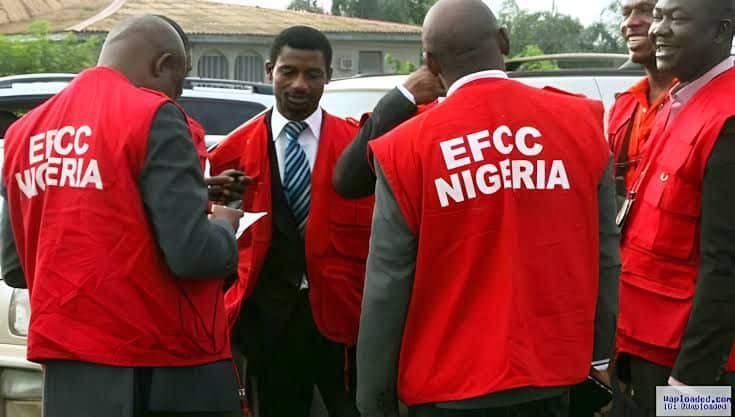
Kaduna High Court adjourns Polycarp Andrew EFCC trial over ₦22 million theft. Case now resumes Dec 11 as defence seeks more time to prepare.
The Polycarp Andrew EFCC trial has been adjourned by the Kaduna State High Court to December 11, 2025, after defence counsel requested more time to prepare.
Justice A. Bello, who presided over Wednesday’s hearing, carefully considered arguments from both the prosecution and defence before granting the adjournment.
The case has attracted significant attention because the defendant, Polycarp Andrew, a former staff member of the Economic and Financial Crimes Commission (EFCC), is accused of allegedly misappropriating ₦22 million while serving as exhibit keeper at the Kaduna Zonal Directorate of the commission.
At the start of proceedings, H.M. Mohammed, representing the EFCC, informed the court that two witnesses were ready to testify: an EFCC officer familiar with exhibit records and an official from Opay Bank. Mohammed emphasized that the prosecution was prepared to proceed without delay.
However, D.B. Kwajafa, representing Andrew, stated he was not ready for trial. He explained that his client had only recently been served with a flash drive containing a video recording of his extra-judicial statement during arrest.
Kwajafa argued that reviewing the recording was essential to preparing a proper defence and requested an adjournment.
EFCC counsel Mohammed countered, stating that the video was not immediately relevant at this stage of the trial. He urged the court to allow proceedings to continue as scheduled.
After hearing both sides, Justice Bello granted the adjournment to December 11, 2025, allowing the defence adequate time to prepare while ensuring the prosecution’s right to present evidence is preserved.
The Polycarp Andrew EFCC trial arises from incidents earlier this year. Andrew was arraigned on May 5, 2025, on six counts of criminal breach of trust and misappropriation of funds. During arraignment, he pleaded not guilty to all charges.
Court records indicate that Andrew allegedly diverted over ₦22 million lodged as exhibits at the Kaduna Zonal Directorate of the EFCC.
Investigations reportedly found discrepancies in exhibit records during his tenure as exhibit keeper. Following these findings, Andrew absconded and was later arrested in Taraba State.
The offences fall under the Kaduna State Penal Code (2017), which prescribes penalties for criminal breach of trust, theft, and misconduct by public officers.
Observers note that the Polycarp Andrew EFCC trial has broader implications for internal accountability within anti-corruption agencies. As Nigeria’s premier anti-graft agency, the EFCC’s credibility is tested when former staff are implicated in corruption.
Legal analysts argue that the prosecution must provide clear evidence linking Andrew to the missing funds. Testimony from the EFCC officer and Opay Bank official is expected to clarify the money trail.
The defence’s video recording may also play a key role if admitted at a later stage.
The defence stresses Andrew’s right to a fair trial, emphasizing that sufficient preparation is essential in complex financial cases. Kwajafa’s adjournment request underscores the need to balance the prosecution’s schedule with the defendant’s rights.
Public interest in the Polycarp Andrew EFCC trial remains high due to the substantial amount involved and the former position of the accused.
Many Nigerians are closely monitoring the proceedings as a measure of the EFCC’s commitment to internal accountability.
The EFCC has reiterated that it will recover stolen funds and prosecute any public officer involved in misconduct, regardless of rank.
The agency also indicated that the trial’s outcome will set a precedent for future cases of internal corruption within anti-graft institutions.
As the court prepares to resume the Polycarp Andrew EFCC trial on December 11, attention will focus on witness testimonies and the admissibility of evidence, particularly the defence’s video recording.
The court’s rulings in upcoming sessions could significantly influence the trial’s direction.
Analysts expect the trial to impact EFCC reforms, particularly in exhibit management, auditing procedures, and staff monitoring. Strengthening internal controls is essential to prevent similar incidents and maintain public trust.
The Polycarp Andrew EFCC trial also serves as a test of Nigeria’s judicial system in handling corruption within law enforcement agencies.
It highlights the need to balance fair trial rights with efficient prosecution, especially in high-profile cases involving significant sums.
The December resumption of the trial is expected to draw legal experts, media coverage, and public scrutiny.
The outcome will likely influence both the reputation of the EFCC and the broader fight against corruption in Nigeria.
Finally, the trial sends a warning to staff within anti-graft institutions that misconduct will not be tolerated and underscores the importance of robust internal oversight mechanisms to maintain integrity and public confidence.
More news at ireport247news
About The Author