The Colombia earthquake has killed more than 100 people, injured hundreds and triggered massive rescue operations after the powerful tremor devastated communities across western Colombia on Monday.
The 7.4-magnitude Colombia earthquake struck at a depth of approximately 107 kilometres, according to the United States Geological Survey, becoming the strongest recorded earthquake in Colombia this century.
Colombia’s Geological Service confirmed the extraordinary strength of the tremor, while authorities immediately mobilised emergency agencies as residents searched desperately for relatives trapped inside damaged and collapsed buildings.
President Abelardo De La Espriella declared a national state of emergency, saying the government had deployed its full capabilities to protect lives and assist communities affected by the disaster.
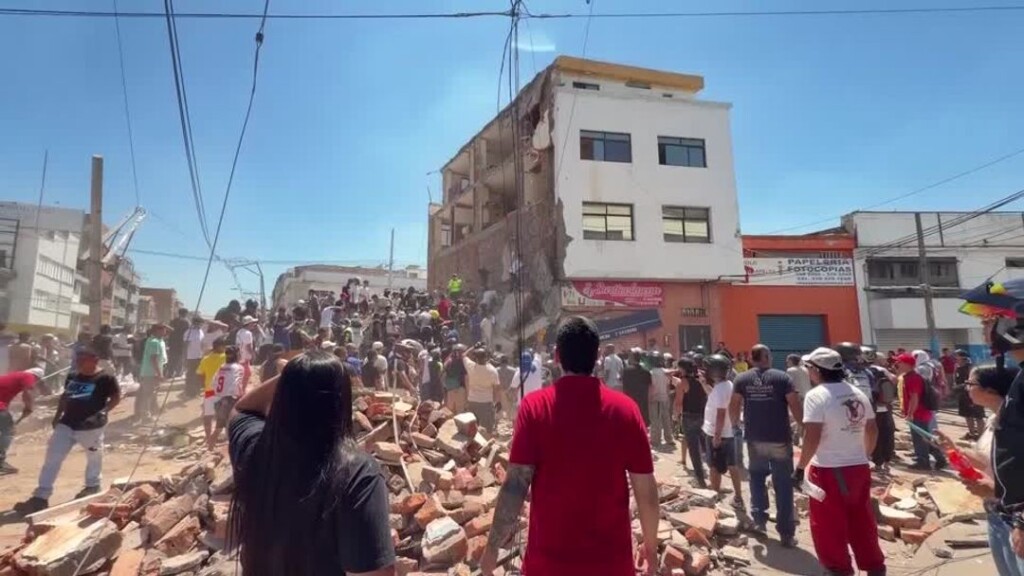
“The first priority is rescuing the people trapped under the rubble,” the president said during a national address, as emergency teams continued searching damaged structures across several cities.
The Colombia earthquake struck only days after De La Espriella assumed office, immediately confronting his new administration with one of the country’s most serious natural disasters in years.
Officials initially placed the national death toll at 111, although local reports later suggested the number could be higher as rescue teams continued searching through collapsed structures.
Valle del Cauca province, home to Cali, reported 35 deaths and approximately 700 injuries, highlighting the scale of devastation caused by the powerful western Colombia earthquake.
Cali was among the worst-affected cities, with residential structures, emergency facilities and other buildings suffering damage while firefighters, police officers and volunteers worked through the rubble.
In Pereira, rescuers searched a collapsed four-storey building after receiving reports that a young boy remained trapped beneath the wreckage of a damaged bakery.
Manizales also suffered significant damage when part of a landmark neo-Gothic cathedral collapsed during the Colombia earthquake, scattering debris across nearby streets and alarming residents.
One of the most emotional rescue efforts took place in Cali, where rescuers reportedly pulled a six-month-old baby and her mother from beneath a collapsed five-storey building.
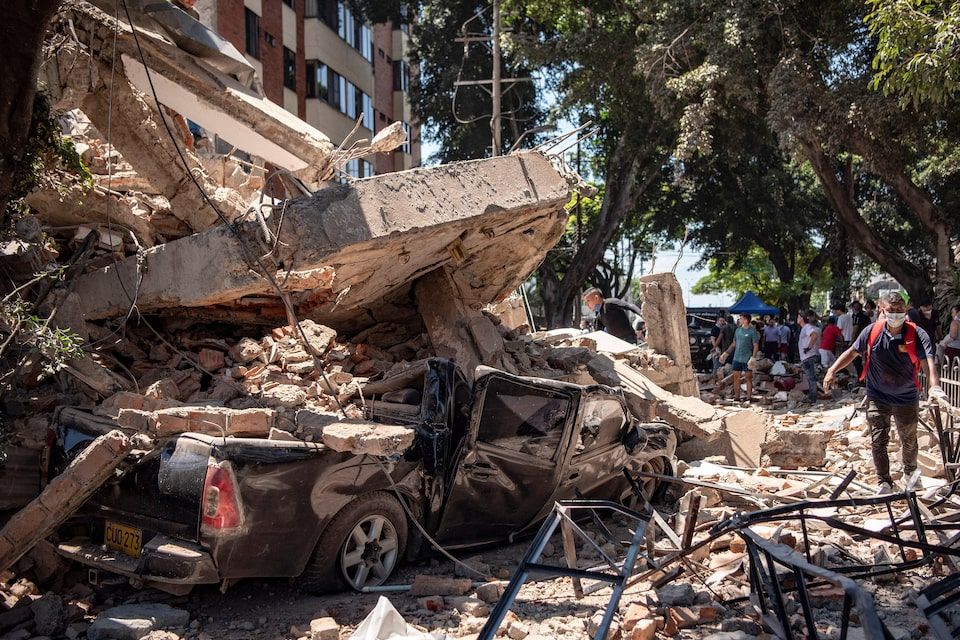
Emergency personnel also rescued residents from a damaged hospital, with footage showing workers helping people escape through windows as authorities assessed the structural safety of affected facilities.
Mauricio Andrade, a Cali firefighter, said his team had already rescued two women and two children from a collapsed structure while preparing to search for additional survivors.
“They are alive,” Andrade said, explaining that rescuers were carefully creating space inside the debris to reach people believed to remain trapped beneath the collapsed building.
The Colombia rescue operation expanded as volunteers joined professional emergency workers, with residents using shovels and other basic equipment to clear debris from damaged structures.
Carmen Yasmin Garcia, a rescue volunteer in Cali, said her group had helped seven people escape from a collapsed building but feared others remained trapped underneath.
“There was scratching,” Garcia said, adding that rescuers still hoped those trapped beneath the structure could be reached despite difficult conditions and the uncertainty surrounding the building’s stability.

Authorities imposed curfews in Cali, Armenia and Manizales following concerns about possible looting, deploying additional police and military personnel to protect vulnerable communities and damaged neighbourhoods.
The Colombia earthquake also disrupted air transportation, forcing aviation authorities to suspend operations at airports in Pereira, Manizales, Quibdo, Armenia, Cartago and Buenaventura pending structural safety inspections.
The government promised additional security personnel for Cali while emergency agencies assessed damage, distributed assistance and worked to locate residents who remained missing after the devastating earthquake.
The 7.4 magnitude earthquake also produced numerous aftershocks, with Colombia’s Geological Service recording 21 tremors by Monday evening and warning residents that further seismic activity remained possible.
Seismologists said the earthquake’s depth did not prevent severe shaking, with its magnitude, inland location and movement along geological faults contributing to significant damage across populated valleys.
Suzan van der Lee, a Northwestern University seismologist, said Colombia’s complex geological setting makes earthquakes particularly challenging to analyse because several major tectonic plates interact beneath and around the country.
Read also: Hormuz deal hopes fade as Trump demands Iran reparations
Colombia lies along the Pacific Ring of Fire, a seismically active zone where earthquakes occur frequently, although most tremors are significantly weaker than Monday’s devastating event.
The Colombia earthquake revived painful memories of the 1999 disaster in Colombia’s coffee region, when a magnitude 6.2 earthquake killed more than 1,000 people around Armenia and Pereira.
Authorities also postponed Cali’s Petronio Alvarez festival, a major Pacific music celebration scheduled to begin Wednesday, as officials concentrated resources on rescue operations and emergency response efforts.
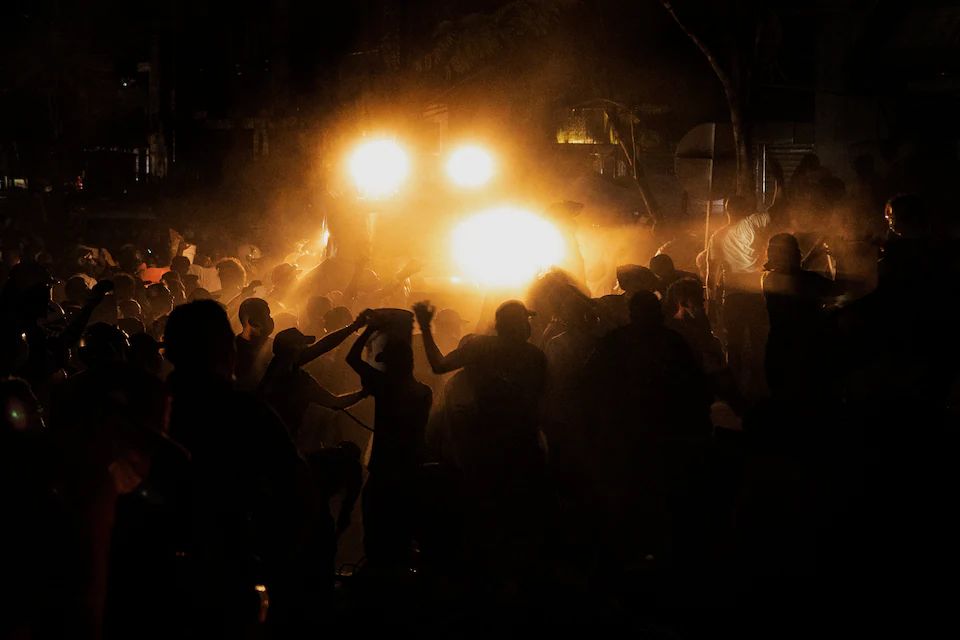
As darkness fell, rescue workers equipped with headlamps continued searching through dangerous debris, determined to locate survivors while engineers assessed damaged structures and monitored the continuing aftershocks.
The Colombia earthquake has left thousands facing uncertainty over their homes, possessions and livelihoods, with President De La Espriella promising assistance, including rent subsidies for people whose houses were destroyed.
For families still waiting for missing relatives, however, the immediate priority remained rescue, as emergency teams raced against time to search collapsed buildings and uncover possible survivors.
The Colombia earthquake represents a major test for Colombia’s emergency-response system, with authorities facing the difficult task of rescuing survivors, treating the injured and beginning recovery operations simultaneously.
As rescue efforts continue, officials are expected to provide updated casualty figures and damage assessments, while communities across western Colombia brace for possible aftershocks and a prolonged recovery process.
About The Author