Wellington, New Zealand – Brenton Tarrant, the Australian man responsible for the 2019 Christchurch mosque shooting, has applied to New Zealand courts to withdraw the guilty pleas he entered in 2020.
The pleas covered 51 counts of murder, 40 counts of attempted murder, and a terrorism charge. Tarrant claims that harsh prison conditions, including prolonged solitary confinement, limited reading material, and minimal contact with other prisoners, caused “nervous exhaustion” and prevented him from making rational decisions when he pleaded guilty.
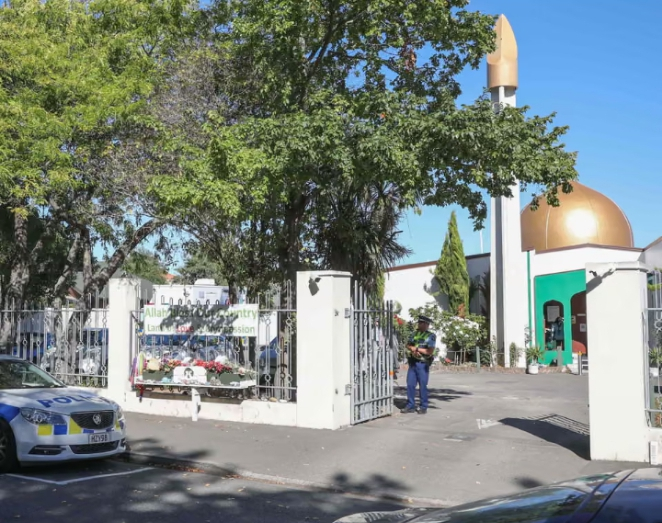
The 2019 Christchurch mosque shooting remains the deadliest mass shooting in New Zealand’s history. On 15 March 2019, Tarrant opened fire at the Al Noor and Linwood mosques during Friday prayers, killing 51 Muslim worshippers and injuring dozens more.
He livestreamed part of the attack on social media, drawing international attention and widespread condemnation. Following the attacks, the New Zealand government banned military-style semi-automatic rifles and created a national firearms registry. The event sparked a global conversation about terrorism, online extremism, and hate crimes.
Tarrant initially intended to defend himself at trial but entered guilty pleas in March 2020 to all charges. In August 2020, he became the first person in New Zealand to be sentenced to life imprisonment without the possibility of parole under current law.
The severity of his sentence reflected both the calculated planning of the attacks and the scale of the tragedy. The 2019 Christchurch mosque shooting continues to influence New Zealand’s laws on terrorism, hate crimes, and gun control, as well as international debates on preventing extremist violence.
During a video hearing on 9 February 2026, Tarrant told a panel of three judges that his mental health had deteriorated due to prison conditions. He said that by the time he entered his guilty pleas, he felt there was “little else I could do.”
Crown lawyers disputed the claim, arguing that he had other options, including delaying the trial or defending himself. They stated there was little evidence he had been in serious mental crisis.
Tarrant, a self-declared white supremacist, said he had hidden his mental illness partly because of political movements he was involved with. He added that he filed his appeal late because he did not have access to certain information needed sooner.
The 2019 Christchurch mosque shooting is central to the court’s considerations, particularly regarding whether his pleas were voluntary and informed.
The court must decide whether Tarrant’s pleas can be vacated. If approved, the case would return to the High Court for trial. If rejected, his appeal regarding life imprisonment without parole will proceed later in the year.
A spokesperson said the main issue is whether Tarrant was capable of making rational decisions when entering his guilty pleas, considering his claims of “torturous” imprisonment conditions.
Security was increased at the Wellington court. Only media, legal counsel, and authorized personnel were allowed inside, with public viewing arranged in an adjoining room and delayed broadcast for victims and families in Christchurch. Tarrant’s legal team has permanent name suppression.
Survivors and families of victims have described the proceedings as emotionally challenging. Aya Al-Umari, whose brother Hussein al-Umari was killed at Al Noor Mosque, said hearing Tarrant speak was “uncomfortable” and reopened wounds that were difficult to heal.
Discussions about justice, trauma, and mental health remain closely tied to the 2019 Christchurch mosque shooting, highlighting the lasting impact on the community.
Tarrant moved to New Zealand in 2017 and planned the attacks over months. He conducted reconnaissance at the mosques, distributed a manifesto, and prepared weapons to maximize casualties.
The 2019 Christchurch mosque shooting not only led to domestic reforms but also prompted international attention on online radicalization, hate speech, and extremism.
Since the attacks, New Zealand has conducted one of its largest coronial investigations into a single incident. In October 2025, the High Court allowed the possibility that Tarrant could be called as a witness during the ongoing inquest, despite objections from survivors and families.
The 2019 Christchurch mosque shooting continues to be studied by legal scholars and policymakers for lessons in counterterrorism and prisoner management.
Legal experts are watching Tarrant’s plea withdrawal closely. They note that the outcome may set precedents for how mental health claims affect guilty pleas in extreme cases.
The appeal could influence courts in New Zealand and internationally in assessing the voluntariness of pleas in high-profile criminal cases.
Tarrant’s case underscores the challenges of balancing prisoner rights, justice, and victims’ emotional wellbeing. Families continue to seek closure while the nation watches for the court’s decision.
Read also: Starmer General election threat: Could UK PM use nuclear option to stop leadership challenge
Whether his guilty pleas will be vacated remains uncertain, and the broader appeal concerning his life sentence is still pending. Security and safety measures remain in place around the court to ensure proceedings respect both the law and the sensitivities of those affected.
About The Author