China London embassy approval is expected this week after years of political deadlock, local resistance, and diplomatic frustration, with the UK government widely anticipated to grant Beijing permission to proceed with its long-delayed plan to construct a vast new embassy complex in central London.
The decision, expected imminently, is being viewed by officials in both London and Beijing as a pivotal moment in the future of UK-China relations and a potential signal of renewed engagement ahead of Prime Minister Keir Starmer’s anticipated visit to China later this month.
The proposed embassy, located at Royal Mint Court near the Tower of London, would become China’s largest diplomatic mission in Europe.
What began as a conventional planning application in 2018 has since evolved into a prolonged diplomatic saga that has strained bilateral ties and become emblematic of the UK’s uncertain and often inconsistent posture toward China.
For Beijing, the delay has been a source of irritation and symbolic grievance; for London, it has underscored the difficulty of balancing national security concerns, local governance, and strategic foreign policy priorities.
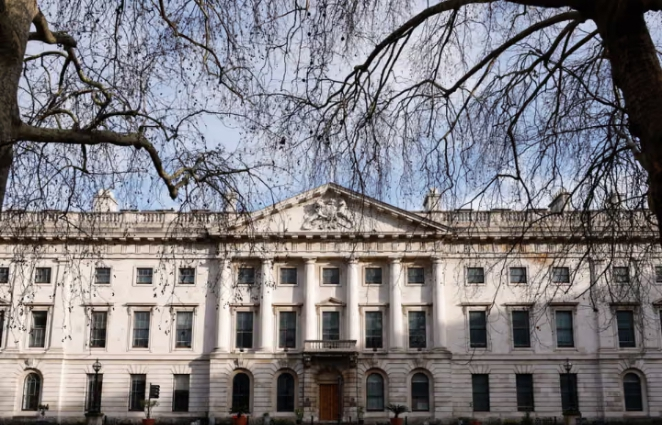
China purchased the Royal Mint Court site for approximately £255 million during a period of relatively warm relations between the two countries.
At the time, senior UK officials viewed the investment as a routine diplomatic development, and informal assurances were given that planning approval would follow.
However, the application encountered resistance at the local authority level, where concerns were raised about the scale of the development, its impact on the surrounding area, and potential security implications arising from its proximity to sensitive infrastructure in the City of London.
When planning permission was initially refused and later allowed to lapse without central government intervention, Chinese officials reacted with disbelief.
In Beijing’s political system, such matters are typically resolved at the national level, and the idea that a local council could derail what was perceived as a state-to-state understanding was difficult to accept.
Over time, the embassy dispute hardened into a test of political intent, with Chinese leaders increasingly interpreting the delays as evidence of bad faith rather than administrative process.
The issue took on greater significance as broader UK-China relations deteriorated. Disagreements over Hong Kong, human rights, alleged espionage activities, and parliamentary sanctions deepened mistrust, while economic cooperation slowed markedly.
Against this backdrop, the embassy project became one of the few tangible leverage points Beijing could use to express dissatisfaction, including blocking UK efforts to redevelop its own diplomatic facilities in China’s capital.
After Labour returned to government, the planning process was formally called in by ministers, removing final authority from the local council and placing responsibility at the national level.
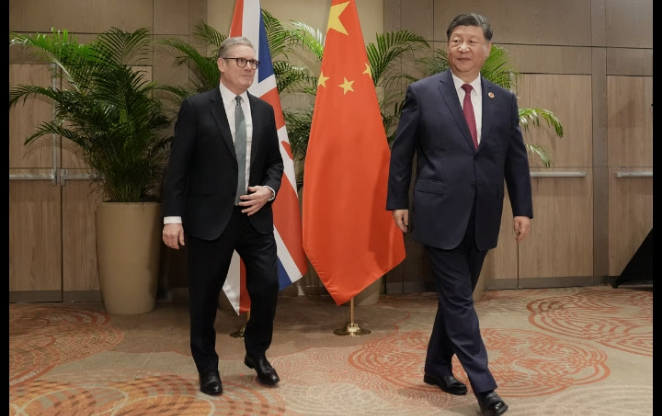
The move followed direct engagement between Chinese President Xi Jinping and Prime Minister Keir Starmer, during which the embassy issue was raised as a priority concern.
While officials insist that the planning decision has been handled independently, its diplomatic significance is widely acknowledged within government circles.
Approval of the Chinese embassy would be widely interpreted as an attempt by the UK to stabilize relations with Beijing after years of volatility.
Starmer’s expected visit to China, which would be the first by a UK prime minister since 2018, is seen as an opportunity to reopen channels of dialogue on trade, investment, climate cooperation, and global security challenges.
Government officials are keen to avoid a repeat of previous high-profile visits that generated political controversy but delivered limited economic results.
Supporters of the decision argue that diplomatic reciprocity is fundamental to international relations. The UK maintains embassies across China, including a significant presence in Beijing, and proponents contend that allowing China to expand its London mission reflects established global norms.
They also note that intelligence agencies have assessed the security risks associated with the larger embassy and concluded that they can be managed through existing safeguards and monitoring mechanisms.
Nevertheless, opposition remains vocal. MPs from multiple parties have expressed concern that the expanded embassy could facilitate surveillance, intimidation of dissidents, or covert intelligence activity.
The site’s proximity to key data cables and financial infrastructure has heightened anxieties, particularly amid a series of espionage allegations that have already strained trust between the two governments.
Outside Westminster, protests have been a regular feature at Royal Mint Court. Local residents have objected to the scale and security footprint of the proposed complex, warning of increased policing, restricted access, and disruption to daily life.
Members of the Chinese diaspora, including activists from Hong Kong, Tibet, and Xinjiang, have joined demonstrations, arguing that a larger Chinese diplomatic presence in London could expose them to harassment or pressure even while living abroad.
Some community groups are now preparing to challenge any approval through the courts, raising the prospect that the controversy could continue long after a formal decision is announced.
Legal action would add another layer of complexity to a process already burdened by years of delay and political sensitivity.
Despite these risks, many analysts believe rejection of the application at this stage would be more damaging than approval.
China remains a major global power with significant economic influence, and a further rebuff could prompt retaliatory measures that affect trade, diplomatic access, and cooperation on shared global challenges.
At a time of geopolitical uncertainty, officials argue that maintaining dialogue, however difficult, is preferable to prolonged stalemate.
Economically, the UK faces pressure to demonstrate that engagement with China can yield tangible benefits without compromising security or values.
Previous administrations pursued ambitious trade deals, while more recent governments have adopted a more cautious tone. Starmer’s approach appears focused on pragmatism, seeking to stabilize relations without returning to the uncritical enthusiasm of the past.
Even if China London embassy approval is granted this week, it is unlikely to mark a dramatic thaw in relations.
Deep disagreements remain unresolved, including the treatment of political activists, sanctions on UK lawmakers, and the broader strategic rivalry between China and Western democracies.
Officials privately concede that the embassy could become a persistent point of tension rather than a symbol of reconciliation.
For Beijing, however, approval would represent a long-awaited restoration of prestige and a confirmation that its concerns are being taken seriously by the new UK government.
For London, it would close a chapter that has consumed diplomatic bandwidth for years and allow attention to shift toward managing a complex but unavoidable relationship in a more structured way.
As the deadline approaches, the decision on the embassy is being watched not only as a planning outcome but as a statement of intent.
Whether it succeeds in smoothing relations or simply reshapes the terrain of UK-China diplomacy, China London embassy approval will stand as one of the most consequential foreign policy decisions of the early Starmer era.
About The Author