China Communist Party purges have reached an unprecedented scale under President Xi Jinping, with 33 members expelled as the country’s ruling party concluded a major political gathering marked by an extraordinary number of empty seats.
The expulsions were confirmed at this week’s fifth plenum, a gathering of senior Chinese Communist Party (CCP) officials that takes place roughly once a year. The unprecedented number of absences has highlighted the extent of Xi’s campaign to enforce discipline across the party’s leadership.
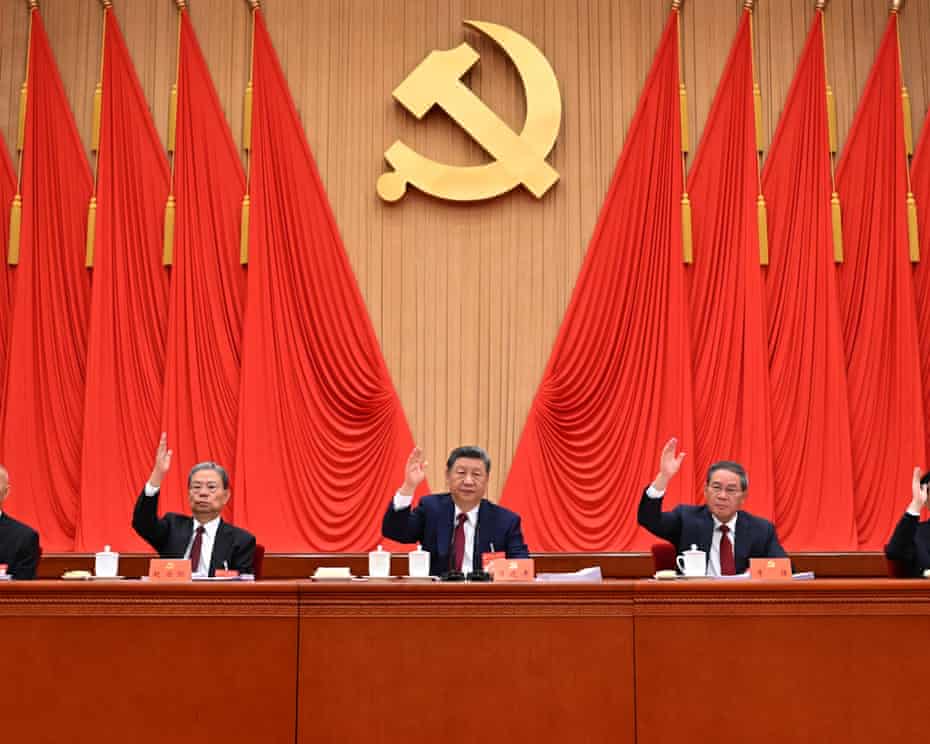
Only 279 full and alternate members of the Central Committee attended the meeting, compared with the 376 members originally named in 2022. This means more than a quarter of the original membership was absent.
The empty seats have become a striking symbol of the political upheaval taking place within China’s leadership, particularly as the purge increasingly affects officials in the highest ranks of the party and military.
Among those whose expulsions were confirmed were Zhang Youxia, formerly the second-most senior figure in China’s military hierarchy, and Ma Xingrui, the former party secretary of Xinjiang. The reasons for some other officials’ absences remained unexplained.
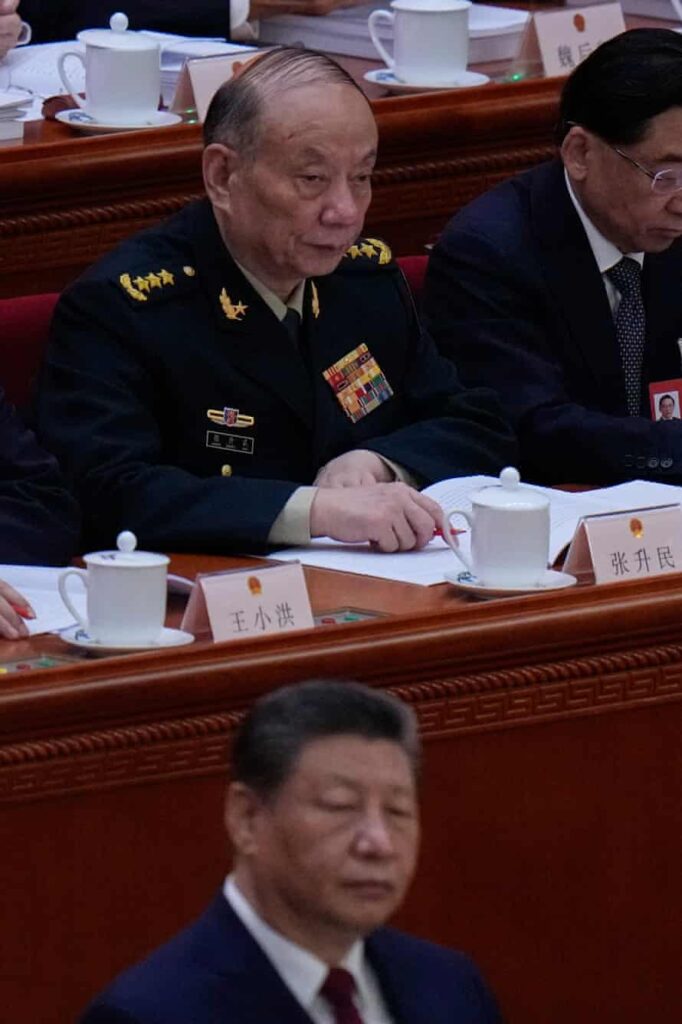
China Communist Party purges reach unprecedented levels
The scale of the latest removals has drawn attention to the growing reach of Xi’s campaign against corruption and alleged indiscipline within the ruling party.
The fifth plenum recorded the highest number of empty seats in modern Chinese political history, reflecting the number of officials who have disappeared from the Central Committee’s ranks since they were appointed in 2022.
Neil Thomas, a senior fellow at the Asia Society thinktank, linked the absences to Xi’s emphasis on internal discipline.
“More empty seats underscores the plenum’s focus on Xi’s vision of strict internal discipline,” Thomas said in a post on X.
The gathering focused on party governance, an issue that has become increasingly central to Xi’s leadership since he came to power in 2012.
Xi has repeatedly presented the fight against corruption as essential to maintaining the party’s authority and ensuring that officials follow its rules. However, the increasingly high-ranking targets of the campaign have raised questions about whether it also serves as a means of eliminating political rivals or punishing disloyalty.
The confirmed expulsions of senior figures, including Zhang Youxia, have intensified those questions because of the positions they previously occupied within the party and the military establishment.
Although the government’s stated emphasis is on discipline and anti-corruption, the scale of the removals demonstrates how extensively the campaign has reshaped the upper levels of China’s political system.
Xi Jinping intensifies crackdown on senior officials
Since taking power, Xi has made the fight against corruption one of the defining features of his leadership.
His administration has pursued officials across different levels of the party, presenting the campaign as an effort to prevent misconduct and reinforce the authority of the Communist Party.
In recent years, however, the crackdown has increasingly reached the highest levels of the political and military hierarchy, demonstrating that seniority does not necessarily protect officials from investigation or removal.
Xi has expressed frustration with what he sees as inadequate discipline among party members. Earlier this year, he said the party must uproot “sick trees”, describing the anti-corruption struggle as a “never-ending journey”.
The language reflects his determination to portray corruption as a persistent threat that requires continuous action rather than a problem that can be resolved through a limited series of investigations.
Nevertheless, the growing number of senior officials affected by the campaign has fuelled debate over the political consequences of Xi’s approach.
Critics and analysts have questioned whether the purge is driven exclusively by anti-corruption objectives or whether it also strengthens Xi’s control by removing officials whose loyalty or political position may be viewed as problematic.
The latest round of expulsions has reinforced that debate, particularly because it includes figures who previously held influential positions within the military and regional party administration.
China’s military leadership weakened by sweeping purges
The military has emerged as one of the most significant areas affected by Xi’s crackdown.
A series of removals has substantially reduced the membership of the Central Military Commission, the body responsible for directing China’s People’s Liberation Army.
Following the latest purges, only two members remain on the commission: Xi himself and Zhang Shengmin, the military’s senior anti-graft official.
The situation represents a major change in the composition of an institution central to China’s defence establishment and political leadership.
The Central Military Commission occupies a powerful position within the Chinese system, overseeing the armed forces while operating under the authority of the Communist Party.
The departure of so many senior figures has therefore raised questions about leadership continuity, institutional stability and the process of rebuilding the military’s senior ranks.
Zhang Shengmin was promoted to the Communist Party’s Politburo during the fifth plenum, making him the only military representative in the party’s senior ruling body.
His elevation places an official associated with the anti-corruption campaign in an increasingly prominent position at a time when the military leadership has undergone extensive changes.
The development highlights the importance Xi attaches to discipline within the armed forces, an institution whose loyalty is crucial to the party’s continued hold on power.
However, the loss of experienced senior officers could also complicate efforts to identify suitable replacements and maintain continuity in military command.
Zhang Youxia and Ma Xingrui among officials expelled
The confirmed expulsions of Zhang Youxia and Ma Xingrui illustrate the level of the leadership affected by the latest developments.
Zhang previously served as the second-highest-ranking figure in China’s military hierarchy, placing him among the most prominent officials responsible for the country’s armed forces.
His removal is particularly significant given the wider changes taking place within the Central Military Commission and the continuing investigation of senior military figures.
Ma Xingrui, meanwhile, formerly served as the Communist Party secretary of Xinjiang, a strategically important region in western China.
His expulsion adds a senior regional political figure to the list of officials affected by the crackdown.
The authorities have not publicly explained every absence recorded during the fifth plenum, meaning that the status and circumstances of some officials remain unclear from the information available.
The distinction is important because absence from the meeting does not, by itself, establish that an individual has been expelled or formally accused of wrongdoing.
Nevertheless, the number of missing members has become a visible indicator of how extensively the composition of the Central Committee has changed since 2022.
The latest figures also suggest that the party is confronting a substantial challenge as it prepares to renew its senior leadership at the next national party congress.
Empty seats expose the scale of China’s political upheaval
The unusually high number of empty seats at the fifth plenum has become one of the clearest illustrations of the consequences of Xi’s campaign.
Of the 376 full and alternate members originally named to the Central Committee in 2022, only 279 attended this week’s gathering.
The difference underscores the scale of the changes that have taken place within the party’s senior ranks during the current leadership period.
Although not every absence was explained, the confirmed expulsions and the broader pattern of removals have made the meeting a symbol of the intensifying crackdown.
The empty seats also carry political significance because the Central Committee forms a major part of the Communist Party’s organisational structure.
Its membership includes officials who occupy influential positions across the party, government and military, making changes to its composition consequential for the distribution of power.
The latest developments suggest that the effects of the campaign extend beyond individual investigations, reaching the institutions responsible for maintaining the party’s leadership and preparing its future leadership structure.
For Xi, the emphasis on discipline reinforces his message that party officials must remain accountable to the ruling organisation.
For analysts, however, the number of removals raises questions about whether the party can maintain an adequate pool of experienced officials for promotion to senior positions.
Xi prepares for China’s 2027 party congress
The fifth plenum also laid the groundwork for the 21st Communist Party congress, which is expected to take place in the second half of 2027.
The congress is held every five years and provides an important opportunity for the party to renew its senior leadership and determine the composition of its principal governing institutions.
Xi is widely expected to seek a fourth term as party leader, a move that would further extend his tenure and make him the longest-serving ruler of Communist China since Mao Zedong.
The next congress is expected to bring changes to the Central Committee and Politburo as officials are promoted, replaced or removed from their current positions.
However, the extent of the recent purges has raised concerns among analysts about the availability of suitable candidates to fill the resulting vacancies.
With senior officials removed from both the party and military leadership, the process of identifying experienced replacements could become increasingly challenging.
The question is not simply how many positions must be filled, but whether the party can replenish its senior ranks while maintaining institutional experience and political cohesion.
The continuing campaign also creates uncertainty for officials seeking promotion, as the removal of senior figures demonstrates the risks associated with remaining in positions of influence under Xi’s leadership.
China’s anti-corruption campaign raises questions about loyalty and power
The latest expulsions have renewed a central question surrounding Xi’s leadership: where does the fight against corruption end, and where do the political consequences of enforcing loyalty begin?
The Chinese government has presented the crackdown as an effort to strengthen discipline, eliminate corruption and protect the party’s authority.
Xi’s repeated calls for stricter internal controls reflect his determination to ensure that the Communist Party remains firmly in command of the state and society.
However, the removal of powerful officials from the military and political establishment has led analysts to question whether the campaign also functions as a mechanism for consolidating Xi’s personal authority.
The confirmed expulsions of senior figures and the unprecedented number of absences at the fifth plenum have added weight to those concerns without, on their own, proving that every removal is politically motivated.
What is clear is that the campaign has significantly altered the composition of China’s senior leadership and left major vacancies in institutions central to the country’s governance and military command.
As the party approaches its 2027 congress, Xi faces the task of rebuilding parts of that leadership while maintaining the strict discipline that has defined his rule.
The fifth plenum has therefore offered a revealing picture of the current state of China’s political system: a ruling party determined to demonstrate control, a military leadership reshaped by successive purges and a growing challenge to find experienced officials to occupy the positions left vacant.
About The Author