Premier League-winning ex-Chelsea goalkeeper Carlo Cudicini is fighting claims over using a sun terrace at his £3 million Kensington home.
Premier League star turned Chelsea executive Carlo Cudicini, 52, is embroiled in a legal dispute after Haya Property Ltd, owners of the freehold of his Kensington mews house, banned him from using a sun terrace at the property.
The dispute reportedly began after Cudicini complained about noisy air-conditioning units installed near his bedroom. Lawyers for the former goalkeeper insist that the terrace was created with valid planning permission and argue that the claims from Haya Property are unfounded.
Cudicini, who made 216 appearances for Chelsea between 1999 and 2009, purchased the home for £1.75 million in 2006, at the height of his Premier League career.
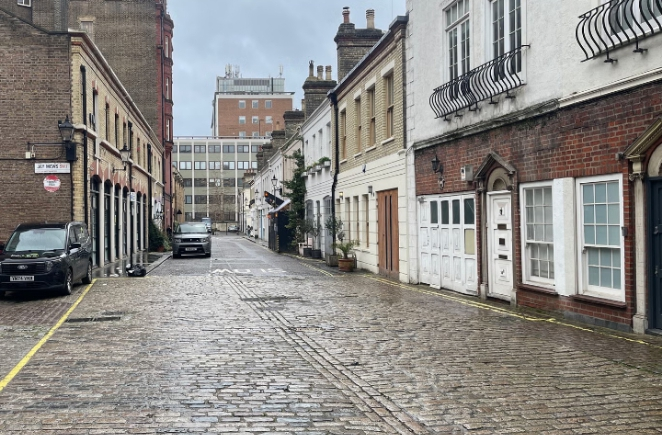
The property is located close to Hyde Park, the Royal Albert Hall, and less than two miles from Chelsea FC’s Stamford Bridge, where he now works as head of talent and pathway programme. Its location in South Kensington makes it one of the most desirable streets in London for high-profile homeowners.
Haya Property claims Cudicini breached his lease by converting part of the flat roof into a terrace. According to planning records, the terrace measures less than two metres in length and width, but the freeholders argue its use constitutes trespass or a covenant violation.
They are seeking an injunction preventing further use of the terrace as well as compensation of up to £25,000, claiming that the former player acted without permission when he adapted the roof space.
The former goalkeeper’s legal team insists the terrace was created under valid planning permission granted by the City of Westminster before he bought the house.
Barrister Mark Warwick KC told Central London County Court that Cudicini “opened up the terrace in line with prior approval and with knowledge of previous landlords,” adding that the work was carried out openly and transparently.
He emphasized that Cudicini’s actions were fully lawful and part of a long-term renovation plan for the property.
Cudicini’s football career began at Serie A side AC Milan in 1992, but he struggled to break into the first team. After a short stint at Lazio, he moved to Chelsea in 1999, where he eventually became the club’s number one goalkeeper.
He was voted Chelsea’s player of the year for the 2001-02 season and played a key role in the squad that won the Premier League title in 2004-05, serving as understudy to Petr Cech under the management of Jose Mourinho.
He later joined Tottenham Hotspur in 2009 and concluded his professional playing career with Los Angeles Galaxy in 2013.
After retiring, Cudicini returned to Chelsea in 2016 as a club ambassador and assistant to first-team boss Antonio Conte. He now serves as the club’s head of talent and pathway programme, overseeing the development of young players.
His professional experience and personal knowledge of the house, Warwick said, allowed him to assemble a comprehensive defence against the lease claims.
During a pre-trial hearing, Warwick explained that Cudicini’s refurbishments, including the terrace, were carried out openly between 2007 and 2008 with the consent of the previous landlords.
Council documents also show he received approval to build a basement with an en-suite guest room and TV/play area, reflecting his careful approach to property renovations. Warwick emphasized that the terrace work was consistent with long-standing planning permissions, and that any claim of trespass is therefore without merit.
The dispute escalated when Haya Property acquired the freehold in November 2015. Cudicini’s lawyers argue that the company’s claim is a retaliatory response to his earlier complaints about noisy air-conditioning units positioned near his master bedroom.
Warwick described the allegations as “unjustified” and said that the claims arose from the landlord’s overreaction to a complaint that was entirely reasonable and in line with tenant rights.
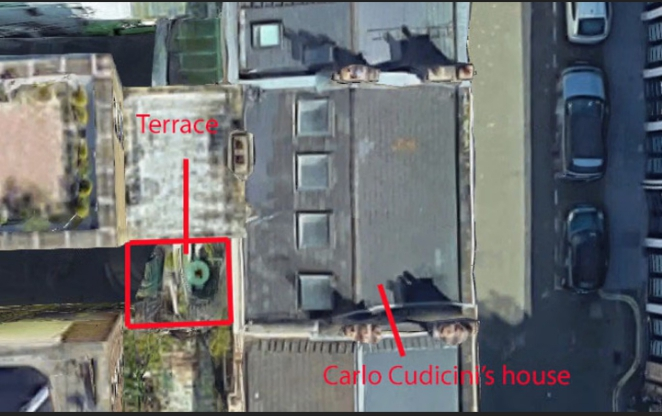
Cudicini purchased the house with the terrace permission already in place, which allowed “the replacement of a rear first-floor window with French doors and use of flat roof and lightwell as a terrace,” according to court documents.
The former goalkeeper further claims that previous landlords, prior to Haya Property taking over, had formal notice of the planning application and agreed to it.
This provides additional evidence in support of Cudicini’s argument that the terrace use has been lawful for many years.
The ex-Chelsea star’s legal team also highlighted the nominal lease terms, including a 999-year lease with an annual rent of “one red rose if demanded,” which underscore the formal and historic nature of his rights as a leaseholder.
Warwick argued that the freeholders’ attempt to block use of a terrace measuring less than two metres is disproportionate and unnecessary, especially given Cudicini’s transparent approach and long history of compliance with planning rules.
The case will return to court at a date yet to be scheduled. Observers note that it illustrates the complexities of property law for high-profile homeowners in London, particularly those owning historic or high-value properties.
Legal experts suggest that while the dispute concerns a very small terrace, it raises broader questions about the rights of leaseholders, the obligations of freeholders, and the limits of planning permissions.
Cudicini’s story also reflects the transition from professional sports to post-playing life. Despite the court dispute, he remains focused on his work at Chelsea, supporting the next generation of players and maintaining strong ties with Stamford Bridge.
His legal representatives argue that the court case is unrelated to his character or conduct, and is instead a narrow dispute over property rights that could affect many leaseholders in similar positions.
During the pre-trial hearing, Warwick emphasized that Cudicini’s extensive enquiries into the property’s history and planning permissions enabled him to present a complete defence.
“Since then, he has carried out further historical enquiries, producing additional documents and a fuller knowledge of the background,” Warwick said. These steps highlight the former player’s proactive approach in ensuring that all renovations were legal and transparent.
The legal dispute over the sun terrace will continue to attract public attention due to Cudicini’s high-profile status and his legacy at Chelsea.
For fans of the Premier League and Chelsea supporters, the case serves as a reminder of how footballers’ off-field lives, including property ownership, can become complicated, particularly when it intersects with urban planning and lease law.
The outcome will likely set a precedent for similar disputes over small rooftop terraces and other minor modifications in high-value London properties.
For now, Cudicini maintains that his use of the terrace is entirely lawful, reflecting a careful balance between respecting the property’s planning permissions and enjoying his own home.
The case highlights the intersection of sport, law, and property rights, illustrating how even seemingly minor disputes over terraces can generate legal scrutiny. As the trial date approaches, both parties will present evidence and arguments to determine whether a compact sun terrace constitutes a breach of lease or remains fully within Cudicini’s legal rights.
About The Author