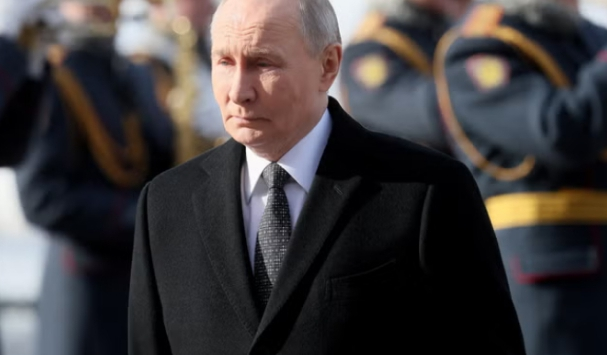
Four years into Russia’s invasion of Ukraine, the Kremlin has acknowledged that its military objectives remain unfulfilled, delivering a blow to hopes for a swift resolution.
Kremlin spokesman Dmitry Peskov told reporters on Tuesday that Moscow’s “special military operation” was ongoing, adding that diplomacy could achieve objectives, but no further peace talks were confirmed.
Peskov claimed the conflict had expanded into a wider confrontation with the West, asserting that foreign support for Kyiv strengthened resistance against Russian aims in Ukraine.
Volodymyr Zelensky marked the fourth anniversary with a televised address, stating, “Putin has not achieved his goals,” while affirming that Ukraine’s independence remains intact despite ongoing aggression.
He continued: “We will do everything to achieve peace and to ensure justice,” emphasizing resilience and defiance in the face of four years of sustained Russian attacks.
Zelensky welcomed foreign dignitaries to Kyiv for commemorations, including British foreign secretary Yvette Cooper, highlighting the international support Ukraine continues to receive amid the conflict.
Sir Keir Starmer, commenting on the anniversary, said Putin is “standing in the way” of a peace deal, pledging the UK will support Ukraine “for as long as it takes.”
Defence secretary John Healey described the war as “four years of failure for Putin,” pointing out that Russia has lost more than a million troops while fighting longer than the Soviet Union did in WWII.
The Kremlin reiterated that Western intervention had widened the conflict, with Peskov stating Moscow remained open to diplomatic avenues, but no dates for negotiations have been confirmed as yet.
Overnight, Russian forces launched 133 drones and an Iskander-M ballistic missile at Ukrainian targets, while the Ukrainian air force intercepted or jammed 111 of these attacks.
Strikes occurred across 16 locations, underscoring the continued intensity of the war, which has forced Ukrainians to take shelter frequently and endure constant threat from missiles and drones.
In Kyiv, thousands gathered at Independence Square to honour victims, while reports indicate over 70,000 Ukrainians, including 15,000 civilians, have been killed since the invasion began.
The UK announced 297 new sanctions on Russian entities, including oil pipeline giant Transneft and 48 tankers, aiming to cut Moscow’s energy revenues and weaken its war capabilities.
Foreign minister Yvette Cooper said, “The UK has taken decisive action to disrupt the critical financing, military equipment and revenue streams that sustain Russia’s aggression.”
The war has increasingly targeted Ukraine’s energy infrastructure, leaving millions without heat or power during severe winter temperatures, reaching lows of -26C in some regions, according to local authorities.
Moscow has dramatically increased drone attacks, launching hundreds from unmanned aircraft over the last year, reflecting a shift in modern warfare tactics against Ukraine’s cities and infrastructure.
Zelensky praised Ukrainians’ resilience, noting that “Ukrainians have turned their own rage into energy for the fight” and emphasized that the nation cannot be driven underground despite continuous assaults.
The president reflected on atrocities committed, listing towns, civilian sites, and hospitals affected: “Bucha. Irpin. Borodyanka… Ukrainians will not forget it. Let this footage be seen by everyone.”
He described the human toll in vivid terms, recounting the impact on families, children, and communities across Ukraine, stressing that the global community must acknowledge the ongoing suffering.
Despite ongoing attacks, Ukraine has recaptured eight settlements, signaling strategic battlefield successes, while planning for long-term reconstruction estimated to cost $588 billion, according to the World Bank.
The anniversary highlights the ongoing stalemate: Russia has not achieved its objectives, while Ukraine’s independence and territorial integrity remain defended, backed by Western support and international attention.
Zelensky concluded, “We inevitably rise, we return, we continue to fight – because we fight for life. For the right to stand on our land – and to breathe our own air.”
The war, now four years in, continues to shape international diplomacy, military strategy, and civilian resilience, emphasizing the human and geopolitical costs of Russia’s continued aggression.
Read also: Miracle baby arrives in UK after groundbreaking deceased donor womb transplant
About The Author