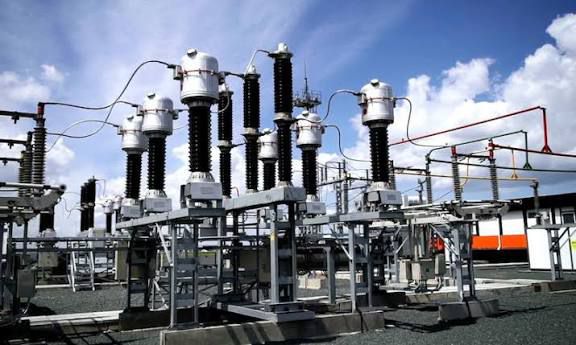
Hurricane Melissa in Cuba has unleashed catastrophic force across the island nation, tearing through coastal provinces and compounding the humanitarian tragedy that began with Jamaica’s devastation.
More than 700,000 people have been ordered to safety as torrential rain, 120-mph winds, and violent storm surges mark one of the most destructive chapters in the island’s recent history.
Officials confirmed widespread power outages, flooded towns, and destroyed homes as Hurricane Melissa in Cuba continues to move northeast, leaving a trail of wreckage across Santiago de Cuba, Guantánamo, and surrounding provinces.
Cuban President Miguel Díaz-Canel described the storm as “an unimaginable test of endurance” and promised that “no citizen will be left behind” during the recovery effort.
The National Hurricane Center warned that life-threatening flash floods and landslides would persist well after the storm’s center moves offshore, making Hurricane Melissa in Cuba one of the deadliest events in decades.
As night fell on the island, rescue brigades worked in blinding rain, navigating collapsed roads and downed power lines to reach families stranded in flooded neighborhoods.
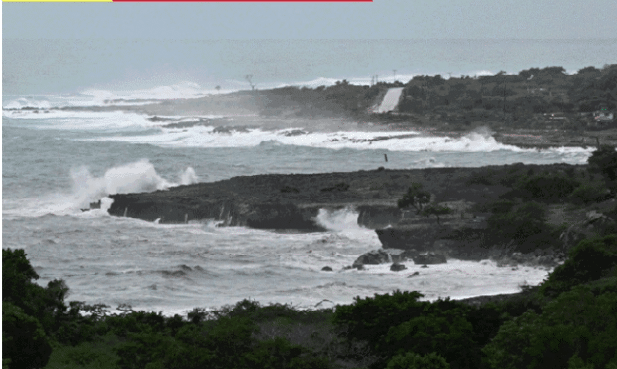
Local reports describe entire communities submerged in waist-deep water, while emergency shelters overflow with evacuees displaced by the relentless Caribbean storm.
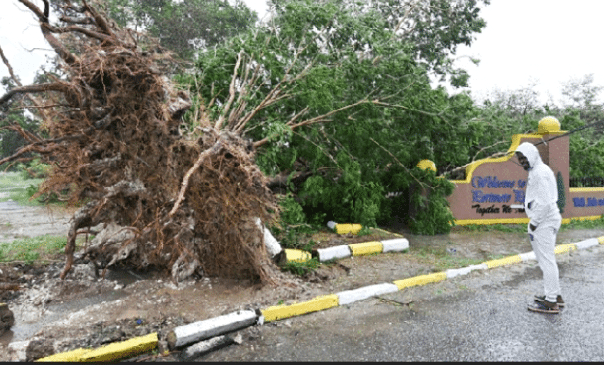
Residents of Santiago de Cuba say roofs were ripped from homes and centuries-old trees uprooted, transforming once lively streets into rivers of debris and despair.
Cuban meteorologist María González said, “We have not seen this kind of destructive intensity since Hurricane Sandy in 2012. Hurricane Melissa in Cuba is rewriting history.”
Satellite images show an eye wall with violent convection and rain bands spanning hundreds of miles, confirming the storm’s immense and sustained power.
Across the Caribbean, the death toll continues to climb, with at least seven fatalities reported—three in Jamaica, three in Haiti, and one in the Dominican Republic.
The National Hurricane Center categorized the storm as a major hurricane, with sustained winds exceeding 120 mph, warning that it could strengthen again as it moves toward the Bahamas.
In the Cuban provinces of Holguín and Las Tunas, residents reported being trapped for hours as bridges collapsed and landslides blocked key mountain routes.
Government media outlets broadcast continuous updates urging calm, even as communications faltered and several radio towers succumbed to the brute force of Hurricane Melissa in Cuba.
Emergency responders say hospitals are struggling to operate with limited fuel supplies, while doctors perform life-saving procedures under generator-powered lights.
In Santiago’s regional hospital, a nurse described the chaos: “Windows shattered, water poured in, but we kept treating patients. This is survival medicine.”
As dawn broke, drone footage revealed entire coastal villages flattened, their remains scattered like matchsticks along the devastated southern shoreline.
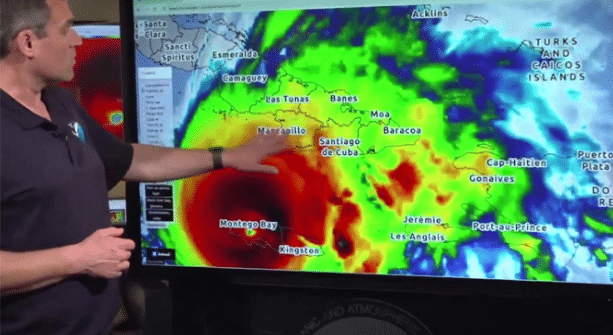
The Caribbean storm has also intensified Cuba’s existing economic hardship, disrupting power grids, transport systems, and agricultural output already weakened by shortages and inflation.
Economists warn that reconstruction could cost billions, further straining a country already suffering from chronic fuel and food scarcity.
Meanwhile, international aid organizations are mobilizing relief supplies, with the United Nations confirming pre-positioned resources in the region for rapid distribution.
UN disaster coordinator Jean-Paul Leblanc called Hurricane Melissa in Cuba “a humanitarian emergency requiring urgent, coordinated global support.”
The government announced that brigades specializing in electricity, water, and construction had been deployed to affected zones even before the storm’s full impact.
These teams, trained for rapid disaster response, are now working around the clock to restore power and reopen flooded transportation arteries.
While Cuba evacuation efforts have saved countless lives, officials acknowledge that many residents refused to leave, choosing instead to protect their homes from looters.
In the countryside, entire banana and sugarcane plantations have been flattened, with farmers describing the damage as “total annihilation.”
Havana’s state television broadcast messages of solidarity from leaders across Latin America, pledging assistance and emergency materials to support the Cuban people.
“We stand with Cuba,” said the president of Mexico, announcing the dispatch of medical brigades and water purification equipment within 24 hours.
The United States also signaled readiness to provide humanitarian aid, though political tensions have slowed coordination between Washington and Havana.
At the same time, Jamaica continues its painful recovery, still reeling from what Prime Minister Andrew Holness called “a generational catastrophe” caused by Hurricane Melissa in Cuba’s earlier rampage.
The Jamaica devastation includes submerged neighborhoods, damaged hospitals, and the destruction of hundreds of schools and community centers across the island.
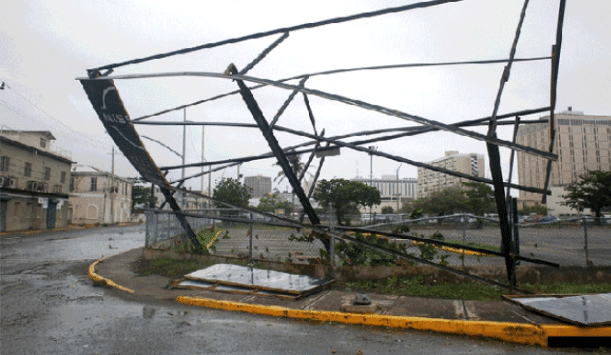
In Kingston, floodwaters reached car rooftops, while hospitals battled to keep patients safe as power grids failed under hurricane-force winds.
The Jamaican government has since launched an official relief portal to coordinate aid, ensuring donations reach verified disaster recovery programs.
Across the Caribbean, anxiety has turned to exhaustion as the storm continues its deadly march toward the Bahamas and Bermuda.
Meteorologists emphasize that Hurricane Melissa in Cuba still possesses enough strength to produce widespread destruction even as it begins to weaken slightly.
In Guantánamo Bay, U.S. naval personnel were ordered to secure facilities, while local authorities reinforced flood barriers to prevent coastal inundation.
Experts from the National Hurricane Center caution that climate change is likely intensifying storms like Melissa, increasing their frequency, scale, and unpredictability.
Ocean temperatures in the Atlantic have remained abnormally high, fueling the kind of explosive intensification witnessed before the storm struck Jamaica.
Climate scientist Dr. Anne-Claire Fontan described Melissa as “the storm of the century,” warning that “the Caribbean must prepare for a new normal of climate extremes.”
In the small town of Contramaestre, residents described the eerie calm following the storm’s passage—birds silent, air thick with humidity, and the sound of collapsing trees echoing through the hills.
Children huddled with their parents in makeshift shelters, sharing canned food and listening to portable radios for updates from national authorities.
One woman, her home reduced to rubble, told reporters, “We’ve lost everything, but we are alive. That’s the only thing that matters today.”
International humanitarian flights are expected to begin arriving by Friday once airports reopen, carrying generators, food, and medical supplies.
Regional governments are coordinating through CARICOM to establish an emergency logistics hub in the Dominican Republic for rapid distribution across the Caribbean storm zone.
The World Food Programme and Red Cross have both deployed assessment teams to identify the most affected communities in eastern Cuba.
Still, the scale of destruction is staggering, and officials admit that it may take weeks before the full extent of Hurricane Melissa in Cuba’s impact is known.
The storm’s inland remnants continue to produce dangerous rainfall, raising fears of additional flooding and landslides in already saturated mountain areas.
Scientists are urging governments across the Caribbean to strengthen early warning systems and improve building codes to mitigate future disasters.
Many residents express gratitude for the Cuba evacuation measures, which likely prevented mass casualties despite the storm’s unprecedented ferocity.
However, they also lament the loss of livelihoods, homes, and infrastructure critical to Cuba’s fragile recovery from years of economic strain.
President Díaz-Canel has promised transparent accounting of relief distribution and appealed for unity, declaring that “our resilience will shine brighter than the storm’s shadow.”
Faith-based organizations have opened their doors to displaced citizens, providing food, blankets, and emotional support to those traumatized by the event.
Local musicians have begun organizing benefit concerts to raise funds for rebuilding schools and hospitals destroyed by Hurricane Melissa in Cuba.
For now, Cuba stands battered yet unbroken, a symbol of endurance in a region repeatedly tested by nature’s wrath and humanity’s resolve.
In the words of one volunteer firefighter: “The wind took our roofs, but it didn’t take our spirit. We’ll rebuild, stronger than before.”
About The Author