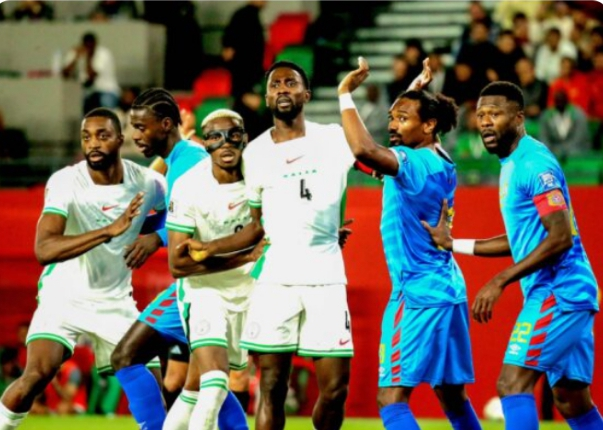
Nigeria’s eligibility protest- FIFA has formally dismissed Nigeria’s appeal over allegations that DR Congo fielded ineligible players in the 2026 World Cup playoff match, ending the Super Eagles’ campaign.
The decision confirms Nigeria’s failure to qualify for the 2026 FIFA World Cup, leaving fans and officials disappointed after a tense playoff defeat in Rabat, Morocco.
Nigeria lost to DR Congo in a dramatic penalty shootout following a 1–1 draw, leaving no room for administrative redress to alter the result or force a replay.
The Nigeria Football Federation lodged a formal protest in December, arguing that several DR Congo players did not meet eligibility requirements under national and FIFA regulations.
The playoff match in Rabat drew significant attention, as the result would determine Africa’s representation in the intercontinental qualifying tournament for the World Cup finals.
After a thrilling contest, DR Congo won 4–3 on penalties, securing a spot in the next stage of qualification and leaving Nigeria with shattered World Cup hopes.
DR Congo’s victory sent the team to the intercontinental playoffs, where they will face other nations for a place in the expanded 48-team 2026 FIFA World Cup finals.
Nigeria argued that the Leopards fielded players in violation of Congolese law, claiming that domestic dual citizenship restrictions were breached by individuals holding European passports.
The NFF specifically highlighted several players who switched allegiances yet reportedly maintained European citizenship, questioning their eligibility to represent DR Congo under FIFA rules.
FIFA’s own statutes prioritize nationality and valid registration with the national association over strict domestic citizenship requirements, complicating Nigeria’s appeal against Congo’s squad.
All contested DR Congo players had been properly cleared by FIFA, holding valid Congolese passports and meeting the organization’s criteria for international competition.

FIFA’s disciplinary committee found no evidence of regulatory violations, concluding that DR Congo had followed correct procedures in registering and fielding their players.
As a result, FIFA rejected the NFF’s request to overturn the playoff outcome, confirming DR Congo’s win and leaving Nigeria without recourse to challenge the result further.
The Super Eagles’ campaign officially ends with this ruling, marking consecutive World Cup qualification failures for Nigeria after missing the 2022 tournament as well.
Fans and officials alike expressed deep disappointment, highlighting the emotional toll of losing on the pitch and having administrative options denied by FIFA’s ruling.
Despite the setback, Nigeria will focus on upcoming tournaments such as the Africa Cup of Nations, seeking to rebuild confidence and improve squad performance for future competitions.
The NFF acknowledged FIFA’s final authority on eligibility matters, emphasizing respect for global governance even while expressing frustration at the loss of an opportunity to appeal successfully.
Nigeria’s absence from the 2026 World Cup reflects broader challenges in African football, highlighting the difficulty of securing spots in the competitive intercontinental playoff stage.
DR Congo celebrates advancing towards a historic return to the World Cup, energizing its domestic football community and signaling a potential breakthrough on the international stage.
The Leopards will compete in the March intercontinental playoff tournament alongside other nations for a chance to appear in the North American finals.
Nigeria’s officials maintained that their protest aimed to uphold sporting fairness, stressing the importance of adhering to regulations governing player eligibility and team composition.
Allegations of procedural errors or administrative fraud were raised but ultimately found insufficient by FIFA to justify overturning DR Congo’s qualification.
The NFF contended that FIFA may have been misled regarding player registration, claiming documentation discrepancies regarding passports and nationality confirmation for several athletes.
FIFA clarified that eligibility is determined primarily by the possession of a valid passport, not by full compliance with domestic citizenship laws, which differs from Nigeria’s interpretation.
DR Congo’s football officials countered Nigeria’s protest, characterizing the appeal as an attempt to challenge the outcome without merit, asserting that all players were properly cleared.
The Congolese FA publicly stated that efforts to contest the match were unnecessary, emphasizing that victories must be earned on the field rather than through off-pitch appeals.
FIFA’s ruling reinforced its reliance on international documentation and passports submitted by member associations, underscoring global standards over national legal disputes.
Nigeria’s appeal highlighted the conflict between domestic citizenship law and FIFA’s international eligibility framework, demonstrating a recurring tension in international football governance.
The NFF underlined this legal nuance in its appeal, but FIFA found no basis for reversing or replaying the match based on the presented evidence.
Observers suggest that this case may influence how future disputes over nationality and eligibility are handled in international football competitions.
FIFA’s decision closed the case ahead of the intercontinental playoff window in March, giving DR Congo clarity for preparation while leaving Nigeria’s squad to regroup.
Nigerian players have shifted focus to forthcoming tournaments like AFCON 2025, seeking to regain momentum and build cohesion for international competitions.
Super Eagles striker Victor Osimhen featured in the decisive playoff, but his efforts could not prevent the penalty shootout defeat that ended Nigeria’s qualification bid.
Nigeria’s coach urged players to block outside distractions, including eligibility controversies, emphasizing the importance of focusing on training, development, and competitive performance in upcoming fixtures.
The coach encouraged internal improvement rather than dwelling on administrative disputes, highlighting a long-term approach to team success despite immediate setbacks.
DR Congo’s progress has been met with enthusiasm among fans and football leadership, with hopes high for a successful intercontinental playoff campaign and potential World Cup participation.
Many analysts predicted that FIFA’s focus on passport validity would favor Congo’s case, a perspective that proved accurate given the ruling dismissing Nigeria’s claims.
Nigeria’s complaint drew global attention, sparking discussions about the intersection of national law and international football governance, and the challenges of interpreting eligibility rules.
Fans and commentators engaged in online debates regarding the legitimacy of Nigeria’s appeal, reflecting divergent opinions on whether FIFA should enforce domestic citizenship laws.
Social media was divided, with some arguing for stricter adherence to national legislation and others supporting FIFA’s reliance on international passport documentation and eligibility standards.
Nigeria’s exit from the 2026 race leaves a noticeable gap in African representation at the World Cup finals, heightening pressure on remaining continental teams to perform well.
The Super Eagles aim to rebuild their squad and strengthen performance for upcoming CAF competitions, focusing on development programs, player selection, and tactical improvements.
DR Congo’s Leopards, meanwhile, prepare for their next major challenge in the intercontinental playoff bracket, hoping to secure a place in the historic 2026 tournament in North America.
FIFA’s dismissal of Nigeria’s appeal marks a definitive conclusion to the controversy, reaffirming global eligibility rules and emphasizing the organization’s authority in adjudicating international football disputes.
Nigeria’s supporters may look to the future with cautious optimism, as lessons from this experience could inform administrative strategies, squad development, and international competitiveness.
DR Congo’s triumph underscores the importance of proper registration, strategic preparation, and compliance with FIFA regulations, setting an example for other national associations competing for global qualification.
The Super Eagles’ elimination highlights the fine margins in international football, where a single penalty shootout can define a nation’s World Cup aspirations and inspire administrative action.
Read also: Egypt vs South Africa live: Bafana Bafana face tough challenge against Salah and Egypt at Afcon 2025
FIFA’s ruling confirms DR Congo’s legitimate progress, while Nigeria must accept the outcome and channel efforts toward development programs, youth academies, and competitive readiness for future tournaments.
The intercontinental playoff now represents DR Congo’s pathway to a historic World Cup appearance, while Nigeria evaluates administrative procedures, regulatory interpretation, and squad management to strengthen future campaigns.
Overall, FIFA’s decision closes the debate over player eligibility in this case, reinforcing rules governing nationality, registration, and documentation for international football competitions worldwide.
About The Author