

Tensions over Gaza’s future have escalated sharply as the European Union openly criticized Donald Trump’s Board of Peace, describing it as a personal project lacking accountability to Palestinians or the UN.
The EU’s foreign policy chief, Kaja Kallas, said at the Munich Security Conference that the Board of Peace had strayed far from the original UN mandate, raising questions about its legitimacy and scope.
Spain’s foreign minister, José Manuel Albares, added that Europe, which is a major funder of the Palestinian Authority, had been excluded from the process and sidelined in decisions about Gaza reconstruction.
According to Kallas, the UN resolution provided for a Board of Peace for Gaza, but the current board’s statute makes no reference to Gaza or Palestinian input, contradicting the original purpose of the mandate.
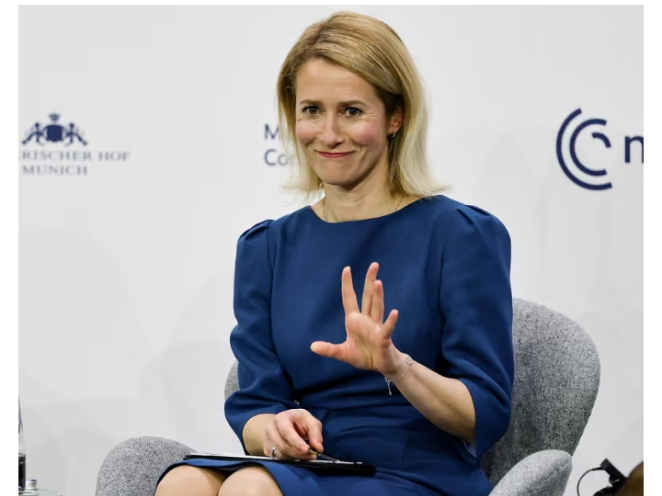
“While the UN security council resolution clearly outlined conditions for a Board of Peace, the current charter ignores these safeguards,” Kallas said. “This raises serious concerns about accountability and transparency.”
Democratic senator Chris Murphy expressed fears that billions in reconstruction funds could end up in the hands of Trump’s allies due to the lack of oversight mechanisms built into the board’s design.
The dispute marks the first high-level clash over Trump’s Gaza initiative and highlights tensions surrounding the ceasefire, humanitarian aid, and reconstruction efforts scheduled in the coming weeks in Washington.
Nickolay Mladenov, Trump’s high representative for Gaza, attempted to redirect attention from controversy to the immediate tasks, including humanitarian aid delivery, weapons decommissioning, and ending Gaza’s internal divisions.
“All of this needs to move very fast. Failure to act risks undermining the ceasefire and could escalate conflict further,” Mladenov warned, emphasizing the urgent need for a unified governance structure in Gaza.
Mladenov stressed that addressing Hamas’s control and the division of Gaza was essential for a sustainable two-state solution. He highlighted that without unified administration, reconstruction efforts could falter completely.
“If Gaza is not one entity, reconstruction will be impossible,” Mladenov said. “Technocratic governance, decommissioned weapons, and Israeli withdrawal are prerequisites to any effective rebuilding process.”
The situation has drawn sharp criticism from European leaders, who argue that bypassing the UN undermines international norms and risks destabilizing the fragile peace framework established after years of conflict.
Kallas emphasized that the Board of Peace should operate with clear oversight and maintain references to Gaza and the UN, warning that failure to do so would erode trust and jeopardize funding commitments.
Albares noted that European countries, historically committed to Palestinian welfare, must not be excluded from decision-making regarding reconstruction projects or the allocation of billions in aid.
“The exclusion of Europe from Gaza reconstruction planning is unacceptable,” Albares said. “The Palestinian Authority deserves a seat at the table, and international accountability cannot be ignored.”
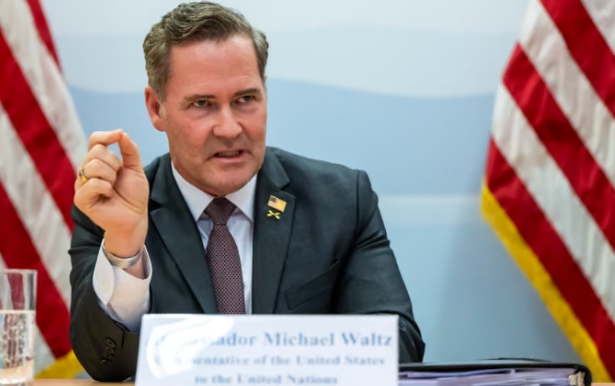
Mike Waltz, the US ambassador to the UN, defended the Board of Peace, stating that “hand-wringing” over the project was unhelpful and emphasizing the need to break Hamas’s control over Gaza.
Waltz also confirmed Indonesia’s commitment to contribute 8,000 troops to the International Stabilisation Force and indicated that additional deployments would be announced soon, highlighting international engagement outside the UN framework.
Describing Trump’s approach as “focused multilateralism,” Waltz said the UN needed to return to its core mission of peacemaking, limiting bureaucracy, and ensuring reconstruction aid reached Gaza without unnecessary delays.
Palestinian activist Mustafa Barghouti warned that plans for Gaza were increasingly detached from reality, with West Bank settlements expanding and the Oslo accord’s framework steadily eroding, threatening the two-state solution.
“Accountability for genocide aside, the process of dismantling the two-state framework is proceeding unchecked,” Barghouti said. “Without international oversight, the Board of Peace cannot address systemic issues on the ground.”
Observers note that the dispute over Gaza’s future represents deeper disagreements about US and European priorities, reconstruction control, and how to enforce accountability for billions of dollars in aid funding.
The debate also underscores the complex dynamics of implementing ceasefires, delivering humanitarian aid, and reconciling differing strategies between Trump’s administration and EU foreign policy authorities.
Both sides acknowledge that immediate humanitarian needs must be addressed, including food, medical aid, and emergency reconstruction, while longer-term governance and security arrangements remain unresolved and contested.
Kallas stressed that sustainable peace in Gaza requires not only aid but inclusive governance, transparent decision-making, and respect for international law, warning that unilateral actions could exacerbate existing divisions.
Mladenov reiterated that technical and operational solutions, including weapons decommissioning and coordination with local authorities, were essential to prevent a relapse into conflict and secure the second phase of the ceasefire.
Experts argue that without robust oversight, the Board of Peace could fail to achieve its intended purpose, risking both financial mismanagement and prolonged instability in Gaza, affecting both Palestinian and Israeli communities.
Waltz maintained that the US approach was necessary to overcome “endless war” scenarios in Gaza, emphasizing pragmatic troop contributions and reconstruction initiatives outside traditional UN channels.
The dispute has drawn attention to the delicate balance between international mandates, donor priorities, and the political ambitions of national leaders, highlighting the potential for friction when global powers diverge in approach.
As the Board of Peace prepares for meetings in Washington next week, all parties face pressure to reconcile differences, ensure accountability, and prevent further deterioration of Gaza’s fragile peace and reconstruction efforts.
European officials continue to insist that Palestinian participation is non-negotiable, while US representatives argue that swift, pragmatic measures are essential to prevent renewed violence and maintain progress toward long-term stability.
Read also: More than 5,000 ISIL detainees transferred from Syria to Iraq, Iraqi Ministry confirms
The coming days are expected to determine whether the Board of Peace can function as a neutral facilitator for Gaza’s reconstruction or become a focal point for international tensions between Trump’s administration and EU authorities.
The bitter dispute over Gaza’s future encapsulates broader geopolitical challenges, the struggle for international oversight, and the complexities of implementing ceasefires, reconstruction, and governance reforms in conflict-affected regions.
About The Author


