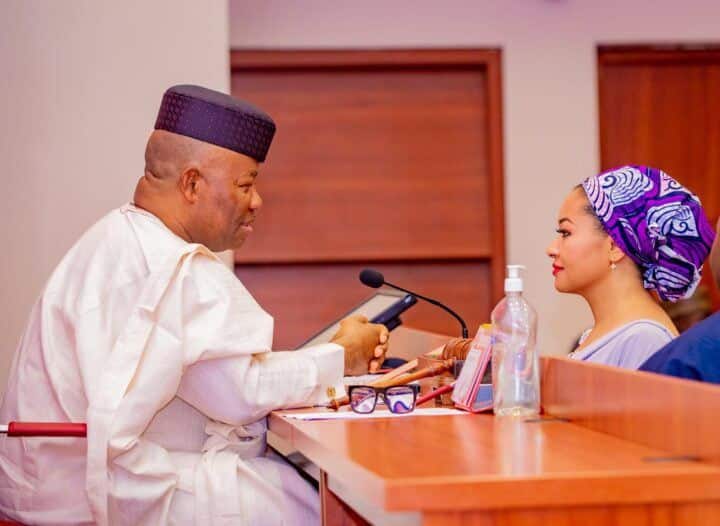
Bauchi Assembly passes bill for 29 new Bauchi Local Government Areas, raising total to 49, pending National Assembly approval for constitutional backing.
The Bauchi State House of Assembly has passed a bill seeking the creation of 29 additional Bauchi Local Government Areas, marking a significant legislative step toward expanding local governance across the state.
However, the proposed local councils will only become official after receiving constitutional approval from the National Assembly.
Once approved, Bauchi State will have a total of 49 local government areas, up from the current 20 — a development that could redefine administrative and grassroots governance within the state.
The bill, titled “A Bill to Provide for the Creation of 29 New Additional Local Government Areas in Bauchi State, 2025,” was debated and passed by the State Assembly after extensive deliberations.
It has since been transmitted to the National Assembly’s Joint Committee on the Review of the 1999 Constitution for federal consideration and approval.

In a formal letter signed by the Acting Deputy Clerk of the Bauchi State House of Assembly, Musa Yerima, and addressed to the Chairman of the Senate Committee on Constitution Review, Senator Barau Jibrin, the Assembly confirmed that the bill had been passed and requested federal legislative action.
“I am pleased to inform you that the Bauchi State House of Assembly has passed into law a Bill to provide for the creation of 29 new additional Local Government Areas in Bauchi State, 2025,” Yerima stated.
The letter, made public on Thursday, clarified that the newly proposed Bauchi Local Government Areas would remain “inchoate” — meaning not yet operational — until the National Assembly enacts an enabling law in line with Section 8(5) of the 1999 Constitution (as amended).
“The additional Local Government Areas listed in Schedule II to this law are inchoate until such time as the National Assembly shall pass an Act to make consequential provisions with respect to the names of the said additional Local Government Areas,” the letter read in part.
Yerima emphasized that the passage of the bill was part of Bauchi State’s commitment to improving local governance and ensuring fairer representation across its growing population, but that the final decision rests with the federal legislature.
Lawmakers who supported the bill said the expansion was motivated by rapid population growth, emerging settlements, and the need to bring government closer to the people.
They argued that creating more Bauchi Local Government Areas would improve administrative efficiency, promote equitable resource sharing, and boost economic development in rural communities.
Bauchi, being one of Nigeria’s most populous states, has experienced increasing pressure on its existing 20 LGAs, which are struggling to meet the demands of its expanding population.
Supporters of the bill believe that new councils will reduce administrative overload, enhance local participation, and enable communities to better access state and federal resources.
Proposed Local Government Areas and Headquarters
The proposed new LGAs and their designated headquarters are as follows:
Balma (Nasaru), Bauchi East (Women Centre), Bauchi West (Miri), Beshongo (Beni), Bula (Bununu), Burra (Burra), Chinade (Chinade), Dagauda/Jalam (Dagauda), Disina (Disina), Dogon Jeji/Jurara (Dogon Jeji), Dass-West (Lukshi), Gadau (Gadau), Galambi (Kangere), Ganjuwa East (Soro), Girawa (Faggo), Gololo (Gololo), Gwana (Futuk), Isawa (Isawa), Jama’a (Nabardo), Karkara (Akuyam), Lame (Lame), Lere (Lere), Madara (Madara), Sade (Sade), Sakuwa (Sakuwa), Udubo (Udubo), Saye (Hardawa), Yankari (Yelwa Duguri), and Zungur (Liman Katagum).
The announcement has sparked mixed reactions among residents and analysts. Many citizens described the move as a welcome step toward inclusive governance and equitable development.
Communities from proposed LGAs celebrated the passage, hoping it would accelerate infrastructural growth and service delivery at the grassroots.
A community leader from the proposed Gwana LGA, Malam Hassan Futuk, said, “We have been waiting for this opportunity for decades. The creation of new councils will finally bring government closer to our people and address years of neglect.”
However, some experts have advised caution. They warned that while expanding the number of Bauchi Local Government Areas is commendable, the state must ensure sustainable funding and efficient management to avoid creating administrative burdens.
Dr. Ibrahim Kobi, a governance analyst, noted that “the success of these new councils will depend on fiscal discipline, transparency, and proper planning. If implemented correctly, they could set a model for other states.”
Constitutional Process and Next Step
Under the 1999 Constitution, only the National Assembly has the authority to give legal recognition to any new local government area proposed by a state.
Therefore, the 29 new Bauchi Local Government Areas will remain inchoate until the federal legislature enacts the necessary constitutional amendments to formalize them.
The Bauchi Assembly has already forwarded the legislation to the National Assembly’s Joint Committee on Constitution Review for scrutiny and endorsement.
Once approved, the state government is expected to begin implementing administrative structures, delineating boundaries, and appointing interim management committees.
Observers say the National Assembly’s approval could make Bauchi one of Nigeria’s most decentralized states, potentially serving as a model for grassroots empowerment and participatory governance.
The passage of the bill by the Bauchi State House of Assembly marks a crucial milestone in the state’s political evolution.
Although the 29 proposed Bauchi Local Government Areas are not yet officially recognized, the development reflects a strong commitment to deepening democracy and ensuring equitable representation.
If the National Assembly eventually approves the proposal, Bauchi will expand its local governance structure to 49 councils — a move that could significantly reshape its administrative and development landscape.
More news at ireport247news
About The Author