

Badenoch more popular than Farage– Kemi Badenoch has overtaken Nigel Farage in public approval ratings for the first time in more than a year, following her decisive handling of Robert Jenrick’s controversial defection to Reform UK.
The Conservative leader’s swift action in dismissing her former shadow justice secretary has resonated with voters, strengthening her reputation as a firm and competent political figure in turbulent times.
According to a new More In Common poll, almost half of Reform voters – 45 per cent – acknowledged that Badenoch handled the defection well.
The survey, conducted immediately after Jenrick’s departure, illustrates a shift in voter perception, with the public three times more likely to view her actions positively than negatively. Such figures highlight the growing gap between Badenoch and Farage in political influence.
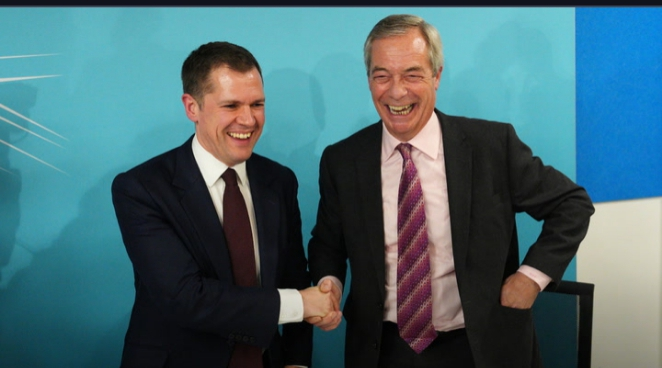
Badenoch’s net approval rating has risen to -11, her highest since December 2024, eclipsing Farage, whose rating currently stands at -13.
Analysts suggest that the decisive dismissal of Jenrick, who had been secretly plotting to join Reform UK, was the key turning point.
The public perceives Badenoch’s action as a demonstration of integrity and strategic decisiveness within the Conservative Party leadership.
Jenrick, formerly a rising star within the Conservative ranks, joined Reform UK hours after his dismissal. His public comments, amplified by Farage, criticized the Tories and framed the move as a principled stand.
Yet poll data indicates that the electorate remains unconvinced, with only 14 per cent saying the defection reflects well on Jenrick. Meanwhile, 37 per cent of voters see the move as a negative reflection on him personally.
The poll also explored the perceived motivations behind political defections. Over half of respondents – 56 per cent – suggested Tory politicians switching to Reform UK were doing so for personal gain rather than principle.
Among Conservative voters specifically, seven in ten stated they would not continue supporting an MP who changed allegiance, highlighting the potential political cost of defections.
Commenting on Badenoch’s rising popularity, political analyst Sir John Curtice pointed to her well-received speeches and proactive responses to recent parliamentary challenges.
“Badenoch’s clarity on policy and firm handling of party discipline has reinforced her public image,” Curtice noted. “Her popularity increase directly correlates with public appreciation of strong leadership in a time of party instability.”
Reform UK, meanwhile, has faced declining average support, now falling below 30 per cent for the first time since the party’s success in gaining control of twenty county councils last May.
Farage, leading the party, has struggled to capitalize on high-profile defections, highlighting Badenoch’s growing influence and the public’s perception of her as a stabilizing force within the political spectrum.
Despite these gains for Badenoch, Reform UK maintains a dominant position in representing the political Right, polling at 35 per cent compared to the Tories at 29 per cent.
Analysts attribute this partly to Farage’s ability to frame the narrative around Conservative defections, although it is clear that Badenoch’s personal approval now exceeds his, signaling a potential shift in the balance of influence.
The poll also revealed nuanced public sentiment regarding party leadership. A majority of respondents believe that Badenoch’s decisiveness sends a strong message about accountability and discipline within the Conservative Party.
“It’s rare to see a leader act so swiftly and be recognized for it publicly,” said one political commentator. “This level of approval often precedes wider electoral gains for the party.”
Badenoch’s rise in popularity comes amid a challenging political backdrop, including ongoing debates about economic policy and party reform.
Her clear stance on handling defections contrasts sharply with Farage’s approach, which often emphasizes ideological positioning over tactical leadership. The electorate’s response suggests a preference for practical leadership during times of political instability.
The Conservative Party has acknowledged the importance of strong leadership figures like Badenoch, particularly as defections and internal dissent continue to shape party dynamics.
Sources close to the leadership indicate that Badenoch’s rising profile is being leveraged to reassure voters that the party remains united and capable of addressing challenges both domestically and within the broader political landscape.
Political strategists emphasize the importance of maintaining this momentum. Badenoch’s ability to translate public approval into concrete political advantage could determine her party’s prospects in upcoming elections.
Her focus on discipline, accountability, and voter trust positions her as a figure capable of reshaping Conservative fortunes while keeping Farage and Reform UK in check.
The implications of Badenoch surpassing Farage in popularity extend beyond party politics. Voters appear increasingly responsive to leadership qualities that emphasize competence, integrity, and decisive action.
The Jenrick defection episode serves as a case study in how swift, assertive leadership can enhance public perception, particularly when contrasted with opponents perceived as less disciplined.
While Farage continues to champion Reform UK’s ideological stance, the data suggests that voters prioritize leadership style and reliability over messaging alone.
Badenoch’s net approval lead signals an electorate more interested in practical outcomes and internal party cohesion than in symbolic gestures of defection or ideological purity.
Observers note that Badenoch’s success also reflects her ability to communicate directly with voters, addressing concerns about party discipline, policy direction, and ethical governance.
Her actions have not only neutralized potential criticism stemming from Jenrick’s defection but have also strengthened her credibility as a rising Conservative leader capable of managing high-stakes political challenges.
The overall trend, according to pollsters, indicates a consolidation of support for Badenoch within both the Conservative base and moderate voters concerned with stability.
This contrasts with Farage’s trajectory, where public approval is increasingly segmented and susceptible to negative perception following high-profile defections and controversial statements.
Analysts caution, however, that maintaining approval will require continued strategic action. Badenoch must navigate ongoing political disputes, including internal party reforms, electoral strategy, and relations with other parties.
Her handling of Jenrick has set a high standard, raising expectations for future decisiveness and policy clarity.
Kemi Badenoch’s overtaking of Nigel Farage in public approval ratings reflects both her decisive handling of the Robert Jenrick defection and broader voter preferences for competent, firm leadership.
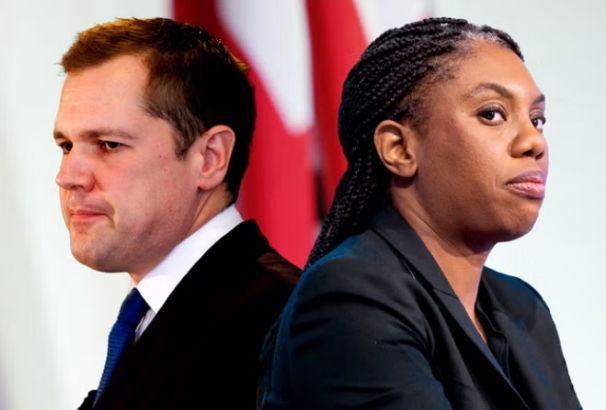
The data suggests a growing recognition of her as a stabilizing figure within the Conservative Party, reinforcing her influence in British politics.
As the party prepares for upcoming challenges, Badenoch’s enhanced popularity positions her as a central figure capable of shaping the future trajectory of the political right in the UK.
Meta description (repeated at end): Kemi Badenoch’s approval rating has overtaken Nigel Farage for the first time in over a year after her decisive handling of Robert Jenrick’s Reform defection.
About The Author


