

Allegations surrounding Nigel Farage’s conduct during his school years at Dulwich College have resurfaced, prompting renewed debate over memory, accountability, and the long-term impact of alleged abusive behaviour.
The controversy follows a recent letter from former classmates who strongly dispute Farage’s attempts to dismiss accounts of offensive conduct, insisting their recollections are consistent, deeply personal, and enduring.
The group of former pupils argue that Farage’s response misunderstands the intensity and uniqueness of the behaviour they say they experienced while attending Dulwich College together.
They claim that Farage’s characterisation of their memories as unreliable undermines the seriousness of the alleged incidents and ignores the emotional harm they say followed them into adulthood.
Among the responses to the renewed allegations is a letter from a former pupil, who is Jewish, who said that while Farage was offensive, he was not racist.
This perspective has been cited by Farage’s defenders as evidence that his behaviour, while provocative, should not be categorised as racially motivated.
However, the wider group of school contemporaries strongly reject what they describe as selective interpretations of individual testimony used to minimise broader patterns of conduct.
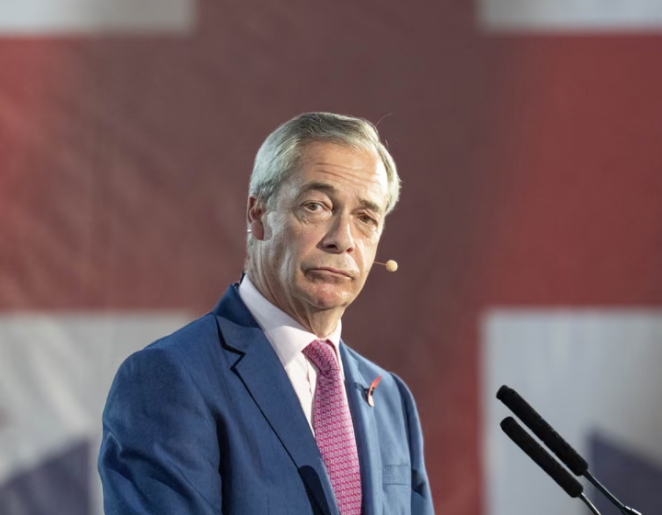
The school contemporaries write that the dismissal of their memories was to misunderstand the “exceptional” nature of Farage’s behaviour to them and the hurt they claim it inflicted.
They argue that the passage of time has not diluted their recollections, but rather clarified the emotional weight of what they experienced as teenagers.
Responding directly to Farage’s comments questioning the accuracy of memory, the former pupils defend the reliability of their accounts in explicit terms.
They write: “You have questioned the reliability of memory: ‘Can I remember everything that happened at school? No, I can’t.’ Perhaps. But abusive and hurtful memories stick, and we have never forgotten.
“Each of us has separately given similar and consistent accounts of you at Dulwich. These memories paint a vivid and undeniable picture of you.”
The signatories insist their testimonies were not shaped collectively, nor influenced by shared political motivations or coordinated planning.
They emphasise that their accounts were formed independently, over many years, and across different professional and personal trajectories.
The group adds: “The accusation that we are politically motivated is false. We represent a broad swathe of professional backgrounds and political opinions. Most of us have had no contact since we left Dulwich. Until writing this letter, we have not acted as a group. We have neither plotted nor conspired.”
The letter directly challenges suggestions that the timing of their renewed statements is linked to Farage’s current political prominence.
In particular, they reject claims that their decision to speak publicly is connected to the rise of Reform UK in national opinion polls.
The signatories to the letter also challenge the claim that they have only spoken out now because Reform is leading in the national polls.
They argue that this narrative ignores a long history of public accounts relating to Farage’s school behaviour, stretching back more than a decade.
They write: “This is not true. You must know this is not the first time a number of us have contributed individually to accounts of you at Dulwich.
“Examples include a 2013 Channel 4 News bulletin; a 2016 report in El País titled ‘Hitler was Right’; an open letter published in the Independent in 2019; and a 2022 biography of you by Michael Crick.”
Those references are presented as evidence that concerns about Farage’s conduct have circulated intermittently long before his current political positioning.
The former pupils argue that the recurrence of these accounts reflects unresolved issues rather than opportunistic intervention.
Farage has previously acknowledged being provocative during his school years but has consistently rejected descriptions of himself as racist or abusive.
Supporters argue that youthful behaviour should be understood within its historical and social context, cautioning against retrospective moral judgement.
Critics counter that repeated, consistent testimonies from multiple individuals warrant serious consideration, regardless of the elapsed time.
They argue that school environments shape long-term identity and that harmful behaviour can have lasting psychological consequences.
The debate has reignited broader discussions about how public figures respond to historical allegations and the limits of memory as a defence.
Legal experts note that while such claims may fall outside formal judicial processes, they can still influence public trust and political credibility.
The resurfacing of the Dulwich College allegations comes at a sensitive moment in Farage’s career, as he continues to play a prominent role in British political discourse.
Observers say the episode highlights the enduring tension between personal history and public leadership.
Read also: Trump orders naval blockade of Venezuelan oil tankers as US-Venezuela tensions sharply escalate
As the exchange of letters circulates widely, it has prompted renewed scrutiny of how institutions and individuals confront uncomfortable aspects of their past.
For the former pupils, the issue is not political positioning but acknowledgment of harm and validation of lived experience.
For Farage and his supporters, the focus remains on intent, context, and the reliability of decades-old memories.
With neither side showing signs of retreat, the debate over Nigel Farage’s school years appears set to remain part of the broader conversation surrounding his public life.
About The Author


