

Australian PM locks horns with Netanyahu-Australia’s prime minister has locked horns with Israel’s leader after rejecting claims that recognising Palestine contributed to the Bondi beach terror attack, calling the suggestion unfounded and dangerous.
The Bondi beach terror attack plunged Australia into mourning and ignited a diplomatic row after Benjamin Netanyahu linked the violence to Canberra’s decision on Palestine recognition.
Anthony Albanese flatly dismissed the allegation, saying acts of terrorism cannot be blamed on legitimate foreign policy decisions supported by much of the international community.
Speaking to national broadcasters, Albanese said there was “no link whatsoever” between Australia’s recognition of Palestine and the deadly antisemitic attack in Sydney.
“Overwhelmingly, most of the world recognises a two-state solution as the way forward,” Albanese said, defending Australia’s stance amid rising international pressure.
The Bondi beach terror attack occurred during a Hanukah celebration, when two local gunmen opened fire on a crowd gathered near the shoreline.
Fifteen Jewish people were killed and dozens injured before police intervened, shooting both attackers, one of them fatally, according to authorities.
Shockwaves from the attack reverberated across Australia, with vigils held nationwide as political leaders urged unity and calm.
Netanyahu, however, escalated tensions by accusing the Australian government of encouraging antisemitism through what he described as appeasement.
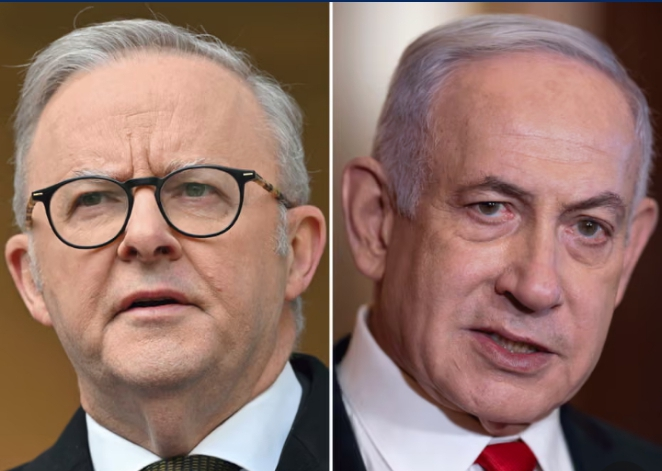
He said Australia had “done nothing to stop the spread of antisemitism,” directly blaming political leadership for the climate in which the attack occurred.
Albanese refused to be drawn into inflammatory rhetoric, instead calling for national solidarity and compassion for Australia’s Jewish community.
“This is a moment where we need to come together,” he said, urging Australians to stand firmly against hatred and violence.
The prime minister stressed that antisemitism is a crime and must be confronted through law enforcement, education, and community protection.
He outlined measures already taken, including criminalising hate speech, banning Nazi salutes, and expanding funding for Jewish community security.
Tensions between Australia and Israel have been simmering for months following Canberra’s decision to formally recognise Palestine.
Israel responded in August by revoking visas of Australian diplomats working with the Palestinian Authority in occupied territories.
Foreign minister Penny Wong described that decision as unjustified, saying recognition of Palestine was part of a broader international peace effort.
Australia argued the move aimed to revive momentum toward a two-state solution, secure a ceasefire in Gaza, and facilitate hostage releases.
Netanyahu previously condemned Australia’s position as “absurd” and a “reward for terrorism,” language that resurfaced after Bondi.
Political analysts noted that Netanyahu faces domestic pressure ahead of elections, potentially influencing his confrontational tone.
Albanese avoided addressing Netanyahu’s personal criticism directly, focusing instead on domestic safety and social cohesion.
“My job is to keep Australians safe,” he said, reiterating zero tolerance for antisemitism in any form.
The Bondi beach terror attack intensified scrutiny of extremist threats and radicalisation within Australia’s borders.
Jillian Segal, the government’s special envoy on antisemitism, warned the violence did not occur in isolation.
“The writing has been on the wall,” Segal said, pointing to graffiti, arson, and escalating hate incidents targeting Jewish communities.
She urged tougher action across universities, online platforms, and cultural institutions where antisemitic narratives can spread unchecked.
Jewish leaders echoed those concerns, calling for stronger leadership and faster implementation of policy recommendations.
Rabbi Levi Wolff of Sydney’s Central Synagogue said antisemitism had reached “a shocking level” nationally.
“When antisemitism goes unchecked, these are the things that happen,” Wolff said, warning against complacency.
Australia’s conservative opposition accused the Labor government of allowing hatred to “fester” before the attack.
Opposition leader Sussan Ley demanded immediate implementation of Segal’s July report recommendations.
She emphasised university campuses as key areas requiring urgent intervention and oversight.
Albanese responded that his government had already committed A$25m to boosting security at Jewish schools and community sites.
He reiterated the importance of distinguishing antisemitism from criticism of Israeli government policy.
“You should be able to express views about events overseas,” Albanese said, “but not blame people for being Jewish.”
This distinction has remained controversial amid weekly protests against Israel’s war in Gaza across Australian cities.
Police have allowed demonstrations under strict conditions, balancing public safety with freedom of expression.
Australia’s multicultural fabric has added complexity to the government’s response, requiring careful community engagement.
Earlier this year, Australia expelled Iran’s ambassador after intelligence agencies linked Tehran to antisemitic arson attacks.
Officials described the move as a clear signal that foreign interference and hate crimes would not be tolerated.
According to census data, Australia’s Jewish population numbers fewer than 120,000 people nationwide.
Community leaders say their small size increases vulnerability during periods of heightened international tension.
The Bondi beach terror attack renewed calls for tougher gun laws, despite Australia’s already strict firearm regulations.
Albanese said no system is perfect and promised to examine loopholes exposed by the tragedy.
Security experts warned against politicising terrorism by tying it to foreign policy positions.
They argued extremist violence is often driven by local radicalisation, misinformation, and online echo chambers.
International observers cautioned that Netanyahu linking Palestine recognition to the Bondi attack risked inflaming divisions.
Such narratives, analysts said, may hinder cooperation against antisemitism rather than strengthen it.
Despite diplomatic friction, Albanese reaffirmed Australia’s commitment to Israel’s security and Palestinian statehood.
He said both positions were consistent with international law and humanitarian values.
As investigations continue, authorities are examining the attackers’ backgrounds, online activities, and potential warning signs.
The tragedy has prompted broader reflection on how global conflicts spill into domestic spaces.
For many Australians, Bondi became a painful reminder that distant wars can have local consequences.
Community vigils emphasised unity, resilience, and rejection of hatred in all its forms.
As one mourner said quietly, “We must not let violence define who we are.”
The dispute between Canberra and Jerusalem is unlikely to fade quickly.
Australian PM locks horns with Netanyahu over linking Palestine recognition to Bondi beach attack remains a defining political moment.
It has reshaped debate on foreign policy, national security, and social cohesion.
Ultimately, Australia faces the challenge of protecting communities while navigating an increasingly polarised world.
Read also: Hollywood director Rob Reiner, wife Michele tragically killed; Son arrested in fatal stabbing
About The Author


