Calls are growing for Australia to protect Iran’s women’s football team after several players were labelled “traitors” by Iranian state-linked media following a national anthem protest during the ongoing AFC Women’s Asian Cup 2026.
Members of the Iran women’s national football team are currently competing in the tournament in Australia, but activists and refugee advocates warn some players could face serious repercussions if they return to Iran after publicly refusing to sing the country’s anthem earlier this week.
The controversy began before Iran’s opening match against the South Korea women’s national football team, when players stood silently during the national anthem. The moment quickly circulated online and was widely interpreted as a symbolic protest against Iran’s leadership and restrictions on women.
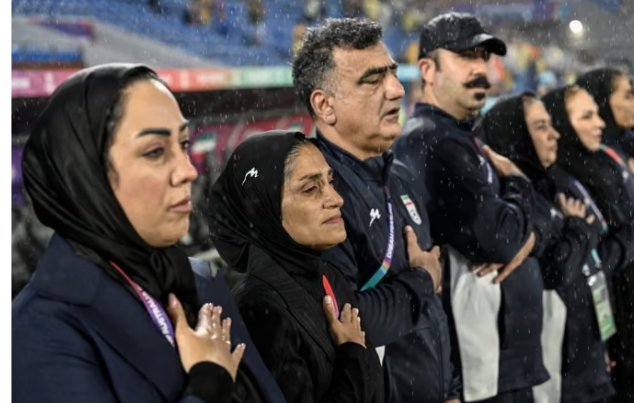
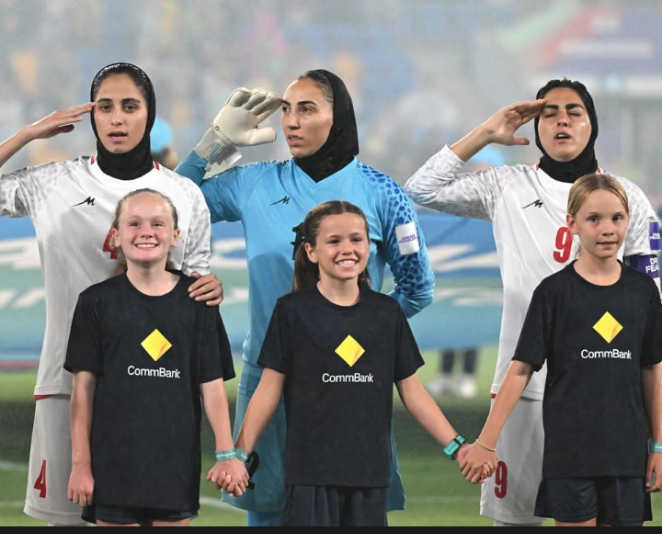
However, before their second group match against the Australia women’s national soccer team on the Gold Coast, the Iranian players reversed course — singing the anthem and saluting before kickoff. The sudden change has fueled speculation that the athletes may have faced pressure or warnings from authorities in Iran.
Australia went on to defeat Iran 4–0 in the match, leaving the Iranian team close to elimination from the tournament. They will play their final group game against the Philippines women’s national football team, with only a large victory offering a chance of reaching the quarter-finals.
Meanwhile, the political backlash inside Iran has intensified. Iranian state television presenter Mohammad Reza Shahbazi accused the players of dishonouring the country after their initial refusal to sing the anthem, reportedly calling them “wartime traitors” and suggesting they should be punished more harshly.
Human rights advocates say such accusations could put the athletes in serious danger if they return home.
Paul Power, chief executive of the Refugee Council of Australia, said the situation raises clear protection concerns.
“Certainly on the evidence that’s available, it would appear that the members of the women’s soccer team are at risk if they’re returned,” Power said, noting that even minor acts of peaceful protest in Iran have led to severe punishments in the past.
Germany-based Iranian journalist Ali Bornaei also urged the Australian government to act, tagging Australia’s foreign minister in a public appeal on social media.
“The lives of the Iranian Women’s National Football Team are in imminent danger,” Bornaei wrote. “After their peaceful protest in Australia, Iranian state-linked media has officially labeled them ‘wartime traitors’.”
“In Iran, ‘treason’ is a capital offense punishable by death. These athletes face arbitrary detention and execution if forced to return.”
Australia’s foreign minister Penny Wong said the government stands with Iranians who are fighting for freedom and basic rights.
“We stand with the brave people of Iran in their struggle against oppression,” Wong said. “They have suffered brutal acts of violence and intimidation, with women in particular being oppressed by the regime.”
She added that the team’s presence at the Asian Cup could inspire younger generations of Iranian women to participate in sport and push for greater rights.
Any humanitarian protection pathway would fall under the authority of Australia’s home affairs minister, Tony Burke. His office declined to comment on whether the government would consider protection for the players if they sought asylum.
Under international refugee law, Australia is not required to offer protection unless individuals formally apply. Advocates say the system is designed for precisely these circumstances, but the decision ultimately rests with the players themselves.
For now, the Iranian team remains focused on their final match of the group stage. But beyond the pitch, the controversy surrounding their protest has raised urgent questions about their safety once the tournament ends.
Read also: Pedro Neto FA charge: Chelsea winger faces disciplinary action after Arsenal red card
About The Author