The Iran women national anthem protest unfolded before their opening fixture at the AFC Women’s Asian Cup, as players stood silently during pre-match formalities ahead of kickoff in Australia.
The Iran women national anthem protest immediately drew global scrutiny, marking the team’s first competitive appearance since conflict escalated across the Middle East in recent weeks.
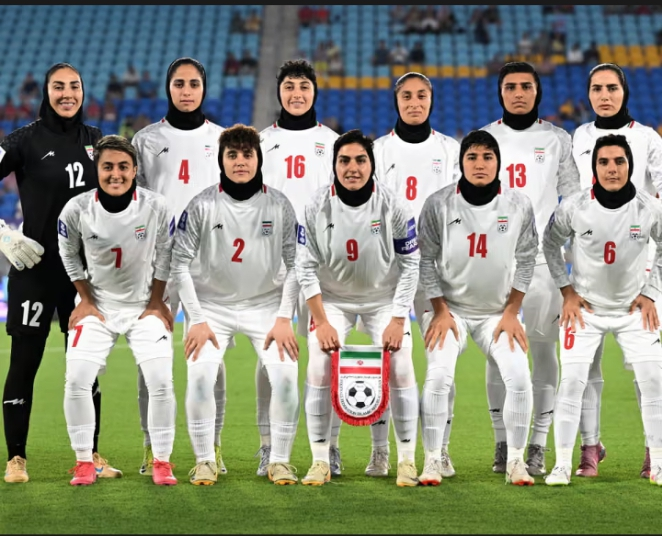
Facing South Korea in their Group A opener, every Iranian player lined up without singing, maintaining composed expressions as the anthem played inside Gold Coast Stadium.
The fixture took place in Queensland, with a significant crowd observing the moment. South Korea later secured a commanding 3-0 victory in the tournament encounter.
Iran had travelled to Australia days before regional air strikes began, leaving players to prepare for continental competition while monitoring developments affecting families back home.
Head coach Marziyeh Jafari declined to comment publicly on political matters when approached by reporters after the final whistle.
Questions also referenced the reported death of Iran’s long-serving leader Ali Khamenei, though team representatives avoided direct responses on the subject.
The Iran women national anthem protest quickly became a defining image of the match, circulating widely across international broadcasts and social media platforms.
Observers described the silence as deliberate yet dignified, highlighting how sport often reflects wider societal tensions during moments of geopolitical uncertainty.
Despite the pre-match focus, the contest itself showcased South Korea’s attacking sharpness and disciplined defensive structure throughout ninety minutes of play.
Iran struggled to convert possession into meaningful chances, with South Korea capitalising efficiently on scoring opportunities in both halves of the encounter.
Midfielder Amy Sayer later expressed empathy for the Iranian squad, praising their professionalism amid emotionally challenging circumstances.
Sayer noted that maintaining competitive focus while facing uncertainty at home demonstrated resilience deserving recognition beyond the final scoreline.
Australia opened their tournament campaign separately with a narrow victory against the Philippines in Perth days earlier.
Iran are scheduled to face hosts Australia next, returning to the same venue for their second Group A fixture.
The Iran women national anthem protest will likely remain a focal point when the teams meet, given the intense media attention already surrounding the squad.
Tournament organisers have not issued disciplinary statements, as remaining silent during an anthem does not automatically breach competition regulations.
Historically, football has provided athletes platforms to express collective sentiment through gestures, silence, or symbolic acts before global audiences.
The Asian Cup, running until 21 March, gathers leading nations across the continent in a showcase of elite women’s football.
In Group B action, North Korea recorded a 3-0 triumph over Uzbekistan in another opening-round encounter.
Iran’s qualification marked a milestone, as they remain the only Middle Eastern nation competing in this year’s edition of the tournament.
Preparation camps had focused exclusively on tactics and conditioning before geopolitical events shifted the emotional landscape surrounding the team.
Players maintained disciplined body language throughout the anthem ceremony, neither linking arms nor bowing heads, instead staring forward uniformly.
Analysts suggested such unity indicates careful collective decision-making rather than spontaneous individual protest from isolated members of the squad.
The Iran women national anthem protest also revived memories of previous athlete demonstrations seen at international sporting competitions.
However, the team avoided overt gestures beyond silence, refraining from visible slogans or additional symbolic actions during the ceremony.
Gold Coast Stadium provided a neutral international setting, far removed geographically from tensions unfolding across the Middle East.
Supporters inside the venue responded respectfully, with no audible disruption reported during the pre-match formalities.
Coaching staff maintained focus on tactical execution, attempting to shield players from overwhelming external narratives.
South Korea capitalised early, pressing aggressively and exploiting defensive gaps to establish momentum.
Iran’s defensive line absorbed sustained pressure but struggled to contain swift transitions through midfield channels.
Despite the defeat, players exchanged respectful handshakes post-match, underscoring sporting professionalism on both sides.
The Iran women national anthem protest overshadowed tactical analysis in immediate post-game discussions.
Broadcasters replayed footage repeatedly, emphasising the silent line-up as emblematic of wider regional unease.
International commentators debated whether sport can remain insulated from political realities during turbulent periods.
Players themselves remained measured, offering brief football-focused remarks while declining geopolitical commentary.
Security arrangements around the squad have reportedly been routine, with no extraordinary measures publicly disclosed.
Australia’s players reiterated intentions to compete fiercely yet respectfully in their forthcoming clash with Iran.
For tournament organisers, maintaining competitive integrity remains paramount as attention intensifies beyond pure sporting narratives.
As the Asian Cup progresses, the Iran women national anthem protest continues resonating globally.
Whether the gesture influences future fixtures or remains a singular moment will depend on unfolding developments on and off the pitch.
Read also:US orders ‘non-emergency’ staff to leave Bahrain, Jordan and Iraq amid regional tensions
For now, the image of silent players standing together stands as one of the tournament’s most powerful early visuals.
About The Author