Australia has moved to deport a British man living in Queensland after authorities accused him of repeatedly promoting neo-Nazi ideology and displaying banned extremist symbols online.
The 43-year-old was arrested earlier this month following an Australian Federal Police investigation into online activity alleged to breach Commonwealth criminal laws.
Police say the man used social media platform X to publish swastikas, promote violent extremist views, and express hostility toward the Jewish community.
Investigators allege the posts occurred repeatedly between October and early November, despite previous platform enforcement action against his main account.
According to police, the suspension of his primary account led him to create a second account with a similar name to continue posting offensive material.
The Australian Federal Police said the content was considered harmful, targeted, and in violation of laws prohibiting extremist propaganda and hate symbolism.
Following his arrest, officers searched the man’s home in Caboolture, north of Brisbane, as part of the ongoing investigation.
During the search, police seized several weapons, including axes, knives, and swords bearing swastika imagery, alongside electronic devices.
Authorities confirmed the man has been charged with three counts of displaying prohibited Nazi symbols and one count of using the internet to menace or harass.He is expected to appear in court in January, while criminal proceedings continue under federal jurisdiction.
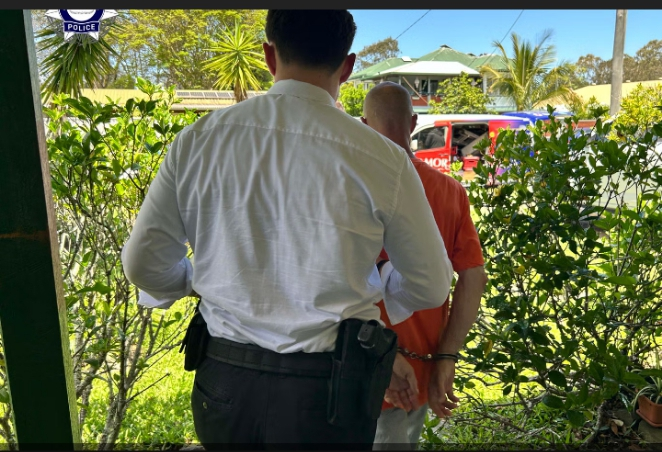
In parallel with the police case, Australia’s home affairs department cancelled the man’s visa shortly after charges were laid.He was transferred to immigration detention in Brisbane, where he remains while deportation arrangements are considered.
Home affairs minister Tony Burke defended the decision, stating that Australia has no tolerance for visitors who promote hatred or extremist ideology.“He came here to hate – he doesn’t get to stay,” Burke said when addressing the case publicly.
The minister emphasised that visa holders are guests in Australia and must respect the country’s laws and social values.Burke noted that while most visa holders contribute positively, authorities will act decisively when individuals pose risks to community cohesion.
The case comes amid heightened national scrutiny of extremist symbolism following a recent antisemitic attack at Sydney’s Bondi Beach.
In response to rising concern, Australian authorities have intensified enforcement against hate speech and extremist displays across the country.
Earlier this year, Australia strengthened its hate crime legislation, introducing mandatory prison sentences for publicly displaying prohibited symbols.
The reforms also criminalised making Nazi salutes, reflecting a broader effort to deter extremist ideology in public and online spaces.
Australian Federal Police assistant commissioner Stephen Nutt said enforcement is aimed at protecting social harmony and public safety.
He explained that extremist symbols are deliberately used to intimidate communities and fracture Australia’s multicultural fabric.“If we identify instances where this is happening, we will act swiftly,” Nutt said, outlining the police approach.
Authorities say the current investigation demonstrates how online activity can have serious legal and immigration consequences.
The case also follows a similar incident last month involving a South African national whose visa was revoked after attending a neo-Nazi rally.
That individual later left Australia voluntarily after being placed in immigration detention by federal authorities.
Legal experts note that visa cancellation powers allow the government to act independently of criminal court outcomes.
Under Australian law, the minister may cancel visas if a person fails the “character test” or poses risks to public order.While the accused man’s guilt will be determined in court, immigration decisions operate under separate administrative standards.
Human rights groups continue to debate the balance between free expression and hate-speech restrictions.
However, Australian officials maintain that extremist ideology does not fall under protected speech, particularly when it promotes violence.
The government says the measures are designed to safeguard minority communities and uphold democratic values.

As the legal process unfolds, the case is expected to remain a reference point in Australia’s broader crackdown on extremist activity.
Read also: US Sanctions Two British Anti-Hate Speech Campaigners in Christmas Tensions
About The Author