Russia loses to Australia in a landmark dispute after the High Court upheld Canberra’s decision to cancel the Russian embassy lease near the nation’s Parliament House in Canberra.
Prime Minister Anthony Albanese said the government acted to protect national security. “The safety of our Parliament and citizens comes first. No foreign power is above our laws,” he said.
The legal battle began after Russia criticized the legislation as “Russophobic hysteria,” claiming it violated the Australian Constitution and challenged the government’s authority to cancel a long-term embassy lease.
In 2023, Australia passed legislation terminating the 99-year lease, citing security threats. “The proximity to Parliament posed risks that could not be ignored,” said a government spokesperson, highlighting intelligence reports on potential surveillance.
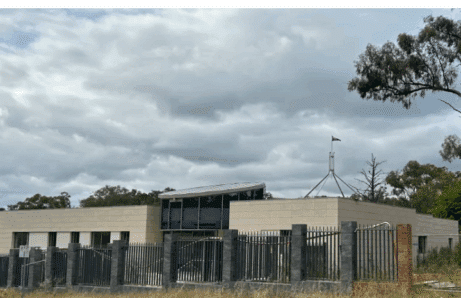
The High Court ruled unanimously that Canberra acted lawfully. “This decision confirms that Australia may legislate to protect its national security, even when foreign powers hold property,” the ruling stated.
Russia, having paid around $2 million for the lease in 2008, is entitled to compensation, the court noted, but it rejected Moscow’s bid to prevent the eviction of embassy staff.
Attorney General Michelle Rowland emphasized, “We will always defend our national security and values. Australia will not compromise on the protection of Parliament or critical institutions.”
Security experts described the location as “unacceptably close to sensitive operations.” Dr. Helen Mackenzie, a Canberra-based analyst, said, “Any embassy so close could facilitate intelligence-gathering or other clandestine activities.”
The Russian embassy stated it would study the ruling carefully. “We will review the text of the High Court decision and assess the implications for diplomatic relations,” an embassy official said in a statement.
Analysts noted that this legal loss could strain Australia-Russia relations further, which have deteriorated since the downing of Malaysia Airlines MH17 and the 2022 invasion of Ukraine.
“The High Court has reinforced that foreign missions cannot override Australian law,” said Professor Mark Ellis, a constitutional law expert. “National security will always prevail over diplomatic convenience.”
Before the legislation, Russia had begun minor preparations at the site, raising alarms among intelligence agencies. Officials feared embassy staff could observe government operations and nearby sensitive buildings.
Rowland added, “This ruling demonstrates that Australia’s legal framework is robust and capable of protecting our institutions from potential foreign interference.”
Observers argue the case sets a precedent for future disputes over foreign property in sensitive zones. “Other nations will now recognize that leases can be revoked when security is at risk,” said Mackenzie.
The government will now consider next steps, including the process of compensation and ensuring no similar risks arise elsewhere. “We will proceed with caution and thorough review,” Rowland said.
Russia’s loss also carries symbolic weight, highlighting that even powerful nations cannot challenge Australian laws when national security is concerned. “It sends a clear message globally,” noted Ellis.
Australia has consistently monitored foreign embassy activities in Canberra, especially from countries with strained relations. Intelligence officials praised the ruling as a protective measure against potential espionage.
“The legislation and court decision work together to ensure Canberra’s Parliament remains secure,” said Rowland. “No foreign power will compromise our institutions’ integrity or safety.”
Security analysts noted that embassies located near government centers could gain undue access to communications or sensitive activities. The High Court’s decision prevents any such risk from arising.
“This is a victory for common sense and the rule of law,” said Mackenzie. “It balances diplomatic obligations with the fundamental need to protect national security.”
The Russian embassy has indicated it may seek diplomatic remedies for compensation but will not pursue further legal action. “We respect Australia’s legal process,” said an official statement.
Australia’s decision reflects a broader approach to risk management. “We evaluate every foreign property near Parliament for potential threats,” said Rowland. “This ensures that national interests are never compromised.”
As Russia loses to Australia, experts highlight that other nations may now approach Canberra with greater awareness that leases can be revoked if security concerns arise. “The precedent is clear and strong,” said Ellis.
Observers also emphasize that Canberra’s legal authority over foreign property balances international relations with internal safety priorities given the eventual outcome where Russia loses to Australia. “The government’s legislative powers are crucial for the protection of democratic institutions,” Mackenzie said.
By blocking Russia’s embassy near Parliament, Canberra underscores its proactive stance on national security, ensuring no foreign state can inadvertently or deliberately monitor government operations.
“This is not just about one embassy,” said Rowland. “It is about safeguarding the foundations of Australian democracy and maintaining public confidence in our institutions.”
The Australian High Court ruling strengthens Australia’s capability to act decisively when foreign leases or activities pose risks. “Legal action and intelligence assessments must work hand in hand,” said Mackenzie.
Intelligence reports warned that proximity to Parliament could allow sensitive information gathering. The legislation and ruling collectively prevent any such scenarios, ensuring that critical government operations remain secure.
Security commentators stress that this case will influence future embassy placements globally. “Countries will think twice before assuming legal protections will shield them from national security laws,” said Ellis.
Australia continues to monitor diplomatic activities closely. The government aims to prevent any embassy, including Russia’s, from jeopardizing parliamentary safety or the security of critical institutions.
The ruling reinforces Canberra’s broader strategy to mitigate foreign influence risks, demonstrating that legislative authority and judicial oversight effectively protect national interests.
Officials also stressed that the decision is part of a consistent policy. “We assess every foreign mission to ensure it poses no risk,” said Rowland. “This ruling reinforces that approach.”
Experts say the outcome will likely shape international understanding of diplomatic property disputes. “Legal precedents like this inform both domestic and foreign actors about Australia’s security priorities,” said Mackenzie.
The case has become a reference point for lawmakers globally who seek to balance diplomatic obligations with national security needs. “It’s a textbook example of legislative and judicial cooperation,” noted Ellis.
Australia’s firm stance demonstrates that foreign influence cannot override the sovereignty of domestic law, ensuring Parliament and sensitive government operations remain protected from potential espionage or observation.
The High Court’s decision sets an unmistakable precedent, showing that foreign leases—even those spanning decades—can be legally revoked when intelligence and security considerations demand action.

Rowland concluded, “Australia will continue to stand firm on safeguarding its institutions. No foreign nation, regardless of power, will be allowed to compromise the security of Parliament or its officials.”