

The Bloody Sunday trial ended in Belfast on Thursday with Soldier F, a British army veteran, found not guilty of murder for the notorious Derry shootings in 1972.
Soldier F faced charges of murdering James Wray and William McKinney and attempting to kill five other protesters during the tragic Northern Ireland Troubles civil rights march in Derry.
The veteran remained anonymous throughout the trial under a court order, shielded by a curtain in the dock, a measure taken for his protection during the Bloody Sunday trial.
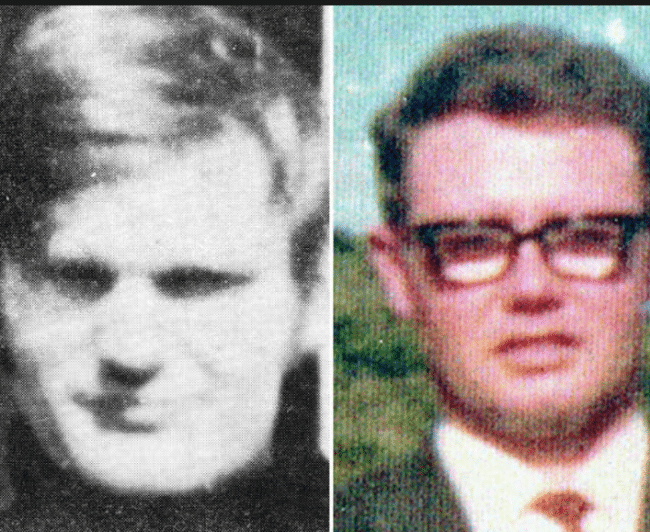
British troops fired into a crowd of unarmed civilians on that day, killing 13 instantly, with a fourteenth dying months later, marking the Derry shootings as a defining moment in history.
Families of victims campaigned for decades for accountability, while veteran organizations argued the prosecution represented an unfair political targeting of Soldier F during the wider Northern Ireland Troubles conflict.
Mr Justice Lynch presided over the trial without a jury, an exceptional procedure, reviewing extensive evidence, witness testimonies, and archival records for the complex Bloody Sunday trial in Belfast.
The defense argued Soldier F acted under extreme stress amid confusion, claiming he could not be individually responsible for the shootings during the chaotic Derry shootings on 30 January 1972.
Prosecutors highlighted forensic evidence and eyewitness statements suggesting deliberate targeting of civilians, contending that Soldier F bore responsibility for lives lost during the Northern Ireland Troubles.
Families expressed deep disappointment with the verdict, describing it as another denial of justice and emphasizing selective accountability in cases connected to the Derry shootings.
Supporters of Soldier F welcomed the ruling as vindication, arguing the Bloody Sunday trial unfairly singled out one soldier while ignoring the challenges soldiers faced during civil unrest.
Granting anonymity to Soldier F sparked debate over transparency, protection, and public trust, highlighting the tension between veterans’ safety and accountability in the Bloody Sunday trial proceedings.
The Derry shootings remain one of the most notorious tragedies of the Northern Ireland Troubles, symbolizing the consequences of violent confrontations between military forces and civil rights protesters.
Investigations, including the Saville Inquiry, deemed the killings unjustifiable, but decades later, translating these findings into criminal convictions proved legally and politically difficult for the Bloody Sunday trial.
Witness recollections were affected by time, complicating evidence collection and context interpretation, demonstrating the challenges of prosecuting historical actions of British army veterans like Soldier F.
Media coverage reflected public polarization; some emphasized legal complexities, while others focused on victims’ families’ anguish, underscoring the symbolic importance of the Derry shootings beyond courtroom verdicts.
The trial prompted discussions about accountability in historical conflicts, balancing military service under difficult conditions against the rights of civilians, with the Bloody Sunday trial serving as a focal point.
British and Irish officials closely observed the trial, aware of its potential impact on reconciliation and post-conflict relations, as the Derry shootings remain a sensitive chapter in the Northern Ireland Troubles.
The verdict left families of victims feeling justice was incomplete, highlighting difficulties in pursuing accountability decades after violence, while scholars emphasized the trial’s value in historical documentation and understanding.
Some commentators suggested the Bloody Sunday trial demonstrated the legal system’s limitations when addressing complex, decades-old military incidents during the Northern Ireland Troubles.
Civil society groups stressed the importance of institutional responsibility, arguing that focusing solely on Soldier F obscures broader systemic issues that contributed to the Derry shootings and unrest across Northern Ireland.
Veteran organizations warned that trials like this risked creating a perception of unfair targeting, emphasizing that British army veterans often operated under extreme stress and challenging operational conditions during the Troubles.
The trial offered rare insight into decisions made by soldiers on Bloody Sunday, providing a historical record while highlighting the legal and moral ambiguities faced by Soldier F and fellow troops.
Families called for renewed investigation into all military actions on that day, insisting the Bloody Sunday trial should be a starting point, not the conclusion, in seeking comprehensive accountability.
Observers noted the acquittal might affect future prosecutions in Northern Ireland, emphasizing the challenges in addressing historical injustices while ensuring fair treatment of veterans like Soldier F.
While the verdict disappointed victims’ families, experts emphasized that trials of historical military actions play a critical role in shaping public understanding and preserving memory of the Derry shootings.
The Bloody Sunday trial reflects ongoing tensions between the need for justice, the protection of military personnel, and society’s attempt to reconcile with the violent legacy of the Northern Ireland Troubles.
Political leaders highlighted the trial’s significance for lessons learned, urging continued dialogue, commemoration, and education regarding the Derry shootings and the broader civil rights struggle during the Troubles.
The acquittal of Soldier F ensures the Bloody Sunday trial will remain a landmark case, demonstrating the challenges of balancing legal accountability, historical context, and military realities decades after tragedy.
Relatives of victims continue to campaign for justice, emphasizing that legal proceedings alone cannot resolve the pain caused by the Derry shootings or fully address historical accountability in Northern Ireland.
Experts suggest future mechanisms may be required to address unresolved cases from the Troubles, noting the Bloody Sunday trial offers important insights into legal, ethical, and historical considerations.
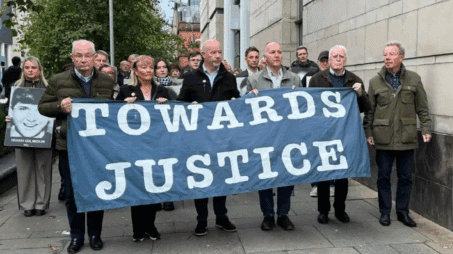
The Bloody Sunday trial acquitted Soldier F, leaving families dissatisfied while providing legal, historical, and societal perspectives on the Derry shootings and the enduring legacy of the Northern Ireland Troubles.

