Armed robots in Ukraine war are rapidly transforming the nature of combat as Ukraine and Russia increasingly deploy uncrewed ground vehicles to perform dangerous frontline missions once carried out by soldiers.
Since the start of the full-scale invasion launched by Russia in 2022, the conflict has evolved into a technologically advanced battlefield dominated by drones, surveillance systems and remote-controlled weapons.
While aerial drones initially captured global attention, military planners are now focusing heavily on ground-based robots that can move through trenches, ruined buildings and contested zones without risking human lives.
Ukrainian forces have developed specialised battalions dedicated to operating these machines, marking a new phase in the war where robotics and automation play an increasingly central role in combat operations.
According to Ukrainian commanders, armed ground robots are already carrying out frontline tasks ranging from surveillance to direct attacks against Russian positions in contested areas.
Major Oleksandr Afanasiev of the K2 Brigade, which operates what he describes as the world’s first UGV battalion, says “robot wars are already happening” on parts of the front line.
The brigade deploys robotic vehicles equipped with machine guns that can advance into areas where soldiers would face immediate danger from artillery, snipers or aerial drone strikes.
Afanasiev explains that the machines “open fire on a battlefield where an infantryman would be afraid to turn up,” allowing Ukrainian forces to maintain pressure on Russian troops without exposing soldiers to constant risk.
Some of the robotic systems have also been fitted with explosive charges and used as kamikaze vehicles designed to detonate inside enemy positions or fortified hideouts.
Unlike aerial drones that can often be heard approaching, ground robots move quietly across the battlefield, sometimes giving opposing forces little warning before an attack.
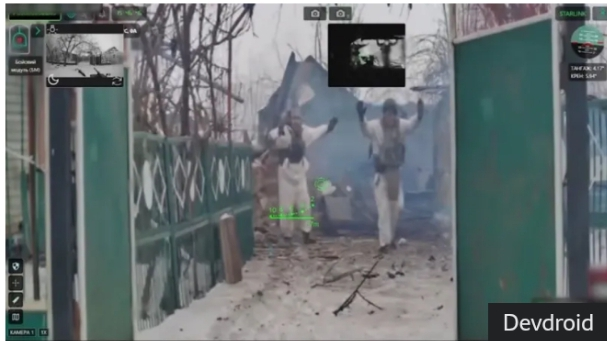
Ukrainian commanders say the machines have already played roles in repelling Russian assaults and forcing enemy troops to surrender when confronted by unmanned weapon platforms.
Footage shared by Ukrainian units reportedly shows Russian soldiers surrendering after being confronted by armed ground drones approaching their positions.
Despite the growing autonomy of the systems, Ukrainian military officials insist that humans still retain ultimate control over lethal decisions.
A deputy commander from Ukraine’s 33rd Detached Mechanised Brigade, known by the callsign Afghan, said modern UGVs can navigate terrain and identify potential targets independently.
However, he emphasised that the final decision to open fire must always be made by a human operator to comply with international humanitarian law and avoid tragic mistakes.
“Robots can misidentify the wrong person or attack a civilian,” Afghan explained, stressing that strict oversight is required when deploying autonomous combat technologies.
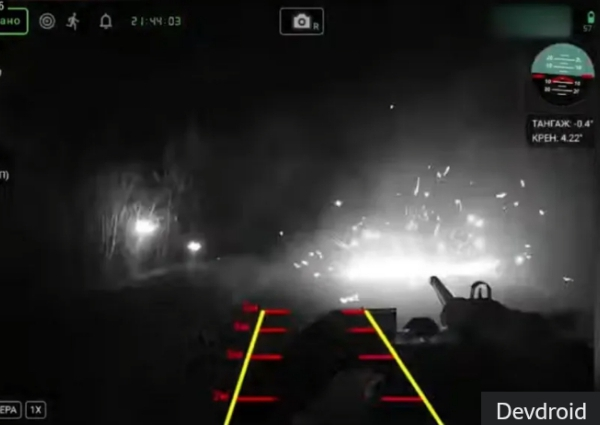
Most of the ground robots currently used in the war are operated remotely by soldiers located a safe distance away, typically using encrypted internet connections and specialised control systems.
Operators guide the vehicles through ruined towns, forests and trenches using live video feeds transmitted from cameras mounted on the robots.
Some Ukrainian UGVs are equipped with grenade launchers in addition to machine guns, expanding their ability to strike enemy fortifications or vehicles.
Others are designed to perform engineering tasks such as planting landmines, laying barbed wire or clearing dangerous areas without putting troops in harm’s way.
Even so, the majority of uncrewed ground vehicles in the Ukrainian arsenal still perform non-combat roles that remain critical to frontline survival.
Robots frequently deliver ammunition, food and medical supplies to troops positioned in areas where constant drone surveillance makes human movement extremely risky.
They are also used to evacuate wounded soldiers from the battlefield, allowing medical teams to retrieve casualties without exposing rescue crews to enemy fire.
Former Ukrainian commander-in-chief believes these robotic systems will soon become far more powerful as they integrate with artificial intelligence and swarm technology.
Speaking at the London think tank , he predicted that future battles would involve large coordinated groups of drones attacking simultaneously from land, air and sea.
“In the near future we’ll see dozens and even hundreds of smarter and cheaper drones attack from various directions and heights,” Zaluzhnyi said while describing the next generation of warfare.
Such coordinated attacks could overwhelm traditional defences and create complex battle scenarios where machines communicate and operate with minimal human intervention.
The rapid development of robotic warfare has been driven largely by necessity as both Ukraine and Russia face significant battlefield challenges.
In Ukraine’s case, the widespread use of aerial drones has made the front lines extremely dangerous for infantry units.
Military analysts say the “kill zone” along the frontline now stretches roughly 20 to 25 kilometres from the main line of contact due to constant surveillance and precision strikes.
This environment means any soldier moving in open terrain can quickly become a target for drones or artillery guided by drone reconnaissance.
As a result, commanders increasingly rely on robots to perform tasks that would otherwise expose troops to almost certain danger.
Afanasiev argues that while infantry remains essential to hold territory, robotic support systems are becoming indispensable.
“Ukraine can afford to lose robots, but it simply cannot afford to lose battle-ready soldiers,” he said.
Ukraine is also dealing with manpower shortages after years of intense fighting and heavy casualties on both sides.
Recruiting new soldiers has become increasingly difficult, further increasing the importance of technological solutions such as robotic combat platforms.
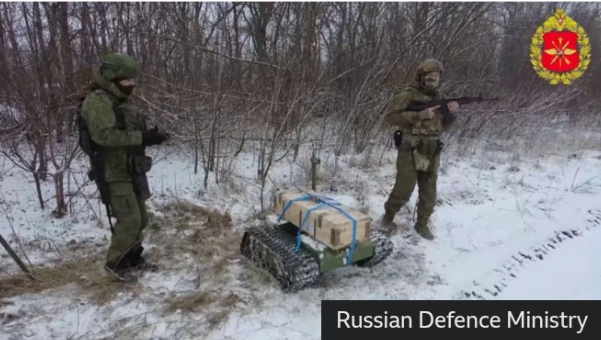
Russia has also been actively developing its own ground robots to compete with Ukrainian systems.
Russian media reports describe a vehicle known as the Kuryer that can be equipped with a flamethrower or heavy machine gun and operate autonomously for several hours.
Another Russian robotic weapon reportedly used in the war is the Lyagushka, meaning “Frog,” a small explosive-laden vehicle designed to detonate near Ukrainian positions.
As the number of robotic platforms grows on both sides, experts say direct clashes between unmanned combat systems could soon become common.
Yuriy Poritsky, chief executive of Ukrainian robotics company Devdroid, believes the battlefield will inevitably see robots fighting other robots.
“Sooner or later our strike UGV will come up against their strike UGV,” he said, adding that the idea of robot wars is no longer science fiction but a present reality.
His company has already produced hundreds of “strike droids” for Ukrainian forces and is working on systems that can automatically return to base if communications with operators are lost.
Future versions may be able to travel independently to assigned coordinates, monitor enemy movement and engage targets if necessary before returning to their launch point.
Another Ukrainian manufacturer, Tencore, dramatically increased its production during the conflict.
The company delivered more than 2,000 ground robots to Ukrainian forces during 2025 alone.
Its director Maksym Vasylchenko expects demand to surge dramatically as military planners expand their use of robotic platforms.
According to Vasylchenko, Ukrainian forces could require as many as 40,000 ground robots in 2026, with at least 10 to 15 percent equipped with weapons systems.

He believes strike robots will soon become essential tools for any modern army operating in high-intensity conflict zones.
Looking further into the future, Vasylchenko predicts robotic soldiers could eventually resemble humans in shape and movement.
Such developments could dramatically reshape military tactics and raise new ethical debates about the role of autonomous machines in warfare.
For now, however, most battlefield robots remain relatively simple vehicles equipped with cameras, remote controls and mounted weapons.
Yet even these early systems are already changing how battles are fought across eastern and southern Ukraine.
Read also: Iran won’t surrender to Israel US, President Pezeshkian declares as regional war intensifies
As technology advances and production increases, the war may increasingly be fought not just by soldiers and drones, but by fleets of intelligent machines moving across the battlefield.
About The Author