Angela Rayner union backing has emerged as a defining moment in Labour Party politics, as speculation grows over potential leadership changes should the party falter in the Gorton and Denton by-election.
This public endorsement by a major trade union has intensified debates within Labour over the future direction of its leadership and policy priorities.
Maryam Eslamdoust, general secretary of the Transport Salaried Staffs’ Association (TSSA), confirmed her support for Angela Rayner, marking the first time a prominent Labour-affiliated union leader has openly considered an alternative to Sir Keir Starmer. She stated, “If we were to come third, I think Keir’s time will be up,” signaling potential fractures within party ranks.
Despite the high-profile union endorsement, Angela Rayner’s office emphasized that there is currently no contest for leadership. A spokesperson clarified, “Angela has been clear Labour must come together, avoid distraction, and work as a team to deliver for the public,” indicating that the deputy leader remains focused on party unity amid turbulent political circumstances.
The Gorton and Denton by-election has become a crucial test for Labour, with party insiders warning that poor performance could spark a wider leadership challenge.
Analysts suggest that the public backing of Rayner by the TSSA could embolden other factions within the party, increasing pressure on Sir Keir Starmer to address criticisms and rally his support base.
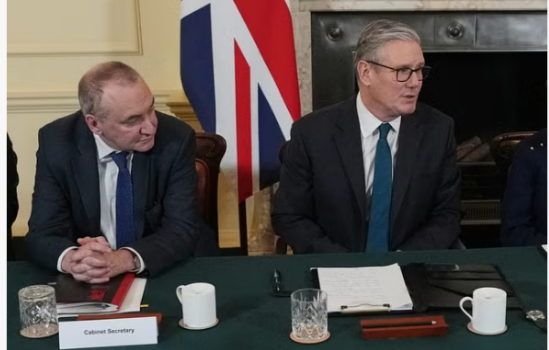
Internal party debates have coincided with multiple high-profile departures from Downing Street. Sir Chris Wormald, Britain’s cabinet secretary, stepped down after just 14 months, receiving a payout reportedly exceeding £250,000.
The resignation followed similar exits by chief of staff Morgan McSweeney and communications head Tim Allan, raising questions about stability at the heart of the government.
Payments such as the Chris Wormald payout, which require Treasury approval for amounts above £95,000, have attracted scrutiny due to concerns over value-for-money standards.
Whitehall sources indicated that Sir Keir Starmer signed off on the payout through a ministerial direction, despite it not fully meeting typical civil service authorization rules.
Former cabinet secretary Gus O’Donnell criticized the government for anonymous briefings targeting civil servants, calling them “one of the current Labour government’s biggest failings.”
He urged the prime minister to assert stronger oversight over special advisors to prevent reputational damage and restore confidence in the civil service.
The criticisms follow a pattern of high-profile resignations and controversies within the Labour leadership team, prompting ministers to defend Sir Keir Starmer’s approach.
Water minister Emma Hardy described the prime minister as “keen to make sure we have the team we need” and emphasized his dedication to tackling the cost-of-living crisis, which remains a top concern for the public.
Starmer has faced allegations that he “threw his cabinet secretary under the bus” following Wormald’s resignation. Hardy rejected such claims, insisting that Starmer’s management changes aim to ensure that Downing Street has the right personnel to deliver on the government’s priorities and improve operational efficiency.
The Labour leadership debate has been further complicated by critiques of Downing Street culture. Female parliamentarians have criticized what they describe as a “boys’ club,” advocating for greater representation of women in senior positions.
Baroness Harriet Harman has suggested reviving the first secretary of state role, effectively a deputy prime minister position, to address gender imbalances.
Angela Rayner and Andy Burnham have jointly challenged Sir Keir Starmer’s policy on business taxes, particularly the proposed pub tax.
Rayner highlighted challenges posed by rising VAT and energy costs for hospitality businesses, while Burnham supported lowering business rates to protect local enterprises, reflecting wider concerns about the economic climate.
The combination of policy disagreements, high-profile resignations, and public union endorsements has intensified speculation over Labour’s direction.
Analysts note that these developments could either catalyze party cohesion under Starmer or trigger a leadership challenge if electoral results in Gorton and Denton are unfavorable.
Observers also point to recent controversies surrounding appointments of figures like Lord Peter Mandelson and Lord Matthew Doyle.
Critics argue that these selections, despite links to individuals associated with sex offenses, have further undermined confidence in the government’s judgment and fuelled calls for reform in appointments processes.
The political climate has prompted calls for introspection within Labour. Senior figures argue that the party must focus on operational efficiency, ethical governance, and responsiveness to public concerns. Union support for Rayner has spotlighted internal divisions but also reflects broader debates about leadership effectiveness and party unity.
In the context of the ongoing by-election, the Labour Party faces the dual challenge of maintaining voter confidence while managing internal dynamics.
Failure to address concerns could weaken the party’s standing in future elections and create openings for opposition parties to capitalize on perceived instability.
Rayner’s union backing has also drawn attention to the influence of trade unions within the party. Historically, unions have played a key role in shaping leadership outcomes, and Eslamdoust’s endorsement signals that influential factions may push for more significant leadership changes if electoral setbacks occur.
Despite the pressure, Angela Rayner has consistently framed her role as one focused on teamwork and cohesion. Her office reiterates that the priority remains on winning elections and advancing Labour’s policy agenda, suggesting that any leadership considerations remain contingent on electoral performance.
Meanwhile, Starmer has signaled a commitment to ensuring his team is aligned with government priorities.
Ministers report that he is “absolutely dedicated to cutting the cost of living” and remains focused on delivering practical solutions, including energy support, wage adjustments, and relief for small businesses, which remain central voter concerns.
The debate over leadership and internal party cohesion has become intertwined with public perceptions of Labour governance.
Analysts note that maintaining credibility requires careful management of high-profile resignations, financial payouts like Wormald’s, and the optics of union interventions, all of which influence voter sentiment ahead of critical by-elections.
In addition, the challenge of gender representation continues to shape discussions about Downing Street culture. Calls for greater female leadership in senior roles reflect a broader societal expectation that governments reflect diversity and inclusivity, adding another dimension to the leadership debate within Labour.
Labour insiders emphasize that while union endorsements are politically significant, they do not automatically translate into immediate leadership changes.
Party rules and processes ensure that any transition requires broader support and consideration, reinforcing the need for strategic planning amid electoral uncertainties.
Observers agree that the Gorton and Denton by-election will serve as a key indicator of party health. Poor performance could amplify calls for change, while success might strengthen Sir Keir Starmer’s position and reduce the immediacy of leadership speculation, illustrating the high stakes associated with these developments.
Angela Rayner union backing reflects both her growing profile and the complex dynamics shaping Labour politics. The endorsement underscores the tension between party loyalty, electoral performance, and the influence of affiliated unions, highlighting the strategic decisions facing party leadership in the months ahead.
The combination of financial scrutiny, civil service resignations, union pressures, and calls for gender equity within Labour underscores the multifaceted challenges facing Sir Keir Starmer.
How he navigates these issues will likely shape not only internal party cohesion but also Labour’s public credibility in the lead-up to future national elections.
As the political landscape continues to evolve, Labour members and observers will watch closely for signals of strategic adjustments, leadership priorities, and responses to union interventions.
Angela Rayner’s prominence in these discussions reflects her potential to influence the party’s direction, especially if electoral outcomes in Gorton and Denton fall short of expectations.
The current Labour situation illustrates a delicate balancing act: maintaining unity, addressing economic and social concerns, and preparing for potential leadership transitions without undermining voter confidence or operational effectiveness.
Angela Rayner union backing serves as both a symbol of internal pressure and a reminder of the stakes involved in political leadership decisions.
Ultimately, the unfolding events suggest that Labour faces a pivotal moment. With high-profile resignations, union endorsements, and public scrutiny of leadership effectiveness, the party must carefully manage its internal politics while presenting a coherent vision to the electorate.
The outcomes of these decisions could shape not only the immediate leadership structure but also the party’s trajectory for years to come.
Keyphrase list: Angela Rayner union backing, Sir Keir Starmer, Gorton and Denton by-election, Chris Wormald payout, Labour leadership challenge, UK civil service resignations
About The Author