Albanese recalls parliament as the federal government moves to urgently advance sweeping hate speech and gun law reforms in response to the Bondi terror attack that killed 15 people and sent shockwaves across Australia.
The early recall of lawmakers signals a decisive political moment, with the prime minister framing the reforms as a necessary response to rising extremist ideology and hate-driven violence.
The decision will see members of parliament return to Canberra on January 19 and 20, two weeks ahead of the scheduled start of the parliamentary year.
The special sitting will include condolence motions for the victims of the Bondi attack, alongside debate on legislation the government says will fundamentally strengthen Australia’s ability to confront hatred, extremism and firearm-related risks.
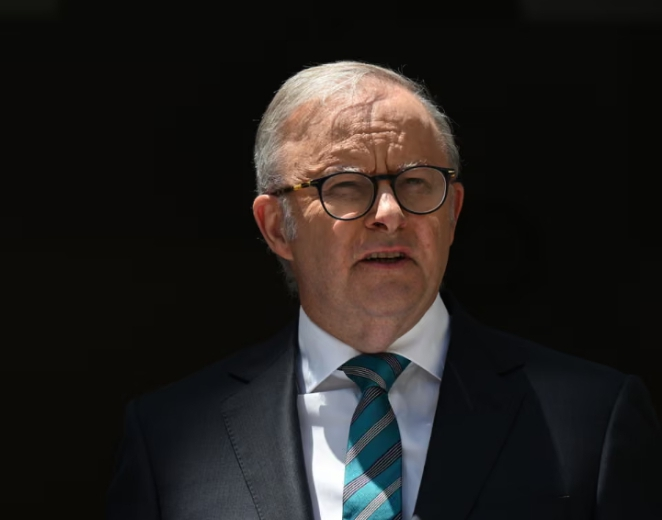
Anthony Albanese said the early recall reflected both urgency and responsibility, rejecting claims that the move was politically opportunistic.
He argued that Australians expected leadership in moments of national trauma and that delaying legislative action would send the wrong signal to communities directly affected by the violence.
Albanese recalls parliament against a backdrop of heightened community tension, particularly among minority groups who have reported an increase in hate speech and intimidation in recent months.
Jewish organisations, in particular, have repeatedly warned that existing legal protections were inadequate to deal with the scale and severity of antisemitic rhetoric circulating both online and offline.
At the centre of the government’s legislative agenda is a major overhaul of federal hate speech laws. The proposed reforms will introduce a new racial vilification offence aimed at criminalising conduct that incites hatred, intimidation or harassment on the basis of race, religion or ethnicity.
The offence is designed to capture serious harm while remaining distinct from legitimate political expression, a balance the government says has been carefully considered during drafting.
The legislation will also expand current bans on prohibited extremist symbols and create a new criminal offence for inciting hatred with the intent to intimidate or harass.
Under the reforms, courts will be required to explicitly consider extremist or ideological motivation as an aggravating factor during sentencing, allowing for tougher penalties in cases where hatred is central to the offence.
A significant feature of the package is the creation of a national framework to formally list hate groups. Unlike existing terror listings, which require a high evidentiary threshold, the new scheme will allow authorities to designate organisations that promote or glorify hatred even if they fall short of terrorist classification. Once listed, it would become an offence to recruit for, fund, or publicly promote such groups.
The government has also confirmed that the home affairs minister will be granted expanded powers to cancel or refuse visas where there are reasonable grounds to believe an individual poses a risk of spreading extremist ideology.
These provisions are intended to target so-called “hate preachers” and others who exploit Australia’s openness to advance divisive agendas.
Alongside the hate speech reforms, the legislation will address gun ownership and firearm access, an issue reignited by the Bondi terror attack.
The government plans to introduce the largest national gun buyback program since the Port Arthur massacre of 1996, aiming to reduce the number of prohibited and high-risk firearms in circulation.
The proposed gun buyback is expected to require cooperation between the federal government and the states, with funding arrangements already emerging as a point of contention. Several states, including Tasmania, have indicated that the Commonwealth should bear the full cost of the scheme, arguing that firearm regulation is primarily a federal responsibility in this context.
Albanese has insisted that the combined approach to hate speech and gun laws is deliberate, reflecting the reality that extremist violence often involves both ideology and access to weapons.
He rejected opposition claims that the issues should be dealt with separately, arguing that the Bondi attack demonstrated the dangers of addressing one without the other.
Opposition leader Sussan Ley said the Coalition would examine the legislation closely, warning against what she described as an overly broad bill covering complex and distinct policy areas.
She accused the prime minister of risking division by bundling speech-related offences with firearm regulation, though she stopped short of committing to oppose the legislation outright.
Some Nationals and One Nation MPs have already voiced opposition to tougher gun laws, with Barnaby Joyce calling for the reforms to include a ban on the burning of the Australian flag.
Joyce argued that flag desecration should be treated as a form of hate speech, a proposal that has drawn mixed reactions across the political spectrum.
Despite the political tensions, Albanese has expressed confidence that the legislation will pass the Senate by the end of the special sitting.
He said all parties would have sufficient time to review the bill, noting that opposition MPs had already been briefed and that consultations with crossbenchers and the Greens were ongoing.
The government has also confirmed that the legislation will be reviewed by the Parliamentary Joint Committee on Intelligence and Security prior to its formal introduction, a move intended to reassure critics concerned about civil liberties and oversight.
Community leaders have broadly welcomed the tougher stance on hate speech, while stressing the importance of careful implementation.
The president of the Executive Council of Australian Jewry, Peter Wertheim, described the reforms as a promising step but cautioned that previous efforts had fallen short of delivering meaningful protection.
The Bondi terror attack has also prompted broader reflection on Australia’s approach to social cohesion, with Albanese recently announcing a royal commission into antisemitism and community harmony after initially resisting calls for a federal inquiry.
The decision marked a significant shift in the government’s position following sustained pressure from community groups and political leaders.
Albanese recalls parliament at a moment when Australians are demanding both accountability and action, with the government betting that decisive legislative reform will restore confidence and reduce the risk of future attacks.
Whether the proposed laws strike the right balance between security, freedom of expression and federal cooperation will be closely scrutinised in the days ahead.
As parliament prepares to debate the legislation, the legacy of the Bondi attack continues to shape the national conversation. For the government, the recall represents an opportunity to demonstrate leadership in the face of tragedy.
Read also: Iran protests latest: Trump briefed on strike options as security forces tighten grip nationwide
For critics, it is a test of whether urgency has come at the expense of careful lawmaking. For many Australians, it is a sign that the political system is responding to a moment of profound national grief with concrete action.
About The Author