Australia woke to grief and anger as Anthony Albanese unveiled sweeping new hate speech laws following the Bondi beach terror attack that killed fifteen people.
The prime minister conceded failures in confronting antisemitism earlier, acknowledging that warning signs were missed before violence erupted during a Hanukah celebration in Sydney.
Under the proposed reforms, hate speech laws will expand to directly target so-called hate preachers promoting violence, division, or racial supremacy across communities nationwide.
The government’s five-point plan also grants the home affairs minister new powers to cancel or refuse visas for individuals spreading extremist ideology.
Albanese’s announcement came as mourners gathered for the funeral of ten-year-old Matilda, the youngest victim of Australia’s worst terrorist attack.
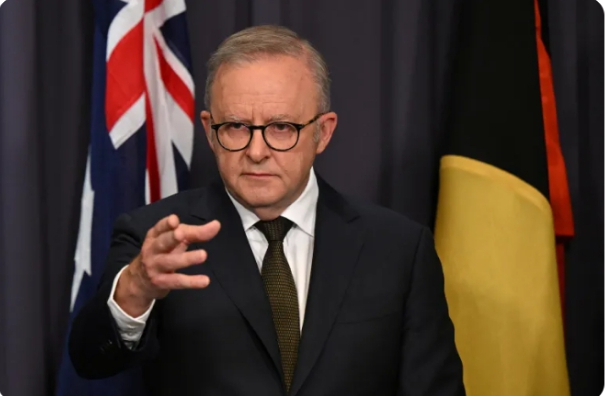
Standing before the nation, the prime minister admitted governments are imperfect and promised decisive action to confront rising antisemitism and radicalisation.
Pressure on Albanese intensified after critics accused his government of acting too slowly as antisemitic incidents surged following October 2023 events overseas.
Opposition leader Sussan Ley argued stronger measures should have been introduced years earlier, saying the Jewish community feels profound anger and betrayal.
Ley unveiled a rival Coalition plan including funding cuts to projects accused of supporting antisemitism and pausing visas from designated terrorist enclaves.
The opposition also revived proposals allowing citizenship stripping for dual nationals involved in terrorism, a move likely to provoke fierce legal debate.
Albanese defended his government’s focus on tightening gun laws after the attack, rejecting claims it distracted from failures addressing extremist hatred.
Former prime minister John Howard questioned whether firearms reform overshadowed the deeper ideological threat posed by radical preachers operating near legal limits.
Central to Labor’s response is adopting recommendations from antisemitism envoy Jillian Segal, though critics note commitments remain vaguely worded.
The new plan promises aggravated offences for leaders inciting violence, harsher penalties for online threats, and hate as an aggravating sentencing factor.
Authorities would also gain powers to list organisations whose leaders promote racial hatred, separate from existing terrorist designation processes.
Albanese said any reforms must withstand constitutional challenge, acknowledging complexities around free speech and federal criminal law.
Despite urgency, he stopped short of confirming whether parliament will be recalled before Christmas to pass the legislation.
Home affairs minister Tony Burke said current laws allow extremists to push boundaries without consequences, leaving authorities powerless to intervene earlier.
Burke insisted the new threshold will finally allow prosecution of individuals and groups sowing division under the guise of legality.
Federal police commissioner Krissy Barrett confirmed known hate preachers are already being monitored by security agencies nationwide.
Groups such as Hizb ut Tahrir and neo-Nazi networks have previously been cited as exploiting loopholes while avoiding formal bans.
Security officials allege the Bondi attackers were inspired by Islamic State ideology, deepening fears of home-grown radicalisation.
Albanese described the massacre as an attack not only on Jewish Australians but on the nation’s way of life and shared values.
He said Australians are shocked, angry, and demanding stronger leadership against what he called an evil scourge of hatred.
Within parliament, debate is intensifying over balancing civil liberties with decisive action against violent extremism.
Greens justice spokesperson David Shoebridge warned banning organisations could deepen division and restrict legitimate political criticism.
Shoebridge argued open societies must protect the right to criticise states and policies, even during moments of national trauma.
Beyond policing, the government announced education reforms aimed at addressing antisemitism before prejudice becomes entrenched.
Education minister Jason Clare appointed business leader David Gonski to chair a taskforce targeting hate within schools and universities.
Clare said children are not born with hatred, stressing antisemitism is learned behaviour requiring early intervention.
The eSafety commissioner will also work with federal agencies to counter online antisemitism and extremist propaganda.
Digital platforms remain a key battleground as radical ideologies spread rapidly beyond traditional community structures.
Community leaders have welcomed tougher laws but insist legislation alone cannot heal deep societal fractures exposed by the attack.
Jewish and Muslim groups have held joint vigils, calling for unity while demanding accountability from political leaders.
For many Australians, the Bondi tragedy represents a turning point demanding stronger resolve against hatred in all forms.
As funerals continue and investigations unfold, the nation watches closely to see whether promised reforms deliver real change.
Albanese’s legacy may now hinge on whether these laws restore confidence that government can protect communities before violence strikes.
Read more: Winter storms worsen Gaza humanitarian crisis as aid remains blocked
About The Author