Experience the extraordinary Alaska polar night as Utqiaġvik enters 65 days without sunrise. Explore the science, culture, and resilience behind this Arctic phenomenon.
When the Sun slipped beneath the horizon on November 20th, the people of Utqiaġvik, Alaska, officially entered the extraordinary seasonal event known as the Alaska Polar Night. This moment marks the final sunset of the year and the beginning of 65 consecutive days in which the Sun will not rise again until January 22, 2026. For many around the world, the idea of going more than two months without daylight sounds disorienting or even impossible. But for the northernmost community in the United States, this dramatic shift is a natural and expected chapter in the rhythm of Arctic life.

Utqiaġvik sits well above the Arctic Circle, and its position on the planet subjects it to extreme seasonal variations in daylight. During winter, the Earth tilts in such a way that sunlight cannot reach the city — even during the brightest part of the day. Instead of sunrise, residents experience faint twilight: a soft blue-gray glow that brushes the horizon for a few hours before fading back into darkness. This transitional light adds a surreal beauty to the season, softening the landscape and giving the otherwise black sky a momentary breath of color.
For locals, the arrival of the Alaska Polar Night is neither frightening nor inconvenient. It is a familiar, even cherished, part of their annual cycle. Generations of Indigenous Iñupiat families have lived through these conditions, developing deep knowledge, coping strategies, and cultural practices tied to the winter season. Homes glow with artificial lighting, snow reflects moonbeams like white glass, and on clear nights the stars shine with unusual clarity thanks to the crisp, cold air. Although the darkness is long, the community adapts with a sense of resilience and shared understanding.
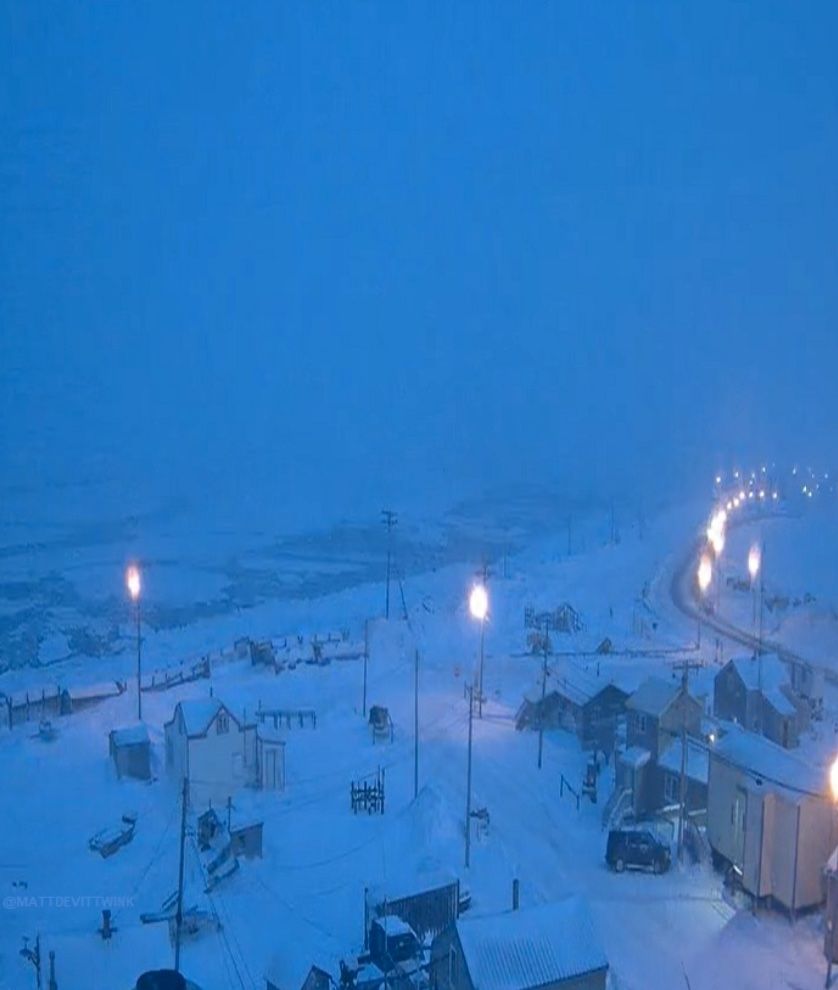
Scientifically, the explanation for this seasonal darkness is rooted in the Earth’s axial tilt of 23.5 degrees. As the Northern Hemisphere leans away from the Sun in winter, the Arctic region enters prolonged night, while regions closer to the equator continue to experience regular daylight cycles. The closer a location is to the pole, the longer its period of darkness. Utqiaġvik’s extreme latitude means its residents endure the longest sunless stretch in the entire United States. The Alaska Polar Night, therefore, is not just a geographical curiosity — it is a direct demonstration of how cosmic mechanics affect daily life.
Despite the lack of sunlight, this period is far from dull. In fact, winter darkness brings some of the most astonishing natural displays anywhere in the world. The aurora borealis — the northern lights — becomes more vivid during the season, painting the night sky with shimmering ribbons of green, blue, and violet. These lights, caused by charged solar particles interacting with Earth’s magnetic field, illuminate the darkness with breathtaking patterns that dance overhead like celestial curtains. For many residents, the aurora is one of the most beloved gifts of the Alaska Polar Night.
Beyond its beauty, the prolonged darkness also influences wildlife behavior. Arctic foxes, snowy owls, seals, and other animals adapt their routines to the absence of sunlight. Some species become more active under the cover of night, while others conserve energy in preparation for the coldest months ahead. The frozen landscape, meanwhile, enters a state of deep quiet — a stillness that underscores the isolation and wonder of the region.
For outsiders, the concept of 65 days without sunlight often sparks fascination and disbelief. Social media buzzes every year with videos and posts reacting to the moment the final sunset occurs. People frequently question how anyone can function without the daily rhythm of daylight, how mental health is maintained, or how children go to school in perpetual darkness. Yet for Utqiaġvik’s residents, this life is normal. Many even find comfort in the predictable routines the season brings.
Communities prepare well in advance for the Alaska Polar Night. Homes are stocked with supplies, winter gear is checked for safety, and indoor activities become central to social life. Families gather for movies, card games, drumming, and storytelling — cultural traditions that help sustain morale during the long, dark months. Light therapy devices, commonly used to counteract seasonal affective disorder, provide a simulated dose of sunlight when needed. Businesses, schools, and services continue operating on regular schedules, proving that life moves steadily forward even when the Sun does not rise.
As the weeks progress, anticipation builds for the moment the Sun returns. When the first sliver of light finally appears in late January, the entire community celebrates. Children run outside to welcome the golden glow. Adults gather at viewpoints to witness the symbolic rebirth of daylight. The return of the Sun marks both the end of the Alaska Polar Night and the beginning of a slow transition toward longer days, eventually leading to spring and the famed midnight sun of summer.
Until then, Utqiaġvik settles into its winter rhythm — a world illuminated not by sunlight but by moonbeams, streetlamps, starlight, and the ethereal glow of the aurora. And each year, as people across the globe watch in amazement, this resilient Arctic community continues to thrive through one of the planet’s most extraordinary natural experiences.
Read more news at: ireport247news.com