The Federal Government orders an urgent Unity Colleges Closure after violent attacks in Kebbi and Niger, raising national concern about student safety and growing insecurity.
The Federal Government has announced a sweeping emergency directive for the immediate Unity Colleges Closure across several high-risk regions, following a new wave of violent attacks that have shaken the education sector.
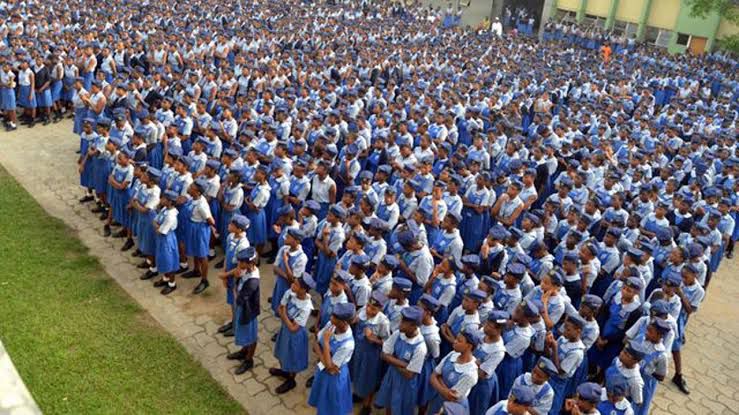
The decision comes in the aftermath of deadly assaults on schools in Kebbi and Niger states, pushing authorities to adopt stronger preventive measures while communities grapple with fear and uncertainty.
According to officials from the Ministry of Education, the shutdown is not merely a reaction but a strategic intervention designed to avert further tragedy.
Recent intelligence reports indicated that more learning institutions could be targeted, prompting the government to act before another incident occurs.
The Unity Colleges Closure is therefore intended to place student safety above all other considerations, even if it means temporarily disrupting academic activities.
The most recent attack unfolded at the Government Girls Comprehensive Secondary School in Maga, Kebbi State, where armed men stormed the compound at dawn.
Their entry was forceful and calculated, creating chaos as students and teachers scrambled for safety.
Vice Principal Malam Hassan Makaku courageously confronted the intruders, attempting to protect the girls under his care, but he was shot dead on the spot.
The attackers seized twenty-five schoolgirls and fled, leaving behind a devastated community now grappling with shock, grief, and fear.
Barely a day later, another distressing incident occurred at St. Mary’s Papiri Private Catholic Secondary School in Agwara, Niger State.
Eyewitnesses reported that armed terrorists entered the school premises quietly, overpowering security personnel and abducting both students and teachers.
The exact number of abducted victims remains uncertain as families continue to report missing children.
This second assault, coming so soon after the Kebbi attack, sent a clear signal that the threat to Nigerian schools was escalating rapidly.
In response, the Ministry of Education issued an official circular signed by Hajia Binta Abdulkadir, Director of Senior Secondary Education.
The circular stated that the Minister of Education, Dr. Tunji Alausa, approved the shutdown after reviewing worsening security conditions.
It emphasized that the decision was rooted in the urgent need to prevent another breach and ensure that no school becomes an easy target for terrorists. The Unity Colleges Closure is therefore a protective measure rather than a punitive one, the Ministry stressed.
The directive affects more than forty schools spread across states historically vulnerable to banditry, insurgency, and mass abductions.
These Unity Colleges were established to foster national unity, offering students from different backgrounds equal access to quality education. Today, however, they find themselves on the frontline of insecurity.
Schools such as FGGC Zaria, FGC Daura, FGGC Tambuwal, FGC Anka, FGC Birnin Yauri, FGC Ilorin, FGGC Omu-Aran, FGGC Kabba, FGGC Bwari, and many others are included in the list of affected institutions.
Parents have expressed mixed reactions to the directive. Some believe the Unity Colleges Closure is the only sensible decision given the relentless attacks, while others fear that prolonged interruptions will harm their children’s academic progress.
Several parents argue that education cannot thrive in a climate of terror, insisting that authorities must prioritize security over academic calendars.
Many families have already relocated their children from northern schools due to recurring abductions.
Security experts warn that schools have become attractive targets for armed groups seeking high-profile leverage.
Attacking students generates national outrage, weakens public confidence, and allows criminal groups to negotiate ransoms or political concessions.
Analysts say the repeated attacks demonstrate a coordinated strategy by insurgent networks who view schools as vulnerable zones with maximum psychological impact.
The Federal Government has promised to intensify security around schools through enhanced surveillance, deployment of additional security personnel, and collaboration with community policing networks.
However, the success of these measures depends on sustained funding, intelligence-sharing, and strong local involvement.
Several civil society organizations have also called on the government to create a long-term national school safety framework that addresses the root causes of insecurity.
Child rights advocates are particularly concerned about the psychological impact on students caught in the middle of these crises.
Children who experience violence or displacement often struggle with trauma, anxiety, and loss of trust in their environment.
Without counseling and structured emotional support, many of these students may find it difficult to reintegrate into academic life once the Unity Colleges Closure is eventually lifted.
Meanwhile, education stakeholders say the shutdown underscores the urgent need to rethink how learning environments are protected.
Some advocate for fortified school structures, while others suggest relocating vulnerable campuses to safer zones.
Many educators argue that Nigeria must begin treating school security as a national priority, not an afterthought.
While the Ministry of Education has not provided a timeline for reopening the affected schools, officials maintain that the directive will remain in force until security agencies confirm that the situation has stabilized.
For now, families, teachers, and students must navigate the uncertainties that come with nationwide school closures. The hope remains that decisive action today will prevent further tragedy tomorrow.
The Unity Colleges Closure marks a pivotal moment in Nigeria’s ongoing struggle to protect education from the shadows of violence.
As the nation reflects on recent tragedies and hopes for safer days ahead, one truth becomes clear: protecting students is not optional—it is essential to securing the future of the country.

More news at ireport247news
About The Author