International airlines cancel Venezuela flights after the United States warned of “potentially hazardous situations” due to heightened military activity around the South American nation.
Six major carriers—Spain’s Iberia, Portugal’s TAP, Chile’s LATAM, Colombia’s Avianca, Brazil’s GOL, and Trinidad and Tobago’s Caribbean—halted flights, citing warnings from the US Federal Aviation Administration.
TAP announced the cancellation of its flights scheduled for Saturday and next Tuesday, linking the decision directly to US alerts about unsafe Venezuelan airspace.
Iberia confirmed that all flights to Caracas were suspended until further notice, emphasizing that passenger safety remains the top priority amid growing regional tensions.
The Venezuelan Airlines Association president, Marisela de Loaiza, reported that several airlines took similar steps after reviewing US safety advisories concerning military activity near Venezuela.
Panama’s Copa Airlines, Spain’s Air Europa and PlusUltra, Turkish Airlines, and Venezuela’s LASER continue to operate flights despite the risks cited in official advisories.
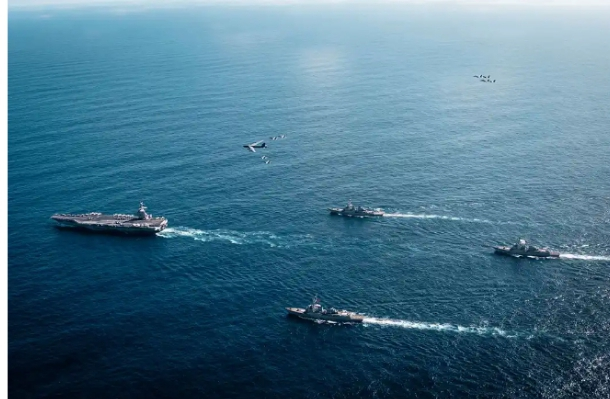
The US has deployed troops and the world’s largest aircraft carrier to the Caribbean, claiming it is an anti-narcotics operation targeting criminal networks operating in the region.
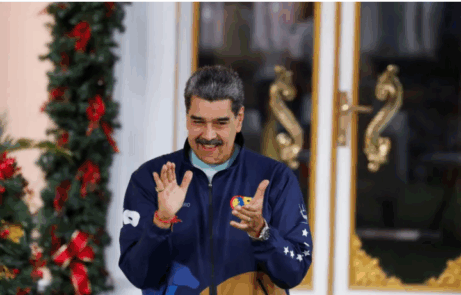
Caracas, however, describes the US military buildup as an attempt to pressure President Nicolas Maduro out of office, calling the action “neocolonial” in nature.
The US has also conducted at least 21 attacks on alleged drug trafficking vessels in the Caribbean and Pacific, reportedly killing 83 people during these operations.
Critics argue that these strikes violate both international law and US domestic law, questioning the legitimacy of military action without congressional approval or UN oversight.
The Trump administration increased the reward for information leading to Maduro’s arrest or conviction to $50 million, labeling him a “global terrorist leader of the Cartel de los Soles.”
President Donald Trump has sent mixed signals about intervention, claiming in interviews that the US does not intend to wage war against Venezuela directly.
Read also: US warns civilian flights amid rising military activity around Venezuela
Asked if Maduro’s days as president were numbered, Trump replied, “I would say yeah,” while later suggesting that dialogue with Caracas remains a possibility.
Regarding the deployment of US troops, Trump said, “I don’t rule out that. We just have to take care of Venezuela,” highlighting an ambiguous approach to intervention.
The FAA has urged all civilian flights in and around Venezuela to exercise extreme caution, warning of threats at all altitudes, during overflight, and on the ground.
Ties between Washington and Caracas have long been strained, worsening after Maduro succeeded Hugo Chavez following the latter’s death in 2013, deepening political and economic disputes.
US administrations have consistently rejected Maduro’s legitimacy, imposing sanctions and accusing him of corruption, authoritarianism, and election fraud, intensifying economic hardships in Venezuela.
The Trump administration recently designated the Venezuelan drug organization Cartel de los Soles as a terrorist group, accusing Maduro of leadership without presenting public evidence.
Conservative foreign policy hawks in the US increasingly advocate for regime change, urging Trump to remove Maduro, framing it as a necessary step to stabilize the region.
Maduro has called US actions “pretexts for war,” expressing willingness for dialogue but warning that any attack on Venezuela would face fierce resistance.
“No foreign power will impose its will on our sovereign homeland,” Maduro said, adding that violating Venezuela’s peace could provoke a “monumental surprise” for aggressors.
Venezuelan opposition leader Maria Corina Machado, Nobel Peace Prize laureate, stressed that the goal is not regime change but respect for democratic processes and the will of the people.
Machado explained to The Washington Post that the public must oversee a transition that is orderly, peaceful, and irreversible, ensuring stability and legitimacy in governance.
She advocated for privatizing Venezuela’s oil sector and opening the economy to foreign investments, aiming to attract capital and rebuild the nation’s struggling infrastructure.
The ongoing flight suspensions have impacted international travel and commerce, disrupting connections for business, tourism, and humanitarian missions operating within Venezuela.
Airline decisions reflect broader concerns about the safety of Venezuelan airspace, highlighting the intersection of civil aviation and geopolitical tensions in the Caribbean.
The US military buildup also increases pressure on neighboring countries, which must navigate complex regional security dynamics while maintaining diplomatic relations with Washington and Caracas.
Analysts warn that any escalation could destabilize trade routes, oil exports, and regional security, with potential ripple effects across Latin America and global markets.
The heightened threat environment has led airlines to weigh commercial interests against passenger safety, often erring on the side of caution to avoid liability and human risk.
Passengers have faced cancellations and rerouting, creating logistical challenges for travelers and cargo operators, while prompting governments to issue travel advisories and monitor airline compliance closely.
In summary, airlines cancel Venezuela flights amid rising tensions, affecting travel, commerce, and regional security while Washington and Caracas continue to navigate a delicate geopolitical standoff.
The complex situation remains fluid, with ongoing negotiations, warnings, and potential for escalation, underscoring the delicate balance between military action, civilian safety, and international law.
As flights remain suspended, stakeholders await updates from authorities, including potential easing of restrictions or additional advisories that could impact international air traffic to and from Venezuela.
The coming weeks will be critical in determining whether diplomatic engagement can reduce tensions, restore confidence in Venezuelan airspace, and allow airlines to resume operations safely.