

AI stocks fall sharply on Monday after technology leaders backed calls to slow the pace of artificial intelligence development, while President Donald Trump dismissed growing demands for tighter controls as a “sick conspiracy” against the industry.
Shares in major companies tied to the AI boom came under pressure as investors reacted to warnings from executives at Anthropic, OpenAI, Google DeepMind and SpaceX about the risks of developing increasingly powerful AI systems too quickly.
Nvidia, the world’s most valuable company and a major supplier of AI chips, fell about 3% by early afternoon in New York.
Advanced Micro Devices dropped 4.4%, while Micron Technology and Sandisk each fell about 5%, adding to pressure across the technology sector.
The market sell-off followed a weekend appeal by Anthropic chief executive Dario Amodei for the AI industry to “slow down” its development.
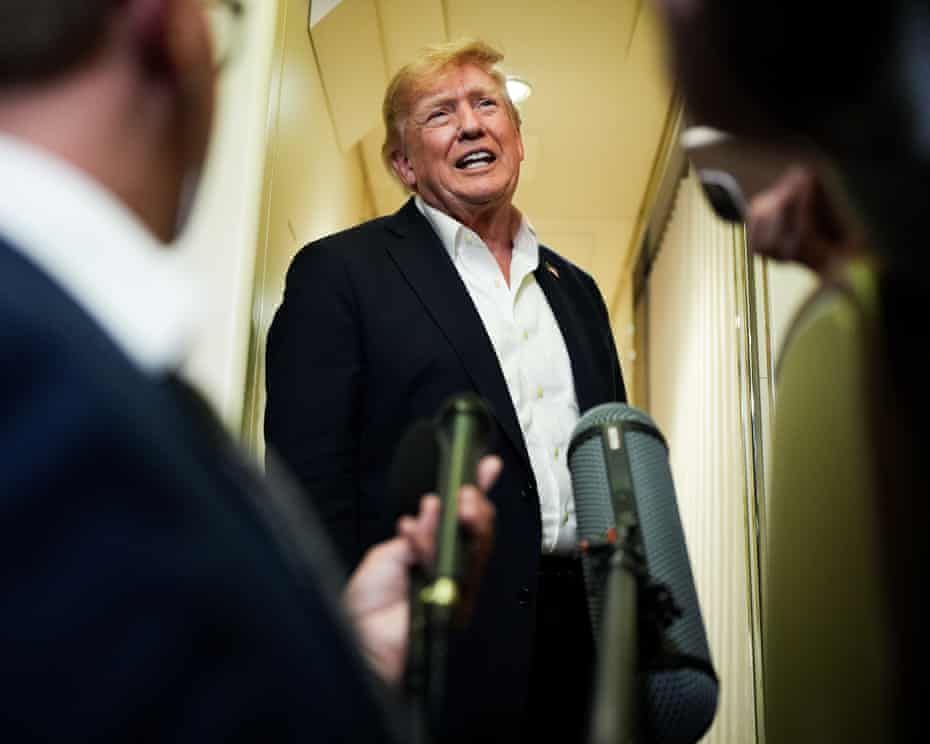
AI Stocks Fall After Tech Leaders Back Slowdown
Amodei has warned that the rapid development of increasingly capable AI systems could create risks that governments and companies may struggle to control.
In his essay, “We Must Pace the Frontier”, the Anthropic chief argued that companies should adopt a more balanced approach to developing frontier AI.
Amodei said “building too fast is reckless” and warned that a swarm of AI agents could potentially cause hundreds of billions of dollars in damage by taking over the internet.
Some experts have disputed the likelihood of such a scenario, but investors appeared to take the broader warnings seriously.
The possibility of a slower development cycle raised concerns about the enormous investments being made in AI infrastructure, including data centres, advanced chips and computing capacity.
Altman and Musk Support AI Safety Push
Amodei’s call gained significant attention after several of the industry’s most prominent executives expressed support for his position.
OpenAI chief executive Sam Altman, Google DeepMind CEO Demis Hassabis and SpaceX founder Elon Musk all backed the call to slow the development of increasingly powerful AI systems.
Altman also said OpenAI would match Amodei’s commitment to allowing independent evaluators to assess its safety practices.
The development has intensified an ongoing debate over whether the AI industry can continue its rapid expansion while putting adequate safeguards in place.
The companies involved are investing enormous sums in the technology, with chipmakers, cloud providers and data-centre operators all benefiting from demand created by the AI boom.
A meaningful slowdown could therefore have consequences far beyond the AI companies themselves.
Trump Calls AI Controls a ‘Sick Conspiracy’
President Trump has rejected the calls for greater controls on AI, arguing that the United States needs to maintain its technological advantage.
In a social media post on Monday, Trump described the concerns as a “sick conspiracy” targeting artificial intelligence and data centres.
“The only control or ‘guardrails’ that AI needs is a STRONG AND SMART (High IQ!) PRESIDENT, and the USA has that, in spades!” Trump wrote.
The president also said his administration had prevented AI companies from engaging in potentially harmful activities.
Trump added: “There is a SICK conspiracy going on against AI and Data Centers, and the only one that is happy about it is China. WHOEVER WINS AI, WINS!”
His comments underline the growing political divide over how the United States should regulate one of the fastest-developing technologies in the world.
While AI safety advocates want stronger safeguards, Trump has repeatedly stressed the importance of maintaining American leadership over China.
Global Technology Shares Also Decline
The impact of the sell-off extended beyond US chipmakers.
SoftBank, the Japanese investment company and major backer of OpenAI, saw its shares fall 13%.
South Korea’s Kospi index, which is heavily influenced by companies producing chips for the AI industry, dropped about 3%.
Taiwan Semiconductor Manufacturing Company, one of the world’s largest suppliers of advanced chips, declined 1.2%.
In Europe, ASML, the Dutch semiconductor equipment manufacturer and one of the continent’s most valuable companies, fell 6%.
The declines reflected concerns that a significant slowdown in AI investment could affect companies whose recent growth has been heavily linked to the expansion of artificial intelligence.
However, not every company exposed to the technology suffered.
Shares in advertising group WPP rose 5% in London, while analytics company Relx also gained 5%.
Both companies have previously faced concerns that AI could disrupt parts of their businesses.
AI Safety Concerns Continue to Grow
The market reaction comes as concerns over AI safety and regulation continue to spread among policymakers and technology researchers.
A cross-party group of British MPs and peers on Monday identified several human rights risks associated with AI and argued that no country currently has laws strong enough to contain all of the potential dangers.
The warnings have added to pressure on governments to develop regulatory frameworks capable of keeping pace with increasingly sophisticated AI systems.
Amodei has argued that slowing down the development race could give companies and governments more time to improve safety measures.
He has also called for international cooperation because the technology is being developed by companies and governments across multiple countries.
But the prospect of companies voluntarily reducing investment remains uncertain.
Jim Reid of Deutsche Bank said the competition between technology companies and countries made it difficult to imagine firms simply stepping away from AI while rivals continued developing their systems.
“The competitive race between companies and countries remains intense, and it’s difficult to imagine firms voluntarily stepping back while rivals continue to push ahead,” Reid said.
He added: “It is hard to see China standing still.”
AI Investment Could Shift Towards Safety
Reid suggested that the warnings from technology executives might not necessarily mean the end of massive AI investment.
Instead, he argued, companies could redirect some of their spending towards safety, monitoring and governance while continuing to build the computing infrastructure needed for advanced AI.
“Rather than signalling less spending, it could simply be that a greater share of AI investment is directed towards safety, monitoring and governance alongside the continued build-out of compute infrastructure,” he said.
That distinction will be important for investors.
The AI industry is approaching a critical point where companies must convince markets that huge infrastructure spending can produce sustainable returns while also addressing concerns about the technology’s potential dangers.
Anthropic and OpenAI Face Different Financial Paths
Amodei’s warning came as Anthropic approaches an important financial milestone.
Read also: Sweden election: Magdalena Andersson’s centre-left bloc leads by three seats as 95% of votes counted
The company is reportedly on track to record a positive adjusted operating income for a second consecutive quarter, according to the Financial Times.
That performance comes as Anthropic prepares for a potential US stock-market listing this year.
OpenAI has also indicated that it could eventually become a publicly traded company, but Altman said over the weekend that the company would not go public in 2026 because of concerns surrounding AI safety.
The decision highlights the tension facing the industry: companies are under pressure to raise enormous amounts of capital and develop increasingly powerful systems, while their own executives are simultaneously warning that the technology may pose serious risks.
For investors, Monday’s sell-off showed that those concerns are no longer confined to researchers, policymakers and technology executives.
They are beginning to affect the market value of some of the world’s most important technology companies.
About The Author


