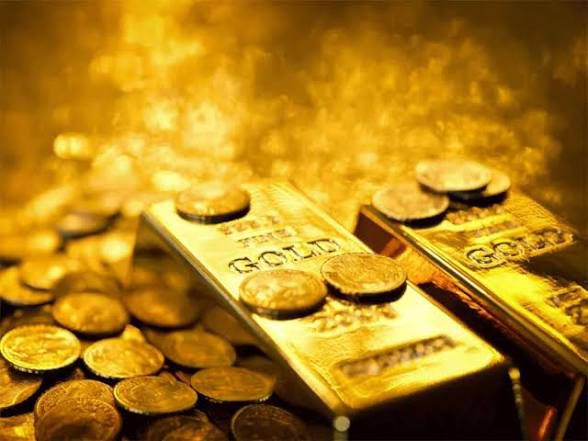
African economies are increasingly repositioning their gold sectors as strategic economic pillars as rising global demand for the precious metal creates new opportunities for export earnings, currency stability and foreign-exchange reserves.
Across the continent, governments are tightening regulations, expanding refining capacity and formalising artisanal mining activities in an effort to capture more value from the ongoing rally in gold prices.
The renewed interest in gold comes at a time of heightened geopolitical uncertainty, particularly tensions in the Middle East that have rattled global energy markets and fuelled inflation risks worldwide.
As oil prices climb and financial volatility increases, many African countries are turning to gold as a financial buffer against external shocks.
African nations race to harness gold boom amid global uncertainty
The African nations race to harness gold boom has accelerated as policymakers see the metal not just as a mining commodity but as a strategic economic asset capable of strengthening fiscal resilience.
Safe-haven demand for gold has surged globally as investors seek protection against geopolitical tensions and potential shifts in global monetary policy. Analysts say the uncertainty surrounding the global economy, including expectations of possible interest-rate adjustments by the United States Federal Reserve, has contributed to the sustained rise in bullion prices.
Gold prices climbed significantly in the past year and have continued trading near record highs amid persistent geopolitical instability.
The rally has created an economic windfall for Africa, a region that holds some of the world’s largest gold deposits. Governments are now trying to ensure that the surge translates into long-term economic gains rather than short-term export revenue.
A report by the World Bank suggests that gold prices could remain elevated if geopolitical tensions persist and central banks continue increasing their bullion reserves.
The report noted that renewed global conflicts or policy uncertainty could push gold prices even higher, reinforcing the metal’s role as a global store of value.
Ghana leveraging gold to stabilise its economy
One of the countries benefiting most from the gold rally is Ghana, Africa’s leading gold producer.
The surge in bullion prices has significantly boosted Ghana’s export revenues and helped strengthen its currency after years of economic turbulence.
Higher foreign-exchange inflows from gold exports have helped stabilise the Ghanaian cedi, easing inflationary pressures that previously threatened the country’s economic recovery.
Inflation in Ghana, which once surged above 50 percent during the height of its economic crisis, has fallen sharply in recent months as currency stability improved.
To sustain the gains, the government has introduced the Ghana Accelerated National Reserve Accumulation Policy, a strategy aimed at increasing national reserves through gold-backed financial mechanisms.
The initiative reflects a broader policy shift toward using gold reserves as a tool for strengthening macroeconomic stability.
Sudan relying on gold amid economic crisis
In Sudan, gold has emerged as the backbone of an economy grappling with prolonged political instability and civil conflict.
The country produced approximately 70 metric tonnes of gold in 2025, generating billions of dollars in revenue and making the mineral Sudan’s most valuable export commodity.
However, authorities say a large share of the country’s gold production has historically been lost to smuggling and illicit trade networks.
To address the challenge, Sudan is pursuing new export partnerships aimed at increasing transparency and ensuring more of the country’s gold wealth flows through official channels.
A recent agreement with Saudi Arabia to purchase Sudanese gold directly is expected to strengthen official trade routes and improve government revenue collection.
Uganda emerging as a regional gold hub
Meanwhile, Uganda has rapidly emerged as a key gold trading hub in East Africa.
The country recorded a dramatic rise in gold exports last year, with revenues surpassing traditional agricultural exports such as coffee.
Officials attribute the surge to favourable global prices and policy reforms that encouraged greater participation in the gold trade.
Uganda has also invested in refining infrastructure and positioned itself as a processing centre for gold sourced from neighbouring countries, including Democratic Republic of Congo and South Sudan.
The government’s decision to remove export levies on gold has further encouraged formalisation within the sector and attracted more traders into the market.
Burkina Faso expands state role in mining
In Burkina Faso, authorities are pursuing a policy of stronger state participation in the mining sector as part of efforts to capture more value from the country’s growing gold production.
The West African nation recorded record output in recent years, making gold one of its most important sources of government revenue.
Under new policies, the government requires state ownership stakes in mining projects and is planning to establish a national gold refinery.
Officials say the strategy will ensure that more of the value chain—from extraction to processing—remains within the domestic economy.
Mining revenues have already become an increasingly important contributor to public finances and development projects across the country.
DRC and Senegal tighten control over gold trade
Elsewhere, the Democratic Republic of Congo is attempting to formalise its vast artisanal mining sector, which has historically operated outside official regulatory frameworks.
Through a new state-owned gold trading entity developed in partnership with the United Arab Emirates, the government aims to channel more artisanal production into official markets and reduce smuggling.
Similarly, Senegal has begun tightening oversight of its gold trade amid concerns over large-scale illicit exports.
The government recently approved the creation of a National Gold Trading Centre to improve transparency and ensure that more revenue from gold production benefits the national economy.
Turning a commodity boom into long-term growth
Economists argue that the success of the African nations race to harness gold boom will depend largely on whether countries can move beyond raw mineral exports to develop integrated value chains.
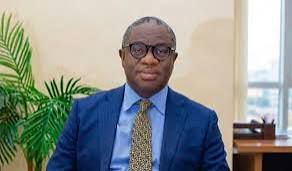
According to Joseph Nnanna, chief economist at the Development Bank of Nigeria, processing and refining gold locally will be crucial for generating sustainable economic value.
He noted that natural resources can only drive long-term development when countries build industries around extraction, processing and export.
With gold prices still hovering near record levels, African governments now face a critical opportunity.
If managed effectively, analysts say the current gold boom could strengthen foreign reserves, stabilise currencies and create new revenue streams that reduce dependence on external borrowing.
But without stronger regulatory frameworks and value-chain development, the rally could remain a temporary windfall rather than a lasting engine of economic growth.
About The Author