Canada vows to match Trump’s 50% tariffs after trade negotiations collapsed, with Prime Minister Mark Carney accusing Washington of making unfair changes and threatening economic relations between longstanding allies today.
🇨🇦 Canada Rejects Last-Minute US Demands
Carney said Canadian officials negotiated in good faith, but the final American proposals changed the balance of the agreement and undermined confidence in any settlement between Ottawa and Washington governments.
In a statement, the Canadian prime minister said: “Last-minute changes in the US proposed terms were unfair, uneconomic and called into question the reliability of any deal” at this stage.
Carney then delivered the clearest response, saying: “Canada will match those tariffs dollar for dollar to protect our workers and businesses,” signalling an immediate escalation of the dispute between allies.
The breakdown followed three days of extended negotiations after President Donald Trump postponed the original tariff deadline, giving both governments additional time to seek compromises on contentious trade issues today.
Those talks ultimately failed to produce an agreement before midnight Friday, leaving Canadian exporters facing American tariffs worth roughly US$20 billion in annual product shipments across important economic sectors nationwide overall.
United States Trade Representative Jamieson Greer blamed Ottawa for the collapse, arguing that Canada had rejected terms Washington considered favourable and had introduced demands that disrupted negotiations substantially during talks clearly.
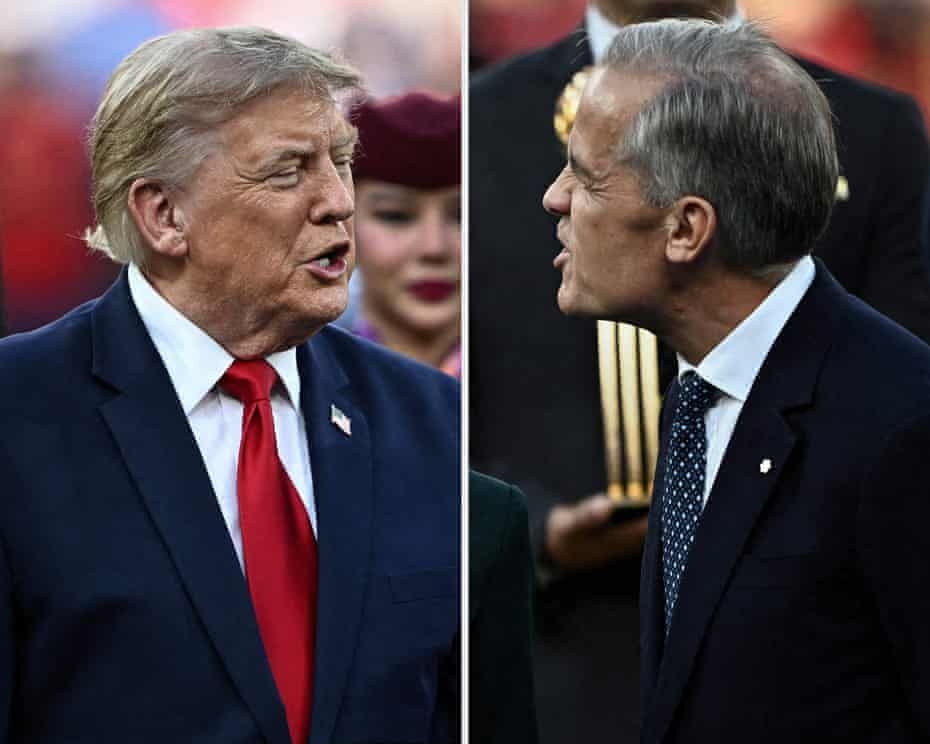
“Tonight, Canada declined to finalise the trade deal under the terms agreed earlier this week,” Greer said, describing the failure as a “missed opportunity for Canada” during talks.
Greer also defended Washington’s offer as “forward-looking,” saying it contained what he described as “a historic economic and national security partnership” for both countries and their workers with Washington today.
📉 Key Industries Face New Pressure
However, Canadian officials had sought relief covering major industries including steel, aluminium, vehicles and lumber, areas where the Trump administration remained unwilling to offer concessions during negotiations between both sides.
The dispute threatens to deepen uncertainty across North American supply chains, because businesses on both sides rely heavily on cross-border commerce, manufacturing networks, transportation links and integrated markets throughout today.
The scale of the relationship makes the confrontation particularly significant. Canada and the United States exchanged approximately US$880 billion in goods and services during the previous year alone last year.
Although the new American tariffs affect about five percent of Canada’s exports to the United States, the targeted products span numerous industries and could increase costs for businesses and consumers.
Canadian officials therefore face pressure to protect domestic companies without creating additional economic damage, particularly as manufacturers depend on American markets, imported components, transportation systems and predictable trading conditions nationally.
Carney said Ottawa would announce additional measures supporting affected workers and businesses, while insisting that his government would not accept an agreement simply because Washington demanded one in Ottawa.
“The goal throughout these negotiations has been to secure the best possible agreement for Canada, never a deal at any price or on any deadline,” Carney said publicly.
That position reflects the political dimension of the dispute, which could become more consequential than the immediate economic cost if relations between the neighbouring countries deteriorate further politically and internationally.
🇺🇸 Trump Tariffs Trigger Canadian Retaliation
Ontario Premier Doug Ford backed the federal response, urging Canadians to remain united while supporting retaliatory measures designed to defend national economic interests against American tariff pressure during this dispute.
“Team Canada needs to stand together more united than ever before,” Ford said, adding that he supported “tariff for tariff, dollar for dollar” in response from Canada today.
Ford also argued that Canadian sovereignty and economic security should remain central to the government’s response, while promising Ontario would contribute to efforts aimed at protecting affected industries nationwide locally.
Business leaders, however, warned that escalating tariffs could create significant consequences for companies and consumers throughout North America, particularly by increasing production expenses and disrupting established commercial relationships for everyone.
Candace Laing, president and chief executive of the Canadian Chamber of Commerce, described the American tariffs as “a body blow to North American competitiveness” for businesses and households across Canada.
Laing warned that the measures could increase costs for American consumers while simultaneously threatening Canadian customers, investment decisions and small businesses already operating within challenging economic conditions under pressure today.
Read also: Ukraine seeks Starlink approval for drones targeting Russian missile launchers
🌎 Wider North American Economic Impact
The latest confrontation also raises questions about the future of the North American trade framework linking Canada, the United States and Mexico, which remains vital to regional manufacturing and investment.
With no additional negotiations currently scheduled, businesses are likely to watch government announcements closely as Ottawa considers retaliation and Washington prepares to enforce its tariff policy against Canadian imports.
The standoff demonstrates how quickly negotiations between deeply integrated economies can shift from cooperation toward confrontation when tariff demands, national interests and political calculations collide across a shared commercial border.
For Canada, matching American tariffs dollar for dollar represents a significant escalation, but Carney’s government argues that defending workers, businesses and economic sovereignty requires a firm response.
For the United States, the dispute risks higher costs and renewed uncertainty among industries dependent on Canadian supplies, making the failed negotiations an important test of Trump’s broader trade strategy.
The coming weeks will determine whether both governments eventually return to negotiations or allow retaliatory tariffs to harden into a prolonged trade conflict with consequences across North America in coming months.
About The Author