President Volodymyr Zelenskyy meets troops on front line in the southern Zaporizhia region, reinforcing Ukrainian defenses as both sides report heightened clashes and shifting territorial control this week.
During the visit, Zelenskyy assessed combat readiness and delivered motivational speeches to soldiers defending the Orikhiv sector, a flashpoint where Russian forces have intensified assaults in recent days.
He described the visit as “a duty to stand beside our heroes,” emphasizing unity and determination despite limited ammunition and ongoing Russian bombardments targeting Ukrainian infrastructure.
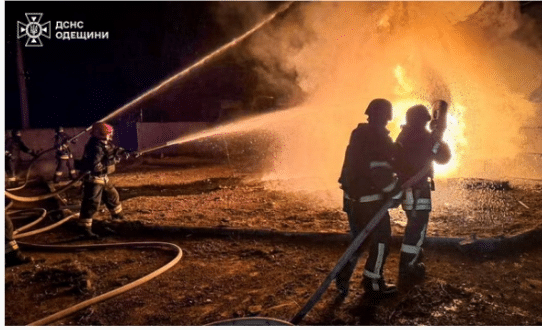
Ukraine’s military confirmed simultaneous strikes on Russian-occupied oil facilities in Crimea and Zaporizhia, signaling Kyiv’s commitment to strategic retaliation even as front-line conditions deteriorate under pressure.
The Ukrainian general staff reported that drones and Flamingo cruise missiles were used to hit depots supplying Russian forces, disrupting logistics essential to sustaining their momentum in southern theaters.
Meanwhile, the Russian Ministry of Defence claimed fresh advances, announcing that troops had seized the villages of Danylivka and Synelnykove following overnight artillery barrages and mechanized assaults.

This renewed surge underlines the evolving nature of the Russia-Ukraine war, where shifting control over small settlements continues to determine momentum and morale for both armies.
For many Ukrainian troops, the president’s presence near the Zaporizhia front line boosted confidence. Soldiers reportedly applauded his decision to visit despite the looming threat of missile strikes.
“We are fighting for every street, every home, and every soul,” Zelenskyy said, promising new defensive reinforcements and accelerated weapon production to meet front-line shortages.
The symbolism of Zelenskyy meets troops on front line extends beyond military morale—it reflects Kyiv’s broader effort to project resilience to domestic and international audiences amid growing fatigue.
In the east, Ukrainian officials confirmed casualties after a Russian drone attack near Bohuslavka, Kharkiv, killing three people and wounding another in a residential area.
Governor Oleh Syniehubov condemned the strike as “a war crime against civilians,” warning that Russian forces are increasingly targeting non-military zones to sow fear and chaos.
As Zelenskyy toured the 65th Separate Mechanised Brigade, defense analysts noted Ukraine’s leadership seeks to maintain visibility amid rising doubts about Western support and resource allocation.
The Ukrainian counteroffensive launched earlier this year failed to achieve its ambitious objectives, with gains limited to minor settlements despite high casualties and critical shortages of artillery ammunition.
In Moscow, Kremlin spokesman Dmitry Peskov declared that Ukraine would “inevitably return to peace talks from a weaker position,” portraying Kyiv’s resistance as unsustainable without negotiation.
Peskov’s remarks followed Kyiv’s suspension of formal peace discussions, citing Russia’s refusal to withdraw troops or compromise on territorial sovereignty over occupied regions.
Ukrainian Deputy Foreign Minister Sergiy Kyslytsya reiterated that meaningful talks are impossible while Russia continues aggression, rejecting Moscow’s claims that Ukraine seeks to prolong the Russia-Ukraine war.
Kyslytsya added that Ukraine’s allies, including the United States and European Union, have been urged to facilitate future dialogue that ensures security guarantees and a just peace framework.
The Kremlin’s rhetoric underscores its confidence amid incremental territorial gains, though independent assessments suggest Russian advances have come at significant human and material costs.
For Zelenskyy, maintaining troop morale and public trust remains critical as the nation grapples with war exhaustion and emerging political challenges within Kyiv’s leadership.
His visit came shortly after Germany’s Chancellor Friedrich Merz pressed Ukraine to accelerate reforms and combat corruption in Ukraine government, which has threatened international donor confidence.
Reports of a $100 million embezzlement scandal involving senior officials led to the resignations of the justice and energy ministers, sparking outrage and demands for transparency.
Merz warned that ongoing aid depends on Kyiv’s ability to ensure accountability, while Zelenskyy promised swift investigations and cooperation with independent anti-corruption agencies.
Analysts believe the dual pressures of warfare and reform are testing Ukraine’s institutional stability more than ever since Russia’s full-scale invasion began in 2022.
“The president’s battlefield visit serves a dual purpose—bolstering troops and signaling continuity of governance amid crisis,” said one Kyiv-based security strategist.
Political observers view Zelenskyy meets troops on front line as a calculated move to refocus national discourse on unity and resilience rather than internal scandals.
The anti-corruption drive, while necessary, risks distracting from urgent defense priorities, particularly as Russia’s advances near Zaporizhia threaten supply routes toward the Dnipro River.
Ukrainian officials insist reforms and war efforts can progress simultaneously, with Zelenskyy arguing that “clean governance strengthens the nation’s defense by earning global credibility.”
Military analysts warn, however, that Russia may exploit Kyiv’s political distractions to intensify offensives before winter, when frozen terrain favors mechanized warfare.
The southern front remains crucial: controlling Zaporizhia grants access to strategic corridors linking Crimea with occupied Donbas, vital to Russia’s logistical network.
Despite recent setbacks, Ukrainian intelligence claims Russian supply lines remain vulnerable to drone strikes and sabotage, offering hope for renewed tactical counterattacks.
The Zaporizhia front line continues to symbolize the resilience of Ukrainian resistance, where outnumbered defenders hold key positions despite relentless aerial and artillery bombardments.
For many soldiers, Zelenskyy’s direct engagement reaffirmed that leadership stands shoulder to shoulder with fighters risking their lives daily for Ukraine’s independence.
As the Russia-Ukraine war enters another winter, the humanitarian toll rises. Thousands remain displaced, while blackouts and destroyed infrastructure deepen hardship across both urban and rural zones.
Kyiv estimates that more than 10 million citizens rely on emergency assistance, underscoring the vast socio-economic costs of a conflict showing no signs of abating.
The endurance of Ukrainian society, built on shared sacrifice, continues to defy Moscow’s expectations of collapse. Yet sustaining that resilience requires consistent international backing.
Zelenskyy used his visit to reaffirm Ukraine’s Western alliances, thanking nations providing ammunition, drones, and humanitarian aid while urging faster deliveries before harsh weather impedes transport.
International partners have praised Ukraine’s determination but privately express concern about the longevity of public support amid growing fatigue and domestic economic strains.
Still, the optics of Zelenskyy meets troops on front line may reinvigorate donor trust, reminding the world that Ukraine’s struggle remains a defense of democratic values.
Observers predict intensified clashes around Orikhiv and Dnipropetrovsk, with both armies racing to secure tactical ground before heavy snow restricts movement and visibility.
Zelenskyy pledged to “fortify every front,” revealing new defense projects aimed at drone innovation and localized production of armored vehicles to lessen dependency on imports.
The visit, though brief, highlighted the unity between leadership and soldiers. It served as a symbolic message of defiance in the face of mounting adversities.
As the conflict grinds on, Zelenskyy meets troops on front line will likely remain a defining image of Ukraine’s wartime narrative—courage, endurance, and the relentless pursuit of freedom.
About The Author