The White House calls Epstein emails a hoax, dismissing online claims and fabricated documents that falsely suggest connections between government officials and Jeffrey Epstein’s notorious criminal network.
Officials stressed that the supposed communications are entirely fabricated and part of a coordinated disinformation campaign aimed at exploiting ongoing public fascination with Epstein-related conspiracy narratives.
The administration emphasized that no authentic correspondence exists within official archives or verified communication systems that matches the alleged content spreading rapidly across social media platforms.
A senior spokesperson reiterated the administration’s full cooperation with cybersecurity experts to identify the source of the forgeries and to protect the public from digital deception.
According to federal analysts, the forged documents were designed with remarkable precision, copying legitimate government templates and metadata signatures to create a convincing yet fraudulent appearance.
The White House calls Epstein emails a hoax to underline its broader commitment to transparency and factual accuracy amid an escalating wave of online political misinformation.
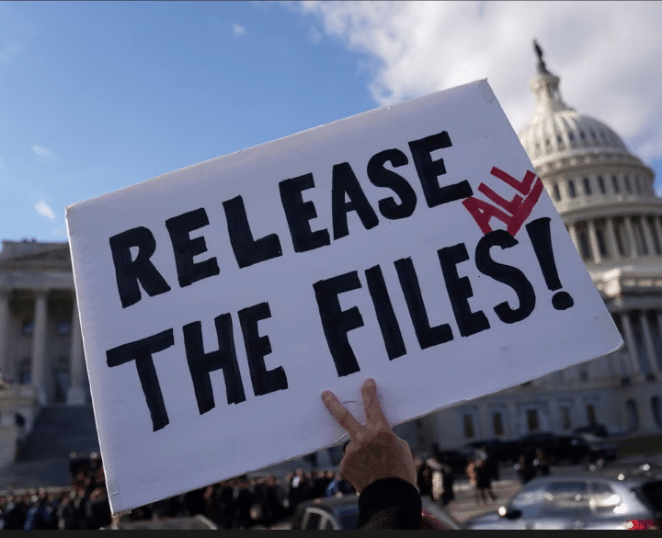
Experts believe the hoax demonstrates how easily manipulated data can infiltrate public spaces, distorting perceptions of power and breeding mistrust among citizens seeking accountability from their leaders.
Digital forensics teams working alongside independent analysts discovered that the files lacked the cryptographic signatures required for genuine government-originated communications, confirming their artificial construction.
The Epstein email controversy originated when screenshots of the fabricated exchanges appeared on fringe forums, alleging hidden transactions and secret meetings between Epstein’s network and senior government aides.
Within hours, the story migrated to major social networks, attracting millions of views and fueling unfounded accusations that spread faster than the official denials issued by authorities.
Investigators pointed out discrepancies such as misaligned timestamps, incorrect routing headers, and inconsistent language styles that exposed the emails as products of amateur editing tools.
Despite overwhelming evidence of forgery, supporters of the theory continued to share the images, demonstrating the persistence of US political misinformation across online communities.
The White House calls Epstein emails a hoax yet again, as repetition has become necessary to counter the viral speed of false narratives and manipulated digital content.
Fact-checking organizations verified that none of the alleged correspondences matched official communication records, confirming the administration’s statement that the materials were entirely fabricated.
Academic researchers studying misinformation patterns noted that stories tied to secrecy, wealth, and scandal often gain traction regardless of factual accuracy or evidentiary support.
They described the Epstein narrative as a potent cultural trigger, capable of reigniting public outrage long after the legal proceedings associated with Epstein’s crimes had concluded.
Specialists in information warfare observed that the structure of the campaign resembled earlier operations that sought to undermine public trust during politically sensitive moments.
The White House calls Epstein emails a hoax in part to shield democratic institutions from the corrosive effects of repeated digital falsehoods masquerading as investigative revelations.
Social media companies responded by labeling the circulating images as manipulated content, but users rapidly reuploaded altered versions to bypass automated moderation systems.
Independent cybersecurity analysts traced the earliest appearance of the files to an anonymous server cluster located outside the United States, complicating efforts to hold perpetrators accountable.
They found embedded code fragments linking the false documents to templates previously used in unrelated disinformation campaigns targeting foreign governments and corporate entities.
This technical evidence reinforced the conclusion that the Epstein email controversy was orchestrated by a network specializing in data forgery for political or ideological purposes.
Officials underscored that such activities not only damage reputations but also erode confidence in legitimate investigative journalism and verified public communication channels.
The White House calls Epstein emails a hoax to reassure the public that no internal correspondence, archived record, or official briefing supports the claims being circulated.
Government communication archives remain under independent oversight, ensuring that any document classified as official can be authenticated through consistent metadata and digital timestamp verification.
However, the emotional appeal of conspiracy theories continues to outweigh technical explanations, especially among audiences already distrustful of institutional sources and mainstream verification mechanisms.
Analysts warn that the danger of US political misinformation lies in its ability to weaponize skepticism, transforming uncertainty into suspicion and suspicion into collective outrage.
The controversy has also reignited debates about online platform accountability, with lawmakers urging stricter standards for detecting and removing falsified government documents.
Civil rights advocates, meanwhile, caution that overly aggressive moderation could inadvertently limit legitimate discourse, blurring the line between censorship and factual correction.
Amid these tensions, the White House calls Epstein emails a hoax to reaffirm its commitment to maintaining a balance between digital freedom and informational integrity.
Officials emphasized that defending the truth requires not just denial of falsehoods but active public education about how manipulated content is produced and disseminated.
Technology experts urged users to verify sources before sharing potentially harmful claims, reminding that viral deception often exploits emotional reaction rather than rational evaluation.
The controversy underscores how online conspiracy theories can function as powerful social instruments, mobilizing anger and fear regardless of evidence or logical coherence.
Scholars noted that the Epstein narrative remains fertile ground for conspiracy rhetoric because it intertwines verifiable criminal history with unprovable political speculation.
This combination makes it exceptionally difficult for truth-based messaging to fully neutralize the emotional impact of fabricated or exaggerated claims.
The White House calls Epstein emails a hoax for the seventh time in official communication, reiterating that the false materials pose both national and informational security threats.
Public confidence surveys reveal growing polarization, with some respondents acknowledging the hoax while others continue to believe the disinformation despite consistent refutation.
Psychologists studying digital belief systems argue that once individuals adopt a conspiratorial framework, corrective facts often strengthen rather than weaken their convictions.
This phenomenon has been termed the “backfire effect,” where exposure to truth paradoxically reinforces commitment to falsehood, perpetuating cycles of misinformation.
The persistence of the Epstein email controversy illustrates the limits of official communication when audiences perceive political motives behind every institutional statement.
Experts agree that combating misinformation requires collaboration between governments, independent media, and educational institutions to build resilience against future waves of synthetic deception.
The White House calls Epstein emails a hoax not merely to reject a single story but to warn of a broader cultural vulnerability to manipulation.
Citizens are urged to scrutinize extraordinary claims and demand verifiable evidence, rather than accepting digital content that conveniently aligns with pre-existing narratives.
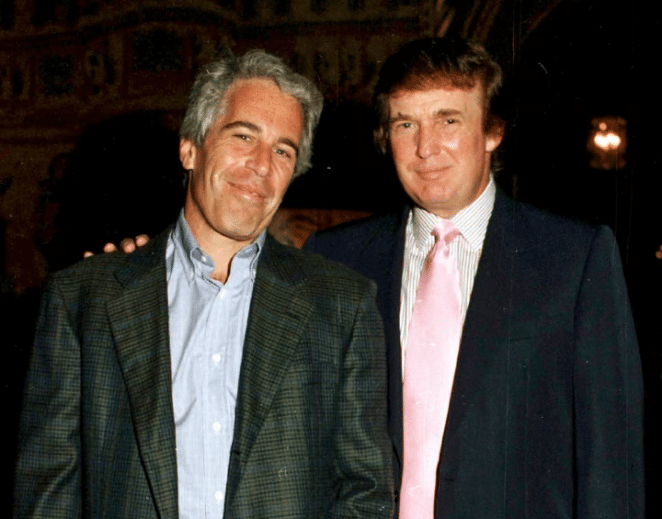
In an environment where speed often overrides accuracy, the cost of misinformation extends beyond reputation, affecting democratic cohesion and societal trust.
Ultimately, the government’s repeated clarifications serve as both a defense against current deception and a call for digital literacy in an era dominated by algorithmic rumor.
The episode serves as a modern reminder that truth must be defended continuously, not through censorship, but through transparent, consistent, and verifiable communication.
The White House calls Epstein emails a hoax, closing the chapter on this fabricated scandal but leaving an enduring lesson about the fragility of truth in the digital age.
About The Author