In newly declassified materials, Epstein emails reveal Trump connection, exposing how the disgraced financier’s network monitored and commented on Donald Trump’s travels, conversations, and political trajectory years after their estrangement.
The release, spanning nearly 20,000 pages, originated from House oversight committee records, throwing a sharp spotlight back on the once–dormant controversy linking Trump and Jeffrey Epstein’s shared history.
A senior congressional aide said, “These communications confirm what many suspected — that Epstein and his circle tracked Trump’s every move, even after their personal fallout became public.”
Analysts observed that Epstein emails reveal Trump connection in ways that go beyond gossip, suggesting a calculated effort by Epstein’s associates to maintain situational awareness of Trump’s movements.
One striking message from 2016 showed Epstein’s pilot, Larry Visoski, writing about Trump’s flight plans. “He usually runs late, so 11 p.m. could be realistic,” Visoski noted dryly.
Epstein’s reply, short but telling, read simply, “Will let you know tomorrow morning.” That seemingly casual tone belied the depth of coordination implied within the exchange.
A former Justice Department official remarked, “People underestimated Epstein’s obsession with influence. Even after his arrest, he wanted to understand the power map — Trump included.”
During the period covered, Epstein emails reveal Trump connection through numerous logistic notes, forwarded articles, and sarcastic remarks about Trump’s behavior and mental state, portraying Epstein’s continued fascination.
In December 2018, Epstein emailed ex-Treasury Secretary Larry Summers, saying, “Trump – borderline insane. Dersh, a few feet further from the border but not by much.”
Summers’ curt response — “Will Trump crack into insanity?” — led Epstein to reply, “This isn’t new. His strength is remarkable. He’s pounded 24/7 but thrives on chaos.”
The tone between them was mocking, reflective of two intellectuals amused yet alarmed by the former president’s volatility. The phrase “evil beyond belief” appeared in another email.
Observers noted that Epstein emails reveal Trump connection by detailing psychological commentary, with Epstein calling Trump “nuts” and “evil,” suggesting both rivalry and lingering curiosity about his former friend’s power.
Another communication came from journalist Landon Thomas Jr., who sent Epstein a Daily Beast article questioning Trump’s mental fitness. Epstein responded, “He feels alone and is nuts!!!”
The release included dozens of similar threads, often mixing aviation updates with gossip and political analysis. Epstein’s pilot frequently provided details of Trump’s movements to various staff.
Visoski’s December 2016 message read, “Trump Plane to arrive Orlando at 5 p.m., then arrive Palm Beach estimate 10 p.m. — he usually runs late.”
That same night, Epstein responded with scheduling adjustments. It was mundane logistics but eerily consistent, implying a deliberate pattern of watching Trump’s flights.
Experts argue that Epstein emails reveal Trump connection through logistical dependence — both used similar airfields, particularly Palm Beach and Teterboro, linking their travel data even after social separation.
In another email, Visoski informed Epstein, “While Trump is in PBI, TSA only allows arrivals between 8 a.m. and 5 p.m.” Such operational notes painted a picture of proximity.
“These weren’t coincidences,” said aviation historian Michael Langford. “Epstein and Trump shared routes because their wealth ecosystems overlapped. Palm Beach was the physical symbol of that entanglement.”
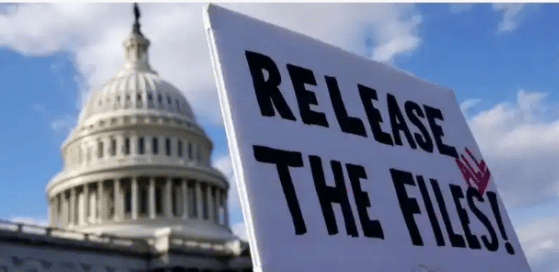
The revelations spurred intense debate on Capitol Hill, with Democrats insisting transparency was overdue. Republicans, meanwhile, accused the media of reviving “stale conspiracies.”
House Democrat Yvette Clarke argued, “This is about accountability. Epstein’s networks didn’t vanish — they intersected with political power, and Americans deserve clarity.”
A Republican counterpart countered, “There’s no evidence of wrongdoing by Trump. These are selective leaks designed for political damage.”
Despite the partisan rhetoric, Epstein emails reveal Trump connection repeatedly in correspondence showing Epstein’s interest extended beyond logistics into media coverage of Trump’s controversies.
Epstein’s accountant, Richard Kahn, sent him headlines about Roger Stone’s arrest, Michael Cohen’s testimony, and Trump’s hush money cases, with Epstein replying, “Told you — the circus continues.”
Each exchange blurred the boundary between curiosity and strategy. Epstein, though ostracized publicly, privately maintained contact with elite circles tracking Trump’s presidency with both disdain and envy.
An internal email even referenced “Trump in our neighborhood today,” implying physical nearness in Manhattan, though no meeting ever materialized after their mid-2000s fallout.
A former Palm Beach socialite recalled, “Jeffrey always acted like he still had a window into Trump’s world. He’d say, ‘Power never really leaves, it just changes doors.’”
Documents confirm that Epstein emails reveal Trump connection not through direct collaboration, but through fascination and a shared orbit among the powerful — a grim reminder of privilege’s persistence.
The revelations arrived amid renewed scrutiny following earlier Democratic releases, where Epstein described Trump as “the dog that hasn’t barked” and accused him of “knowing about the girls.”
White House spokesperson Abigail Jackson dismissed the latest dump: “These emails prove literally nothing. This is recycled gossip masquerading as revelation.”
Trump’s own statement on Truth Social framed the issue politically: “They’re trying to revive the Jeffrey Epstein hoax to distract from their failures on the shutdown.”
However, forensic document analysts insist Epstein emails reveal Trump connection through consistent thematic recurrence — Trump appearing as a symbol of power Epstein couldn’t escape even posthumously.
One exchange from 2017 showed Epstein writing, “President Trump will be at our neighbors on Thursday, so don’t be surprised if Secret Service checks in.”
The line revealed awareness, even anticipation, of Trump’s proximity. “It wasn’t admiration,” said political historian Marla Goodman. “It was control — Epstein wanted to know who was near.”
As more materials were processed, researchers noticed Epstein also tracked Vice-President Joe Biden’s visits. An assistant wrote, “Biden is in West Palm Beach, airport closed between 5 and 6.”
That memo, like others, included no scandal — just surveillance-level attention. Yet its inclusion shows Epstein’s fixation extended to anyone near presidential power.
Analysts suggest Epstein emails reveal Trump connection as part of a broader obsession with influence networks rather than personal friendship, highlighting how power dynamics defined Epstein’s social engineering.
Political scientist Brian Knapp commented, “Epstein viewed access as currency. Knowing Trump’s schedule wasn’t curiosity — it was leverage. Even after losing direct ties, he calculated the angles.”
The public reaction has been polarized. Supporters of Trump denounced the publication as “liberal witch-hunting,” while victims’ advocates welcomed renewed transparency as “long overdue justice through sunlight.”
Survivor rights attorney Maria Lopez said, “This isn’t about Trump alone. It’s about unmasking how Epstein operated — his access, his manipulation, his reach into political elites.”
Conservative commentator Alex Redd countered, “Every time Trump leads in polls, Epstein’s name magically reappears. It’s coordinated media theater.”
Yet the detailed timestamps and corroborated exchanges suggest otherwise. “The record doesn’t lie,” said independent investigator Clara Deane. “The paper trail is there — obsession documented.”
Across digital archives, Epstein emails reveal Trump connection beyond politics, portraying a man who, even disgraced, still measured his worth by proximity to global power players.
A researcher at Columbia University described it best: “Epstein’s ego depended on adjacency. Trump’s rise validated his worldview — that scandal and success could coexist seamlessly.”
Indeed, the emails showed Epstein forwarding Trump stories from tabloids, annotated with cynical remarks. “Lies after lies after lies,” he typed in reference to Stormy Daniels’ revelations.
In private notes, Epstein lamented his exile from Palm Beach’s elite circles, once intertwined with Mar-a-Lago’s guests. His self-pity echoed throughout these exchanges.
“I told everyone from day one,” one email read. “He’s evil beyond belief mad, and most thought I was speaking metaphorically.”
For digital archivists, the tone was revealing — narcissistic, paranoid, but still enthralled by Trump’s narrative arc. The man he despised still embodied everything he once chased.
As experts pored over the documents, many noted how Epstein emails reveal Trump connection through overlapping environments — Palm Beach airfields, Manhattan fundraisers, and media fascination forming an unending loop.
A journalist who covered both figures said, “Trump represented Epstein’s unfinished business — visibility. That’s why he kept watching even from the shadows.”
In Washington, Democrats are weighing whether further subpoenas are warranted. Some suggest releasing Epstein’s full digital archive to ensure no material remains shielded by partisan filters.
A senior aide confirmed, “The committee’s job is not political revenge. It’s ensuring transparency about a man whose crimes touched power at every level.”
Republicans meanwhile warn of overreach. “There’s a risk of rewriting history through selective exposure,” said Rep. Daniel Moore. “Context matters — and Epstein lied often.”
Yet among public analysts, consensus is building that Epstein emails reveal Trump connection in nuanced yet undeniable terms — a story of proximity, obsession, and political convenience.
A political columnist observed, “Whether you see collusion or coincidence, what’s clear is that Epstein never stopped monitoring Trump. That’s psychological gravity, not partnership.”
Still, the moral resonance runs deeper. For many, these documents reopen wounds about how privilege protected predators and blurred moral boundaries in elite power circles.
Human rights campaigner Lila Hassan stated, “Every new page reminds us that abuse and influence operate in the same rooms. The question is: who kept the doors open?”
The Biden administration has not commented publicly but sources within the Justice Department confirmed “heightened archival review” of Epstein’s digital footprint to determine potential evidence relevance.
Legal analysts note that Epstein emails reveal Trump connection not as criminal proof but as sociopolitical texture — an emblem of how reputations and power intersected under elite immunity.
Forensic linguist Dr. Raymond Li explained, “Patterns in Epstein’s phrasing indicate fixation. Trump symbolized both rejection and aspiration. His language betrays admiration wrapped in contempt.”
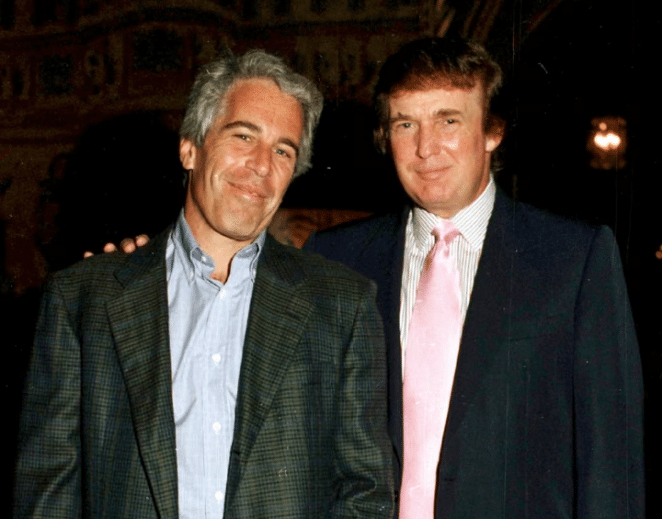
The narrative continues to ripple online. Social media debates have reignited, with hashtags like #EpsteinFiles and #TrumpEmails trending across Truth Social, X, and Reddit forums worldwide.
Public curiosity is understandable. For years, Epstein’s name has represented wealth’s darkest corridors, and each new revelation deepens understanding of that ecosystem.
A Georgetown ethics professor concluded, “These records illuminate how corruption doesn’t end with death — it echoes through institutions, especially when leaders choose silence over scrutiny.”
In sum, Epstein emails reveal Trump connection not as conspiracy, but as documentation of a relentless observer who never stopped mapping influence until the day his empire fell.
About The Author