We will not wait housing plans framed Zohran Mamdani’s first hours as New York mayor, signalling urgency, inclusivity, and decisive governance amid celebration, symbolism, and progressive ambition.
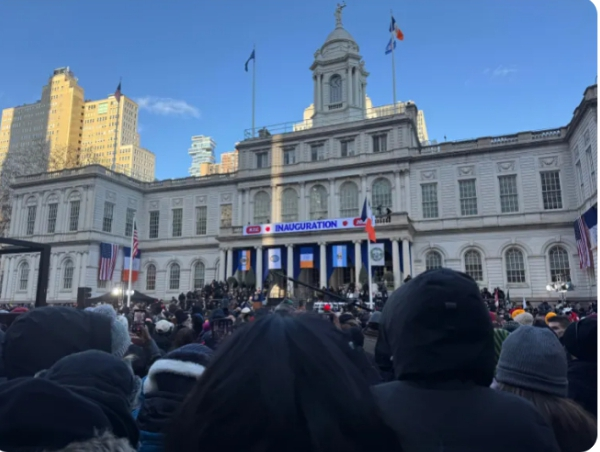
Sprawling crowds filled Lower Manhattan as Mamdani’s inauguration blended politics with public celebration, transforming a typically reserved civic ritual into a participatory moment for ordinary New Yorkers.
Supporters braved freezing temperatures, chanting demands for affordability and fairness, reflecting campaign themes that propelled the 34-year-old democratic socialist into City Hall’s highest office.
“We will not wait,” Mamdani told cheering crowds, promising immediate action on housing, taxes, and inequality, rejecting incrementalism in a city facing relentless affordability pressures.
The public inauguration followed an unconventional midnight oath inside a historic subway station, underscoring Mamdani’s intention to break with political tradition from his first moments.
Holding a historic Quran, Mamdani stood beside his wife, Rama Duwaji, blending personal heritage with civic duty, projecting pluralism central to his political identity.
Later, tens of thousands gathered outside City Hall, watching proceedings on large screens, as the ceremony spilled into streets typically reserved for traffic, not democracy.
Progressive leaders Bernie Sanders and Alexandria Ocasio-Cortez flanked Mamdani, lending national significance and framing the moment as part of a broader movement.
Sanders declared, “When working people stand together, there is nothing we cannot accomplish,” linking New York’s experiment to nationwide struggles over inequality.
The seven-block-long block party symbolised openness, replacing ticketed exclusivity with accessibility, an approach Democratic strategist Nomiki Konst called democratic theatre.
“It opened doors usually closed to anyone outside inner political circles,” Konst explained, reinforcing Mamdani’s promise to democratise governance and civic participation.
Unity featured prominently as city leaders delivered remarks in multiple languages, highlighting New York City diversity and reinforcing messages of shared belonging.
Comptroller Mark Levine celebrated religious plurality, saying, “I am proud to live in a city where different faiths share the same civic moment.”
Mamdani echoed collectivist ideals, promising to replace “the frigidity of rugged individualism with the warmth of solidarity” through policy, budgets, and everyday governance.
Yet beneath symbolism lay substance, as We will not wait housing plans dominated discourse, reflecting the administration’s core affordability agenda from campaign to City Hall.
Housing affordability remains New York’s most persistent crisis, with rents outpacing wages and displacement reshaping neighbourhoods across all five boroughs.
One signature pledge involves freezing rents on stabilised apartments, which comprise roughly half of the city’s rental housing stock.
“Those in rent-stabilised homes will no longer dread rent hikes,” Mamdani said, drawing sustained applause from tenants and housing advocates.
Only hours after celebrations, Mamdani signed executive orders addressing housing policy, signalling governance would begin immediately, not after ceremonial pauses.
“We will not wait to deliver action,” he said, noting rent payments were due the same day, intensifying urgency for struggling households.
The executive orders created housing task forces to identify city-owned land and accelerate affordable housing development across underutilised sites.
Deputy Mayor for Housing Leila Bozorg described housing as “the centre of our affordability crisis,” stressing political will as the decisive factor.
“We can address these problems if we commit resources and courage,” Bozorg said, outlining enforcement against bad landlords and expanded construction.
Beyond housing, Mamdani’s economic vision centres on progressive taxation, echoing chants of “tax the rich” heard throughout inauguration events.
His proposal includes raising corporate taxes and increasing levies on million-dollar incomes, pending approval from New York State leadership.
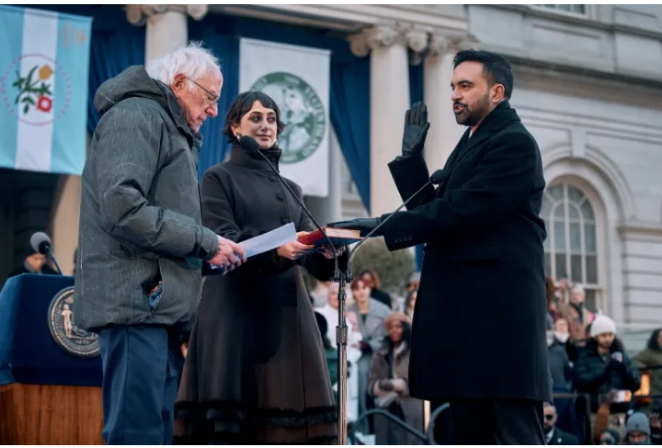
Sanders defended the approach, saying, “Demanding the wealthy pay their fair share is not radical, it is responsible governance.”
Critics argue higher taxes risk driving investment away, while supporters counter affordability and infrastructure demand reinvestment from concentrated wealth.
Mamdani addressed sceptics indirectly, emphasising grassroots origins of his movement spanning taxi depots, warehouses, and neighbourhood gatherings.
“There is no nowhere and no no one in this city,” he said, framing inclusivity as both moral principle and political strategy.
The inaugural spectacle also carried national reverberations, positioning New York as a laboratory for progressive urban governance in divided times.
Ocasio-Cortez noted the campaign’s implications, suggesting Mamdani’s victory challenges assumptions about electability and bold policy platforms.
For many supporters, the celebration felt like ownership of governance rather than observation, reinforcing democratic participation beyond election day.
Protesters lingered behind barricades, reflecting opposition concerns, though they were outnumbered by supporters energised by symbolic transformation.
The cold weather failed to dampen enthusiasm, as bundled families, students, and workers stayed hours hoping to glimpse history firsthand.
Security checkpoints slowed entry, leaving some outside, yet cheers and horns echoed across streets, amplifying collective presence.
Religious leaders from Islam, Christianity, and Judaism shared the stage, reinforcing messages of coexistence amid global polarisation.
Mamdani’s multilingual addresses signalled sensitivity to immigrant communities often marginalised within formal political ceremonies.
Observers noted the choreography blended spectacle with substance, ensuring symbolism reinforced rather than replaced policy commitments.
The We will not wait housing plans became shorthand for Mamdani’s governing philosophy: urgency, equity, and visible action.
Analysts caution that implementation will test relationships with state authorities and powerful real estate interests.
Yet supporters argue momentum matters, with early actions shaping expectations and framing negotiations ahead.
Mamdani’s youth adds intrigue, presenting generational contrast to predecessors and aligning with voters seeking political renewal.
His administration inherits entrenched challenges, including homelessness, infrastructure strain, and fiscal pressures amplified by inequality.
Still, inauguration day framed optimism, with supporters interpreting immediacy as evidence promises will translate into policy.
As confetti fell and chants faded, New York entered 2026 under leadership pledging speed over caution.
Whether We will not wait housing plans deliver lasting affordability remains uncertain, but the tone is unmistakably assertive.
Read more here: Zohran Mamdani makes history as New York City’s youngest, first muslim Mayor
For now, Mamdani’s start suggests governance rooted in movement politics, public visibility, and deliberate disruption of tradition.
New York’s experiment unfolds under national scrutiny, with allies hopeful and critics vigilant as policy battles loom.
What remains clear is that the city’s newest mayor has declared patience a luxury New Yorkers can no longer afford.
About The Author