Zohran Mamdani has officially been sworn in as the mayor of New York City, marking a historic moment for the largest city in the United States. At 34 years old, Mamdani becomes the youngest mayor in generations and the first Muslim to hold the office.
The oath of office was administered just after midnight on Thursday at the decommissioned City Hall subway station in Manhattan.
The location, one of the city’s earliest subway stops, is known for its ornate arches and symbolic connection to New York’s past.
Mamdani placed his hand on a Quran as he took the oath, underscoring the personal and historic significance of the ceremony.
The swearing-in was conducted by New York Attorney General Letitia James, a close political ally.
Mamdani’s wife, artist Rama Duwaji, stood beside him during the ceremony, which blended formality with symbolism in a setting rarely used for civic events.
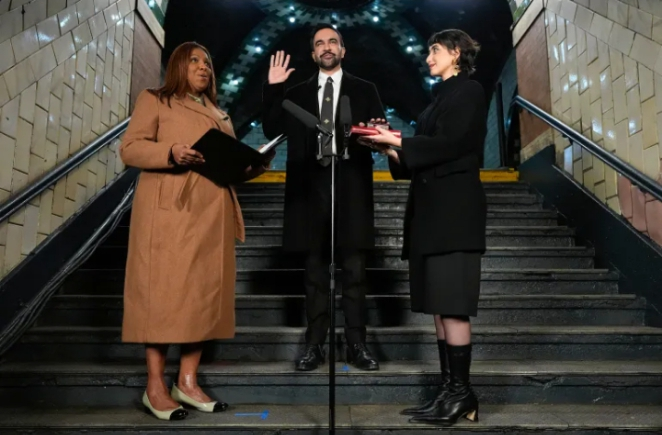
“This is truly the honour and the privilege of a lifetime,” Mamdani said shortly after taking office.
A second, larger public inauguration is scheduled for later in the day at City Hall. US Senator Bernie Sanders, a long-time ally and political inspiration for Mamdani, is expected to administer the oath again.
The ceremony will be followed by a public block party along Broadway’s “Canyon of Heroes,” a route traditionally used for ticker-tape parades celebrating major civic milestones.
Mamdani now steps into one of the most demanding roles in American politics. As mayor, he will oversee a city of more than eight million people, managing everything from public transport and sanitation to housing, policing and emergency response.
The position places him under intense national and international scrutiny.
Beyond being the city’s first Muslim mayor, Mamdani is also the first mayor of South Asian descent and the first born in Africa.
He was born in Kampala, Uganda, to filmmaker Mira Nair and academic Mahmood Mamdani. His family relocated to New York City when he was seven years old, and he later became a US citizen in 2018.
Growing up in New York in the aftermath of the September 11 attacks, Mamdani has spoken about the challenges faced by Muslim communities during that period.
Those experiences, he has said, shaped his political outlook and commitment to public service.
Before becoming mayor, Mamdani worked on several Democratic political campaigns in New York City. He was elected to the New York State Assembly in 2020, representing a district in Queens.
Although relatively unknown citywide at the time, he built a reputation as a vocal advocate for housing affordability and social services.
His mayoral campaign gained momentum during the Democratic primary, where he focused heavily on the rising cost of living.
Affordability became the central theme of his platform, resonating with voters in one of the world’s most expensive cities.
Mamdani ultimately defeated former New York Governor Andrew Cuomo twice — first in the Democratic primary to secure the party’s nomination, and again in the general election in November. The victories cemented his rapid rise in city politics.
As a self-described democratic socialist, Mamdani has promised sweeping reforms aimed at easing financial pressure on working families.
His proposals include free childcare, fare-free city buses, a rent freeze for approximately one million rent-stabilised households, and a pilot programme for city-run grocery stores.
At the same time, the day-to-day realities of running New York City remain unavoidable.
The new mayor will be held accountable for basic services such as rubbish collection, snow removal, infrastructure maintenance and subway performance — issues that often dominate public opinion regardless of broader policy goals.
Mamdani’s tenure is also expected to be shaped by his relationship with Republican President Donald Trump.
During the campaign, Trump openly criticised Mamdani, threatening to withhold federal funding from the city and suggesting the use of the National Guard.
He also made inflammatory remarks about Mamdani’s political ideology and immigration status.
Despite the hostility, the two met at the White House in November following Mamdani’s election victory.
The meeting was described as cordial, surprising both supporters and critics. Trump publicly stated that he wanted Mamdani to succeed and pledged to work with him.
However, tensions persist. Mamdani has continued to describe Trump as a fascist, reiterating comments he made earlier in his political career. The relationship between City Hall and the White House is likely to remain complex and closely watched.
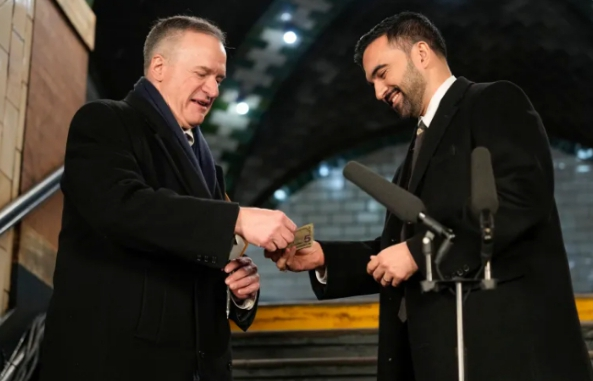
As Mamdani begins his term, supporters see his election as a symbol of generational change and growing diversity in American politics.
Critics, meanwhile, question whether his ambitious policy agenda can be implemented in a city facing financial and logistical constraints.
What is certain is that Zohran Mamdani’s mayoralty represents a significant moment in New York City’s long political history — one that reflects shifting demographics, changing priorities and a new era of leadership.
About The Author