The Wales vs France Six Nations clash at the Principality Stadium was always billed as a daunting examination of how far the hosts have slipped and how ruthlessly the visitors can impose themselves when sensing vulnerability.
From the opening minutes in Cardiff, that contrast was laid bare. France, fresh, confident and brimming with attacking intent, wasted no time asserting their authority, while Wales once again found themselves scrambling to stay afloat against elite opposition in a competition that has offered little mercy in recent seasons.
For Wales, the match represented more than just another fixture in a troubled campaign. It was an attempt to restore belief after a run of heavy defeats that has shaken confidence among players and supporters alike.
Consecutive losses to England, New Zealand and South Africa had already painted a grim picture, and the Wales vs France Six Nations clash arrived with the sense that another long afternoon could follow unless something radically changed.
Empty seats in the stands before kick-off hinted at the growing disconnect between the team and a fanbase accustomed to resilience and pride, even in defeat.
France, by contrast, travelled to Cardiff as outright title contenders.
Their opening-round dismissal of Ireland had reinforced their status as the most complete side in the championship, blending power, speed and tactical clarity.
Under the guidance of Fabien Galthié, France have developed a squad capable of absorbing injuries without losing fluency, a luxury Wales currently lack. Even with enforced changes in midfield, the visitors arrived confident that their systems, rather than individual brilliance alone, would be enough to dominate proceedings.
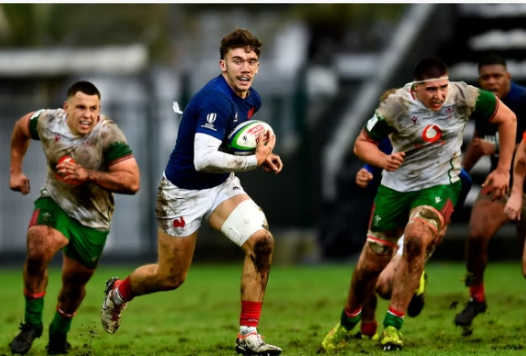
That belief was vindicated almost immediately. Inside the first two minutes, France struck with a precision that has become their trademark. Wales attempted to play out from deep, but pressure from Antoine Dupont forced a turnover of momentum.
The move that followed was swift and decisive, moving through hands with minimal resistance before Emilien Gailleton finished clinically. The conversion from Thomas Ramos made it 7-0, and the sense of inevitability settled in early.
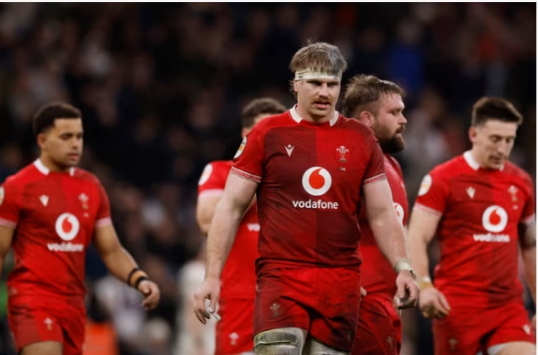
Wales did not lack effort in response. There were moments of defensive resolve and isolated flashes of attacking ambition, particularly when they managed to retain possession for multiple phases.
However, those moments were undermined by familiar problems. At the breakdown, France consistently won the collision, driving Welsh carriers backwards and disrupting any rhythm before it could develop.
The gain line became a recurring obstacle, one Wales struggled to cross without immediately being forced into a retreat.
The influence of Dupont and Matthieu Jalibert was especially telling. Their understanding allowed France to stretch Wales laterally, probing for mismatches and exploiting hesitation in the defensive line.
When space was not immediately available, France showed patience, recycling possession and trusting that pressure would eventually tell. For Wales, the defensive workload mounted rapidly, draining energy and confidence in equal measure.
This Wales vs France Six Nations clash also highlighted the burden currently placed on head coach Steve Tandy, who continues to juggle dual responsibilities as both head coach and defensive coordinator.
The statistical reality of Wales conceding heavily in recent matches has intensified scrutiny of that arrangement, and this contest did little to ease concerns. While organisation was evident in patches, the sheer physicality and pace of France repeatedly exposed structural weaknesses that could not be corrected on the fly.
France’s depth was further underlined by the debut of Fabien Brau-Boirie, who slotted seamlessly into international rugby despite his youth. His composure in possession and willingness to challenge the line offered a glimpse into the production line that continues to fuel French success.
For Wales, watching another emerging French talent flourish on the big stage only reinforced the sense that they are competing against a nation operating several years ahead in development and planning.
The venue itself, the Principality Stadium, has long been a fortress for Welsh rugby, but its aura has faded in recent seasons. Where once the crowd’s intensity could unsettle even the most accomplished opponents, France appeared unfazed, communicating clearly and executing their game plan with calm authority.
The stadium still roared in moments of defiance, but those surges of noise were increasingly reactive rather than driving momentum forward.
From a tactical perspective, France’s superiority lay not only in their attacking sharpness but also in their defensive discipline. Welsh kicks were quickly neutralised, and counter-attacks were launched with intent rather than caution.
Each French clearance felt purposeful, designed to either regain territory or invite Wales into mistakes under pressure. In contrast, Welsh kicking options often appeared reactive, a means of relief rather than a calculated weapon.
As the match progressed, the psychological dimension of the Wales vs France Six Nations clash became more pronounced. Every successful French carry seemed to sap Welsh belief, while each failed Welsh phase reinforced French confidence.
This feedback loop has become a worrying pattern for Wales, where early setbacks snowball into prolonged periods of defensive strain. Breaking that cycle remains one of the most pressing challenges for the coaching staff.

Yet amid the difficulties, there were still signs that Wales are not devoid of potential. Younger players showed glimpses of ambition, and there were sequences where ball retention improved and defensive lines held firm.
The challenge lies in sustaining those moments long enough to shift momentum, something France have mastered through experience and cohesion. For Wales, the rebuilding process will require patience, clarity of vision and, above all, time, commodities often in short supply at international level.
France, meanwhile, will view this encounter as another step toward their broader ambitions in the championship.
Their ability to impose themselves away from home, start fast and manage the game thereafter speaks to a maturity that separates contenders from pretenders. Even without reaching top gear for sustained periods, they demonstrated that control, rather than spectacle alone, is the hallmark of a champion side.
In the wider context of the tournament, the Wales vs France Six Nations clash served as a snapshot of two teams at very different stages of their journeys. Wales are searching for identity and stability after years of transition, while France are refining an already formidable machine.
Bridging that gap will not be straightforward, but acknowledging its scale is the first step toward addressing it.
For supporters, the pain of watching another difficult afternoon is tempered only by the hope that adversity will eventually yield renewal.
Welsh rugby has endured downturns before and emerged stronger, but the path ahead is undeniably steep. Matches like this, harsh as they may be, offer clarity about what must change and how far there is to go.
As the final outcome continues to unfold, one truth is already clear: the Wales vs France Six Nations clash was never just about points on the table. It was a measuring stick, and the reading it delivered was uncompromising.
France remain the standard-bearers, while Wales face a long, demanding rebuild if they are to reclaim their place among Europe’s elite.
About The Author