Prime Minister Keir Starmer has said Britain re-engages Europe as his government seeks to move decisively beyond the political and economic legacy of the Brexit years, arguing that closer cooperation with the European Union is vital if the United Kingdom is to rebuild its international standing.
Speaking after one of the most challenging weeks of his premiership, Starmer rejected calls for his resignation and confirmed he would lead the Labour Party into the next general election, presenting his leadership as central to redefining post-Brexit Britain.
Starmer insisted that his strategy does not amount to undoing the 2016 referendum result, making clear that Brexit remains a settled political reality. “We are not reversing Brexit,” he said, “but we are turning our back on the Britain of the Brexit years that we’ve had for the last decade.”
He argued that the years following the UK’s departure from the EU left the country weaker diplomatically, less confident internationally and increasingly marginalised in major global discussions.
According to the prime minister, Brexit fostered an inward-looking national mindset that reduced Britain’s ability to influence outcomes beyond its borders. “That has seen a Britain that has turned inward,” Starmer said, “a Britain that has not been able to assert itself and influence others on the world stage or the European stage.”
His remarks underline a shift in government thinking that places Britain EU relations at the heart of foreign policy, economic recovery and national security.
The renewed emphasis on engagement with Europe comes amid controversy surrounding the appointment of Peter Mandelson as ambassador to the United States.
Starmer acknowledged that the decision had been wrong and accepted responsibility for the fallout. “I’m not going to list my mistakes in rank order,” he said, “but appointing Lord Mandelson was a mistake.”
The admission was designed to draw a line under a scandal that unsettled Downing Street and prompted questions about judgment at the centre of government.
Despite the pressure, Starmer adopted a defiant tone when addressing speculation about his leadership.
“I won the leadership of the Labour Party when people said I wouldn’t. I changed the Labour Party when people said I couldn’t. I won an election when people said we wouldn’t,” he said.
“And now I intend to change the country, whatever other people say.” He added that he would absolutely lead Labour into the next general election, dismissing claims that his authority had been permanently damaged.
The episode exposed deeper tensions within the Labour Party about accountability, culture and decision-making in government.
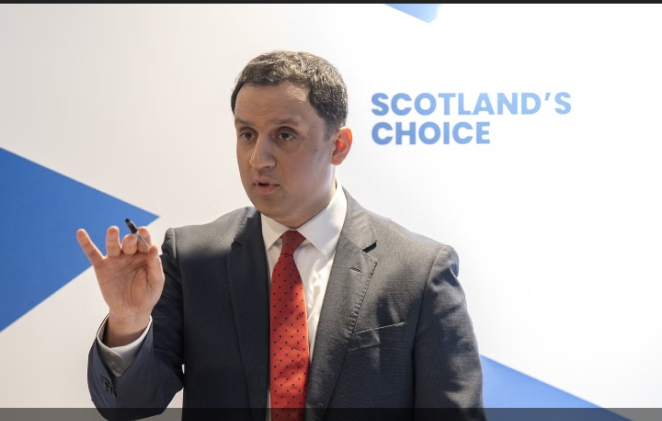
Scottish Labour leader Anas Sarwar publicly questioned Starmer’s position, briefly intensifying internal unease.
However, attempts to force the prime minister out failed after senior ministers and key party figures publicly backed him, emphasising the importance of stability at a time of international uncertainty.
Beyond internal political drama, Starmer has continued to argue that Post-Brexit Britain must adapt to a rapidly changing global environment. He has suggested that closer alignment with parts of the EU single market could benefit both sides in specific sectors, particularly where cooperation serves mutual economic interests.
At the same time, he has ruled out rejoining the EU, seeking to reassure voters wary of reopening old divisions.
The prime minister has also highlighted the importance of deeper defence and security cooperation with European partners, arguing that global instability makes isolation increasingly untenable.
He has said that Britain’s security and prosperity are closely linked to those of its neighbours, and that rebuilding trust and cooperation is essential if the UK is to remain a credible international actor.
As the tenth anniversary of the Brexit referendum approaches, Starmer is attempting to reset the national conversation. His argument is that Britain re-engages Europe not out of regret, but out of necessity, acknowledging that distance and disengagement have carried real economic and diplomatic costs.
In his framing, restoring UK global influence depends on cooperation, credibility and the willingness to work constructively with allies rather than standing apart from them.
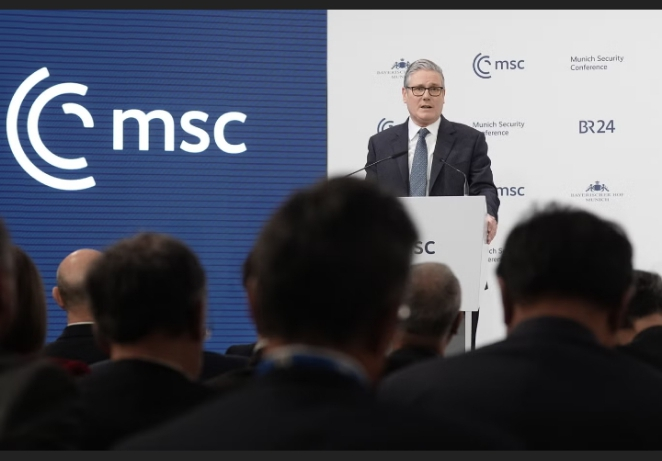
Whether voters accept this vision remains uncertain, but Starmer has made clear that his premiership will be judged on outcomes rather than ideology. By insisting Brexit will not be reversed while openly rejecting the mindset it produced, he has positioned himself as a leader determined to move the country forward.
For the prime minister, the debate is no longer about leaving or rejoining the European Union, but about how Britain chooses to operate in a world where influence is earned through engagement rather than distance.
About The Author