The six men named in the unredacted Epstein files were publicly identified by Democratic congressman Ro Khanna during a floor speech after he reviewed justice department unredacted documents alongside Republican representative Thomas Massie.
The disclosure followed a visit to the Department of Justice, where the two lawmakers said they spent approximately two hours examining previously redacted material connected to Jeffrey Epstein.
Khanna told colleagues that the names had been concealed in earlier public releases of the records. According to his account, when he and Massie flagged the redactions to justice department officials, “they acknowledged their mistake” and provided the identities.
Speaking on the House floor, Khanna said: “If we found six men that they were hiding in two hours, imagine how many men they are covering up for in those 3m files.” He emphasized that the overwhelming majority of the documents remain redacted.
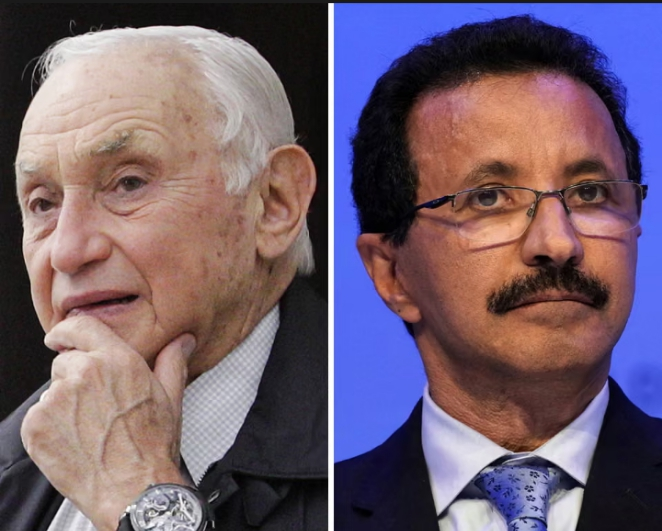
The six men named in the unredacted Epstein files are Leslie Wexner, Sultan Ahmed bin Sulayem, Nicola Caputo, Salvatore Nuara, Zurab Mikeladze and Leonic Leonov.
None of the men have been charged with crimes in connection with Epstein as a result of their appearance in the files, and being named in the documents does not in itself establish wrongdoing.
Individuals can appear in such records through contact details, email exchanges, scheduling notes or other references without being accused of criminal conduct.
The renewed focus on the six men named in the unredacted Epstein files comes amid longstanding public and political pressure for greater transparency surrounding the Epstein investigation.
Lawmakers from both parties have faced demands from constituents to release more information about Epstein’s network of associates, particularly given the financier’s extensive social and professional connections across business, politics and academia.
Khanna and Massie’s joint visit to the justice department signaled a rare moment of bipartisan cooperation on the issue.
According to Khanna, the two lawmakers were granted access to materials that had not been fully disclosed to the public. While he did not present documentary evidence during his speech, he asserted that the redactions were lifted after officials acknowledged an error in withholding the names.
Khanna’s remarks suggested frustration with what he characterized as incomplete transparency. His rhetorical question about how many additional names might still be hidden underscored concerns that the full scope of Epstein’s associations may not yet be publicly known.
Leslie “Les” Wexner
Among the six men named in the unredacted Epstein files, Leslie Wexner is the most widely known. The 88-year-old billionaire built a retail empire that includes Victoria’s Secret, Abercrombie & Fitch and Bath & Body Works.
Wexner had a lengthy financial relationship with Epstein, who managed his investments for years and was granted significant authority over aspects of his finances.
Wexner’s ties to Epstein have been publicly reported for more than a decade. Past investigations detailed how Epstein rose from relative obscurity to immense wealth during the period in which he was associated with Wexner.
Reports have described Wexner as instrumental in expanding Epstein’s financial stature and credibility within elite circles.
The newly reviewed justice department unredacted documents indicate that the FBI appeared to have labeled Wexner as a co-conspirator in internal records.
However, Wexner has not been charged with any crimes related to Epstein’s offenses. He has previously stated that Epstein misappropriated tens of millions of dollars from him and has distanced himself from the financier following Epstein’s initial conviction.
The appearance of Wexner’s name in the six men named in the unredacted Epstein files therefore adds renewed scrutiny to a relationship that was already widely known but now appears in less-redacted official records.
Sultan Ahmed bin Sulayem
Sultan Ahmed bin Sulayem, another of the six men named in the unredacted Epstein files, is a Dubai-based businessman and the chief executive of DP World, a multinational ports and logistics company operating in more than 80 countries.
He is also the brother of Mohammed Ben Sulayem, the president of the Fédération Internationale de l’Automobile (FIA), which governs global motorsport competitions including Formula One.
Recently disclosed documents show that Sultan Ahmed bin Sulayem received an email from Epstein in 2015 containing explicit remarks about a young woman Epstein claimed to have met.
According to the records described by lawmakers, the email included personal comments of a sexual nature. Representative Massie also stated that the unredacted material confirmed Sulayem was the recipient of another message from Epstein in which Epstein wrote: “I loved the torture video.”
There is no indication that Sulayem has been charged with wrongdoing in connection with Epstein. His appearance among the six men named in the unredacted Epstein files reflects documented correspondence rather than an allegation of criminal conduct. As with others listed, being named in the records does not automatically imply guilt.
Nicola Caputo
Nicola Caputo is another of the six men named in the unredacted Epstein files. The name corresponds to that of an Italian politician who served as a member of the European parliament from 2014 to 2019 and later held a senior role in Campania’s regional administration.
However, there is no verified evidence confirming that the politician is the same individual referenced in the justice department documents.
Established reporting has not corroborated any link between the Italian public official and Epstein’s activities. The shared name has raised questions, but without further documentation, the precise identity of the person listed in the files remains uncertain.
This uncertainty highlights a broader issue surrounding the six men named in the unredacted Epstein files: in some cases, limited contextual information makes it difficult to determine the nature or extent of any association.
Salvatore Nuara, Zurab Mikeladze and Leonic Leonov
Less publicly available information exists about Salvatore Nuara, Zurab Mikeladze and Leonic Leonov, the remaining three individuals among the six men named in the unredacted Epstein files. At present, there is little detail regarding who they are or how they may have been connected to Epstein.
Lawmakers have not provided extensive background on these names, and the justice department documents described in the floor speech have not been fully released to the public. As a result, the scope of any contact or reference remains unclear.
The limited information underscores the broader challenge of interpreting partially released investigative files. Without full context, the public is left with names but few explanatory details about the circumstances in which they appear.
Legal and historical background
Jeffrey Epstein pleaded guilty in 2008 to soliciting a minor for prostitution and served a 13-month sentence under a controversial plea agreement. More than a decade later, he was arrested on federal sex-trafficking charges involving underage girls. In 2019, he died in a New York jail while awaiting trial. Authorities ruled his death a suicide.
Since then, public interest in Epstein’s associates and potential enablers has remained intense. Civil lawsuits, investigative journalism and congressional inquiries have all sought to clarify who was connected to him and in what capacity.
The disclosure of the six men named in the unredacted Epstein files represents the latest development in that ongoing process. Lawmakers have continued to press for broader transparency, arguing that the public deserves a full accounting of Epstein’s network.
Renewed scrutiny of justice department handling
Khanna’s floor speech not only revealed the identities of the six men named in the unredacted Epstein files but also raised questions about how the justice department has managed the release of documents. His assertion that officials “acknowledged their mistake” suggests possible inconsistencies in how redactions were applied.
The claim that millions of pages remain redacted has intensified calls for additional review and disclosure. Transparency advocates argue that selective redactions can erode public trust, particularly in high-profile cases involving powerful figures.
At the same time, legal experts note that redactions can be necessary to protect privacy, preserve the integrity of investigations or comply with court orders. Balancing transparency with legal obligations remains a complex task.
Continuing debate
The naming of the six men in the unredacted Epstein files is unlikely to end debate over the broader handling of Epstein-related records.
For some lawmakers, the disclosure strengthens the case for further declassification and congressional oversight. For others, it serves as a reminder that appearing in investigative files does not equate to criminal culpability.
Read also: Canada responds to Trump on Gordie Howe Bridge: Carney details conversation
As scrutiny continues, the six men named in the unredacted Epstein files remain at the center of renewed public attention. Whether additional names will emerge from the remaining redacted materials may depend on future legal decisions, internal reviews and political pressure for further transparency.
About The Author