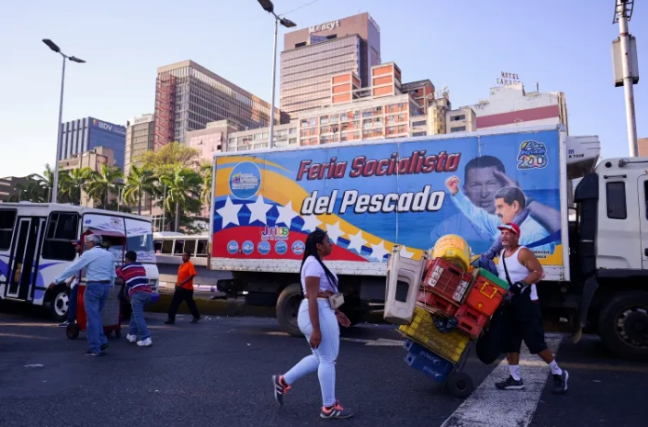
Caracas residents move through their crowded plazas with familiar determination, yet a lingering unease now shadows daily routines as Venezuelans brace for possible US attack.
Beneath a sky filled with tropical warmth, the capital’s markets, bus terminals and pedestrian corridors hum with normalcy, even as conversations turn increasingly toward the rumblings of conflict offshore.
The presence of American warships and fighter jets nearby has created a subtle but undeniable tension, one that seeps into neighbourhoods as people wonder whether their country may soon face a foreign military strike.
For lifelong vendor David Oropeza, the answer seems clear. Selling home-harvested strawberries near a bus stop, he expresses pride, fatigue and a hardened patriotism shaped by decades of political turmoil.
Though grappling with a medical condition requiring constant treatment, he vows to defend Venezuela should US troops move inland.
His certainty echoes a sentiment founded in deep national identity rather than political loyalty, shaped by an instinctive belief that sovereignty must be protected regardless of leadership disagreements.
Across downtown Caracas, others interpret the escalating confrontation differently. Some feel Washington’s pressure might finally force long-awaited political reform.
They view the deployment of US forces—the aircraft carrier, the troops and the F-35 jets—as a sign that change could be approaching, especially after years of economic struggle and contentious elections.
The idea that external intervention might open a path toward renewed opportunity lingers in the minds of many, even as its potential cost remains frighteningly unclear.
The US military’s recent strikes on vessels in the Caribbean and Pacific have intensified these feelings. Washington claims the targeted boats were linked to narcotrafficking operations, yet it has provided little evidence or legal justification, fuelling arguments that such actions violate international law.
The strikes have killed more than eighty people since September, further stoking fear that the US may soon expand its campaign onto Venezuelan territory. President Donald Trump’s recent statements warning of action “on land” have only heightened concern.
For sixty-year-old vendor Carolina Tovar, this pressure represents hope rather than danger. Sitting near a bustling square, she expresses unwavering belief that outside force could break the political gridlock that has defined the country for years.
To her, the continued strain on President Nicolás Maduro’s administration signals the possibility of liberation, a chance for Venezuela to rebuild institutions she feels have deteriorated under persistent crisis. Though she acknowledges the risk, her conviction in the potential benefits remains firm.
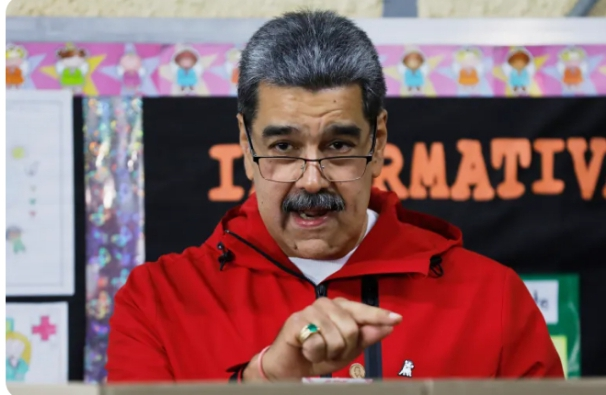
Maduro, reelected in a deeply disputed contest earlier this year, maintains the support of state institutions but faces persistent scepticism at home and abroad.
Opposition groups insist their candidate, Edmundo González, won the vote by a wide margin, and several foreign governments have recognised him as president-elect.
While opposition supporters hope US pressure might hasten political transition, recent polls suggest many Venezuelans prioritise survival rather than geopolitical rivalry. With inflation, low salaries and chronic shortages dominating daily life, the immediate threat of conflict feels overwhelming to many.
The Datanalisis poll reveals a clear reluctance toward foreign intervention. A majority of respondents oppose sanctions, while more than half reject the idea of a military attack.
Their concerns revolve around civilian casualties, the threat of civil war, the possibility of worsening economic collapse and the deeply traumatic consequences of foreign-led conflict. Still, a smaller but determined segment believes external force could rebuild democratic institutions, reshape the economy and bring stability.
Government officials, speaking anonymously, warn that history shows foreign intervention rarely brings peace. They cite examples from Panama, Libya, Syria and other regions where military interference left instability in its wake.
While they understand the frustrations driving some Venezuelans to look outward for solutions, they insist sovereignty must remain non-negotiable. Their view reinforces a long-standing national narrative: Venezuela’s destiny must be shaped internally, regardless of political divisions.
Meanwhile, Maduro has responded by ramping up military visibility. Soldiers, militia members and reservists have been deployed along the coast for training exercises. Anti-aircraft systems have been tested publicly. By November, the government announced a massive mobilisation intended to prepare both troops and civilians for any potential US attack.
These displays, accompanied by televised addresses and strategic meetings, underscore the government’s assertion that Venezuela will not be caught off guard should conflict erupt.
Still, daily life offers a counter-narrative to the sense of impending crisis. Markets remain open, parks stay lively and public squares remain filled with laughter and conversation.
Young Venezuelans, such as twenty-four-year-old supermarket worker Diego Mejía, express concern but also a kind of weary resilience. Many doubt a full-scale invasion is imminent, though they suspect Washington’s interest in Venezuela stems largely from its immense natural resources.
With the world’s largest proven oil reserves and abundant minerals including gold, diamonds and coltan, Venezuela remains a geopolitical prize many larger nations might covet.
Mejía shares this belief openly. To him, Venezuela’s minerals and energy supplies are the true reason behind global attention.
Though he worries about conflict, he places trust in faith to guide the country through uncertainty. His calmness mirrors that of many others who continue their routines while preparing mentally for a crisis they hope never arrives.
Yet fear lingers more strongly for others. Homemaker Dalibeth Brea, watching her child play in a park, admits she feels torn between hope for improvement and deep fear of violence.
She recognises the potential for political change under international pressure but cannot imagine risking her family’s safety. Her instinct leans toward hiding, away from danger, with food supplies stored and loved ones gathered close. The emotional weight she carries reflects the anxiety permeating countless households.
A friend of Brea’s declines to speak publicly, fearing repercussions at her government job—a sign of the precariousness many citizens feel as political tensions mount. The possibility of conflict intensifies caution in workplaces, schools and communities, with people increasingly unsure of what statements may be considered sensitive.
As the sun sets over the sprawling capital, the contradictions defining Venezuela remain stark. Streets buzz with movement even as military drills echo in the distance. Citizens speak openly yet cautiously, hopeful yet afraid, patriotic yet politically fractured. Through it all, uncertainty hangs in the air, stretching from crowded markets to quiet homes.
Whether conflict comes or passes remains unknown. But for now, millions of Venezuelans find themselves balancing between fear and resilience, living their routines while watching the horizon, bracing for the possibility that the world’s most powerful military could soon turn its attention toward their homeland.