Russian President Vladimir Putin has reaffirmed Moscow’s commitment to maintaining uninterrupted fuel shipment to India, anchoring a renewed phase of cooperation shaped by shifting geopolitical and economic pressures.
India welcomed Putin in New Delhi for the latest Modi-Putin summit 2025, where both leaders emphasized stability in energy supply chains and the need to reinforce bilateral trust amid intensified sanctions.
Putin described Russia as a dependable long-term partner, declaring that Moscow stands ready to continue supplying oil, gas, and coal essential for India’s industrial growth and national development.
Modi praised Russia’s steady engagement, noting that consistent fuel access strengthens India’s long-standing energy security partnership, especially as global markets remain volatile and Western tariffs reshape international trade dynamics.
The highlight of the meeting was Putin’s public assurance that Russia would guarantee uninterrupted fuel shipment to India, a pledge welcomed by Indian policymakers focused on economic resilience.
Both leaders stressed that energy cooperation remains a central pillar of their diplomatic relationship, even as global powers attempt to influence India’s strategic decisions through economic and political incentives.
The summit also underscored India’s broader efforts to withstand US sanctions pressure, especially punitive tariffs triggered by New Delhi’s continued reliance on discounted Russian crude supplies.
Modi urged global powers to adopt a balanced view, arguing that India’s oil imports are based on national interest and must be respected within the framework of global energy fairness.
Putin echoed this sentiment, highlighting Western nations’ own engagement with Russian energy, noting that “if the United States buys nuclear fuel from us, India deserves equal freedom.”
Both leaders emphasized that the world’s evolving energy landscape demands neutrality, mutual respect, and practical cooperation rather than coercion and unilateral restrictions imposed by dominant global actors.
Officials from both sides confirmed agreements aimed at strengthening trade corridors, expanding research partnerships, and promoting cross-sector investment designed to reinforce shared economic goals through 2030.
India and Russia also reaffirmed commitments to boosting bilateral trade to $100bn, projecting long-term cooperation despite sanctions that complicate financial settlements and shipping logistics.
The summit placed particular attention on evolving India-Russia defence ties, highlighting New Delhi’s push for self-reliance while continuing to value Russian hardware, training, and technology transfer frameworks.
A joint statement revealed a shift from traditional buyer-seller dynamics toward integrated development, focusing on co-production, joint testing, and enhanced interoperability between both nations’ defence agencies.
Analysts say this reflects India’s ambition to upgrade its military capacity without overdependence, allowing room for diversification while preserving legacy systems sourced from Russia.
Putin expressed readiness to expand defence collaboration, hinting at potential talks on advanced platforms including S-400 units and next-generation aircraft aligned with India’s strategic requirements.
However, officials did not confirm finalised deals, suggesting negotiations continue as India gauges the implications of increasing US scrutiny over weapons trade involving Moscow.
New Delhi’s balancing act between Washington and Moscow has become increasingly delicate, particularly after sanctions targeting Rosneft and Lukoil affected nearly 60 percent of Indian oil imports.
The new sanctions framework extended beyond direct purchases, threatening penalties for intermediaries and foreign companies dealing with major Russian energy firms connected to global supply chains.
Despite this, India insists its procurement decisions reflect national interest and economic necessity, not geopolitical alignment, reinforcing its commitment to strategic autonomy across all sectors.
Modi reiterated that India seeks peaceful cooperation with all nations, emphasizing that energy affordability and security remain central to domestic growth and long-term development planning.
The summit began with ceremonial honours at Rashtrapati Bhavan, signaling the importance New Delhi placed on Putin’s first India visit since Russia’s full-scale 2022 invasion of Ukraine.
A warm reception extended into symbolic gestures, including Modi personally welcoming Putin on the tarmac, reflecting diplomatic warmth despite broader international tension surrounding Russia.
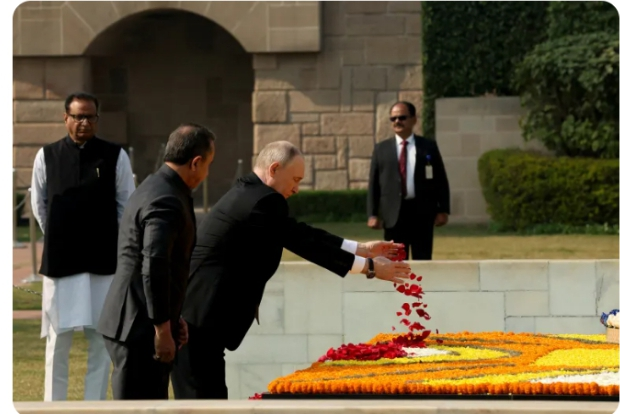
Putin later visited Raj Ghat to honour Mahatma Gandhi, underlining India’s cultural heritage and the values of peace and self-determination that remain central to its foreign policy.
Spectators viewed the visit as a deliberate nod to India’s global identity, affirming dialogue, diplomacy, and collaboration over confrontation and coercive diplomatic strategies.
Throughout the day, Indian and Russian officials exchanged agreements covering employment, chemicals, shipping, and healthcare, marking substantial diversification beyond traditional energy and defence domains.
Indian media highlighted that the emphasis on multipurpose cooperation reflects New Delhi’s desire to stabilize economic ties even as geopolitical currents create unpredictable external pressures.
Negotiators described the 2030 cooperation roadmap as transformative, designed to broaden partnerships, reduce trade imbalances, and create long-term resilience in bilateral economic engagements.
Putin’s reassurance of uninterrupted fuel shipment to India remains central to this roadmap, serving as the foundation for energy policy and bilateral strategy moving forward.
Analysts believe India views Russian fuel as a buffer against Western market fluctuations, ensuring consistent pricing and supply even during global crises or diplomatic standoffs.
Energy experts argue that India’s accelerating demand makes Russia’s commitment invaluable, especially as domestic consumption rises sharply across manufacturing, transport, and residential sectors.
The US tariffs imposed earlier this year, which doubled to 50 percent on many Indian goods, were widely seen as a punitive response to India’s energy decisions.
These tariffs struck major export sectors, compelling New Delhi to seek greater clarity from Washington while negotiating alternative trade routes with long-standing partners like Russia.
Putin used the summit to criticize Western double standards, claiming powerful nations often bend rules for their own benefit while pressuring others to comply rigidly.
Both leaders emphasized the need for global reform in trade and energy governance, stressing fairness, transparency, and mutual respect in international economic dealings.
Strategists suggest the summit reflects India’s recalibration of global partnerships, ensuring diversification while maintaining independence in strategic decision-making across all major sectors.
The meeting occurred amid broader attempts to mediate the Russia-Ukraine conflict, though no major breakthroughs have emerged despite recent diplomatic engagements involving Washington and Moscow.
India maintains its neutral posture, urging diplomacy and ceasefire discussions while refusing to condemn Russia outright, emphasizing dialogue as the only sustainable pathway to peace.
Putin concluded his visit by reinforcing Russia’s long-term commitment to India, highlighting decades of trust, cooperation, and shared interests spanning energy, defence, and global strategic stability.
Indian analysts say the visit signals New Delhi’s refusal to succumb to external pressure, reinforcing sovereignty in foreign policy and economic decision-making amid a turbulent global order.
The pledge for uninterrupted fuel shipment to India thus symbolizes more than energy supply; it represents India’s broader assertion of agency on the global geopolitical stage.
Both sides aim to insulate cooperation from international turbulence, focusing on long-term strategies capable of withstanding sanctions, political pressure, and shifting alliances worldwide.
As the summit closed, officials reaffirmed optimism for deeper integration, sustained collaboration, and strategic alignment anchored by mutual trust and pragmatic cooperation.
Many believe this renewed momentum will shape India-Russia relations for the next decade, especially as global energy and security dynamics undergo profound transformation.
The Modi-Putin summit 2025 ultimately reinforced that bilateral ties remain resilient, adaptive, and strategically relevant despite evolving geopolitical challenges.
India now prepares to implement the agreements reached, confident that strengthened partnerships will support national growth and reinforce global diplomatic flexibility.
The commitment to uninterrupted fuel shipment to India stands as the summit’s defining outcome, underpinning long-term energy cooperation and shielding India from external market instability.

As nations recalibrate alliances, India and Russia appear determined to maintain their historical partnership, strengthened by shared goals and pragmatic diplomacy amid global uncertainty.
The summit concluded with both leaders optimistic that future cooperation would deepen across sectors, reinforcing economic stability and geopolitical confidence for years ahead.
India’s stance remains clear: strategic autonomy, diversified partnerships, and energy security will continue guiding its foreign policy in an increasingly complex world.
About The Author